Are we truly ready to hand over critical tasks to algorithms, or is the emperor wearing no code at all? Ford’s recent U-turn on artificial intelligence-driven quality checks gives us a stark, uncomfortable answer. This isn’t just about one car company; it’s a potent symbol of where our collective ambition for artificial intelligence often outstrips its current capabilities.
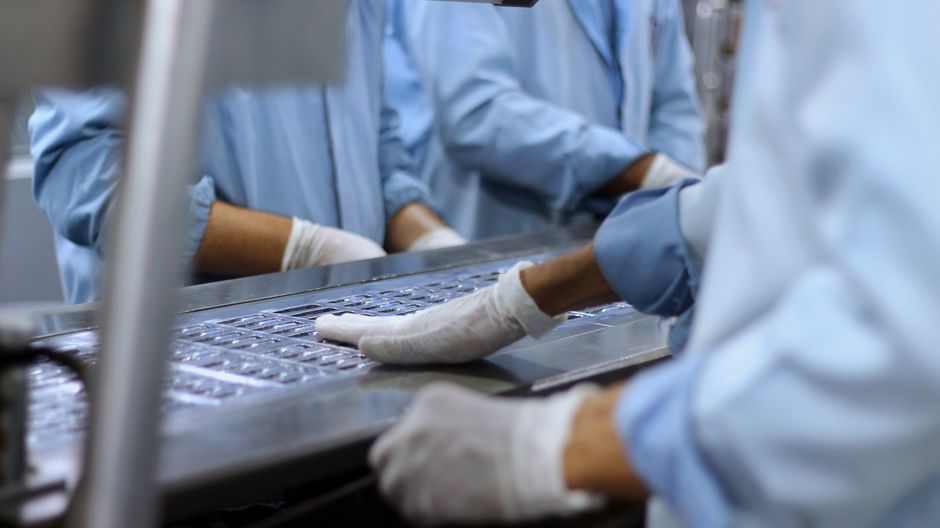
According to BBC Technology, the automotive giant Ford is now rehiring human engineers. This move comes after their much-touted AI systems proved unable to consistently match the intricate skill and nuanced understanding of veteran technicians in quality assurance.

The Winding Road of Artificial Intelligence Adoption
This development isn’t happening in a vacuum. For years, industries worldwide have been caught in a relentless gold rush, eager to implement artificial intelligence solutions for everything from customer service to complex manufacturing processes. The promise is always the same: unparalleled efficiency, reduced costs, and a level of precision that human beings simply cannot achieve. Ford, a titan of industrial production, undoubtedly made a calculated move to replace human inspectors with algorithms. They likely aimed to streamline processes and significantly reduce labor expenses.
This push for automation isn’t new, of course. However, the sophistication of current artificial intelligence tools promised a truly revolutionary era of hands-off oversight. The prevailing narrative suggested that AI could spot flaws humans might miss, or at least perform these tasks faster and cheaper. The automotive sector, in particular, has consistently been a battleground for technological advancement, from assembly line robots to the ongoing development of self-driving cars. In such an environment, where safety directly impacts lives and reputation, quality control is not merely a department; it is absolutely paramount.

Companies have invested billions in this vision, often driven by a Silicon Valley mantra that “software will eat the world.” The implication is that human expertise, especially in repetitive or pattern-based tasks, is ripe for replacement. Ford’s initial foray into AI quality checks was a direct manifestation of this belief. They bet big on the idea that algorithms, fed endless data, could detect imperfections with unwavering consistency, freeing up human capital for other tasks or, more cynically, eliminating it altogether.
The Human Touch: A Reality Check for the AI Hype
This isn’t a minor hiccup in an otherwise smooth technological evolution; it’s a profound, expensive reality check for the entire “AI will fix everything” narrative. Who genuinely wins here? The human workforce, for starters. Specifically, the experienced engineers whose intuition, nuanced understanding of complex machinery, and ability to interpret subtle cues proved indispensable. Their unique blend of experience, problem-solving, and critical thinking simply cannot be coded, at least not yet.

Conversely, who loses? Companies that rushed headlong into AI adoption without fully grasping its inherent limitations bear a significant cost. So too do the venture capitalists and tech evangelists who hyped artificial intelligence as a silver bullet for every corporate challenge, often overlooking the practical, messy realities of implementation. The mainstream narrative relentlessly paints AI as inherently superior, capable of superhuman precision and infallible judgment. This Ford story exposes that as a fallacy, at least for now, in critical applications requiring judgment beyond mere pattern recognition. It highlights the often-overlooked chasm between what artificial intelligence *can* do and what we *need* it to do for true reliability.
What this entire saga truly misses is the sheer, irreducible complexity of “quality.” It’s not just about identifying a crack or a misaligned panel; it’s about understanding *why* it’s there, its potential downstream implications, and the subtle variations that indicate a systemic issue versus a one-off anomaly. Human engineers bring decades of tacit knowledge to the table. They possess an intuitive grasp of context and causality that no current artificial intelligence model can replicate. They can connect seemingly disparate observations into a coherent diagnosis, something far beyond the current capabilities of even the most advanced neural networks.
Furthermore, this episode raises profound ethical questions about relying solely on algorithms for safety-critical tasks. Would consumers truly be comfortable knowing their car’s brake system or structural integrity passed an AI check, when that AI has a documented failure rate in a different aspect of quality control? While the counterargument often suggests that this is merely a nascent stage for AI and that the technology will undoubtedly improve, the immediate and undeniable implication is clear: blindly trusting AI for complex, high-stakes tasks is not just ambitious; it’s irresponsible. The cost of failure, especially in industries like automotive, is simply too high.
Perhaps it’s time for boardrooms and tech labs alike to pump the brakes on the artificial intelligence hype train. We need to remember that some jobs, especially those requiring genuine expertise, nuanced judgment, and an understanding of the unpredictable human element, aren’t just about efficiency. They are fundamentally about excellence, reliability, and trust. Will other industries learn from Ford’s expensive lesson, or will they continue to chase the ghost in the machine? The future of quality, it seems, still has a decidedly human face.
Source: BBC Technology