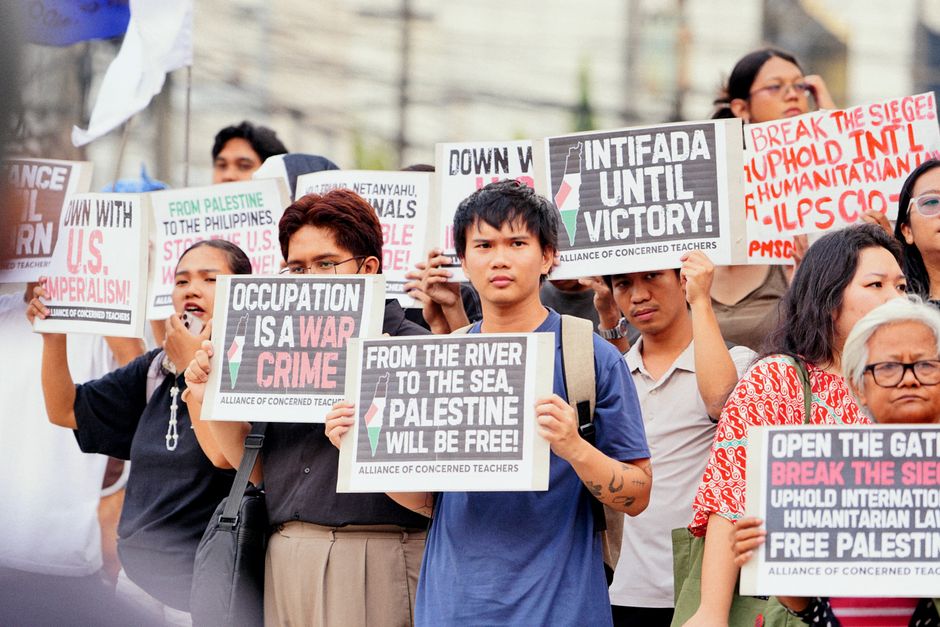
Let’s be brutally honest: another day, another proposed “solution” for the occupied Palestinian territories, and another layer of international bureaucracy to potentially obscure the core issue. This time, the suggestion for a multinational force in the occupied West Bank directly challenges the existing power dynamics and asks uncomfortable questions about the future of **Israel** and its neighbors.
According to Middle East Eye, a joint Palestinian-Israeli movement is now advocating for the deployment of a multinational force in the West Bank. This novel proposal comes amidst a climate of escalating violence and deep political stagnation. It reflects a growing desperation among those caught in the conflict.
The Perpetual Quagmire Facing Israel
The current call for international intervention is hardly new in the history of the Israeli-Palestinian conflict, yet its source — a joint movement — is particularly telling. It signals a profound loss of faith in existing frameworks and leadership on both sides. For decades, the international community has largely confined its efforts to diplomatic initiatives and humanitarian aid. However, these efforts have demonstrably failed to halt the expansion of Israeli settlements or protect Palestinian civilians.
The West Bank, in particular, has become a tinderbox. Israeli military operations are frequent, and settler violence is a documented, alarming reality. Meanwhile, the Palestinian Authority’s control and legitimacy have severely eroded, leaving a security vacuum that often spirals into further instability. This environment of sustained occupation, fragmented governance, and daily friction has created a desperate need for some form of external stabilization. The proposal essentially seeks to fill this void, hoping to shield civilians from the immediate dangers of the ongoing conflict.
The very existence of a joint Palestinian-Israeli movement pushing such a radical idea underscores the deep frustration felt by people living on the ground. They are seemingly bypassing their own national leaders, whose strategies have either failed or contributed to the current impasse. This demonstrates a deep-seated belief that the current trajectory is unsustainable and that local mechanisms are insufficient to guarantee basic security for everyone. It’s a plea for a new kind of intervention, one that acknowledges shared human vulnerability across the divide.
A Multinational Force: A Band-Aid on an Open Wound?
While the call for a multinational force might sound like a pragmatic step towards de-escalation, it carries immense risks and raises fundamental questions about sovereignty and justice. Who would authorize such a force? What would be its mandate, its rules of engagement, and its ultimate goals? Would it be a protector of the occupied, or merely an enforcer of an untenable status quo? These are not trivial details; they determine whether such a force becomes a genuine agent of peace or another complicit actor in the cycle of occupation.
On one hand, proponents argue that an international presence could provide a much-needed buffer, protecting civilians from violence and potentially creating space for renewed political dialogue. It could deter both settler attacks and Israeli military incursions, thereby reducing the immediate human cost of the occupation. For those living under daily threat, any measure that promises a degree of safety might seem like a welcome relief, even if it falls short of true liberation. This perspective emphasizes humanitarian protection as the immediate priority.
However, the inherent danger of such a force is that it might inadvertently legitimize the occupation itself. By providing security within the framework of an ongoing occupation, it could reduce pressure on **Israel** to end its control over Palestinian territories. It could effectively outsource the management of the conflict to international actors, allowing the underlying political issues to fester unaddressed. This risk is particularly acute if the force lacks a clear, time-bound mandate tied to a comprehensive political solution. It could become a permanent fixture, turning the West Bank into an international protectorate rather than moving towards genuine Palestinian statehood.
Furthermore, the idea of a multinational force raises questions of accountability. What happens if this force itself commits errors or abuses? To whom would it be answerable? History is replete with examples of international interventions that, despite good intentions, have created new problems or exacerbated existing ones. The mainstream narrative often sidesteps these complexities, focusing instead on the superficial appeal of "stability" without interrogating the cost of that stability. For **Israel**, such a force could offer a convenient way to offload some of the burdens of occupation while maintaining overall strategic control. But for Palestinians, it could represent yet another layer of external control, further delaying their aspirations for true self-determination.
Ultimately, this proposal, born of desperation, highlights the catastrophic failure of the international community to enforce its own resolutions and hold all parties accountable. A multinational force, without a clear political horizon and a genuine commitment to ending the occupation, risks being a band-aid on a gaping wound. It could pacify the symptoms while allowing the disease — the unresolved conflict and the occupation — to rage on.
The call from a joint Palestinian-Israeli movement for a multinational force is a stark reminder of how deeply entrenched the conflict has become. Will the world answer this desperate plea with a genuine commitment to justice, or simply offer another temporary fix that delays the inevitable reckoning? The future of the West Bank, and indeed the entire region, hangs in the balance.
Source: Middle East Eye