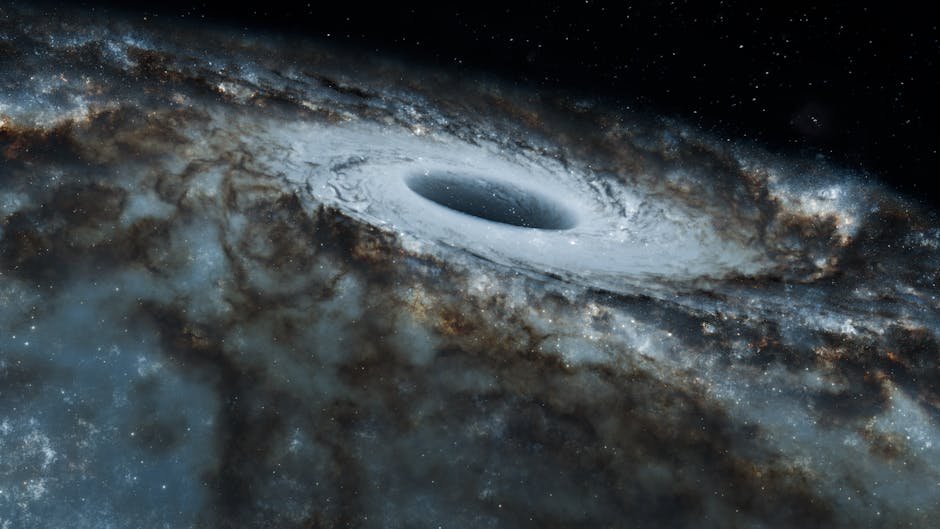
What if I told you that in the vast expanse of the universe, the James Webb Space Telescope has just given us a peek at a “sleeping giant” black hole that weighs as much as 6 billion suns? This isn’t just a dazzling discovery in the realm of science; it’s a monumental moment that reframes our understanding of the cosmos and the forces that govern it.
According to reports from Google — Space & Science, astronomers have utilized the James Webb Space Telescope to measure a black hole that lies 10 billion light-years away from Earth. This colossal entity is now confirmed to have a staggering mass equivalent to 6 billion solar masses, a revelation that both astounds and challenges our current theories in astrophysics.
The Significance of This Scientific Achievement
Why does this matter? The detection of such a massive black hole so far away forces us to rethink not just cosmic formation but also the very nature of black holes themselves. For decades, the science community debated the growth mechanisms of supermassive black holes—those monstrous entities lurking at the centers of galaxies. Generally, they believed that black holes grow in tandem with their host galaxies, but this latest finding suggests that some may develop independently and perhaps much earlier in the universe’s history than we thought.
This aligns with the ongoing conversation about dark matter and energy, fundamental components of the universe that remain stubbornly elusive. Our understanding of black holes could have implications beyond mere curiosity; it might lead us to answers we’ve sought about the fabric of space-time and the structures that shape our universe.
Implications and What’s at Stake
What does this mean for the future of science? While we celebrate this groundbreaking achievement, let’s not forget the looming questions. Are we witnessing the peak of our understanding, or are we merely scratching the surface? The black hole’s size challenges existing astrophysical models, and if the implications are not adequately addressed, it could lead to a significant paradigm shift in the field.
On one hand, this discovery reinforces the advanced capabilities of the James Webb Space Telescope, proving that we can peer further back in time and space than ever before, revealing cosmic secrets that were once thought to be lost forever. On the other hand, as we advance in our scientific exploration, we must also grapple with the potential for hubris. For too long, scientists have been confident in their models of the universe, only to face new revelations that upend their theories.
In a world where we are constantly racing toward the next scientific milestone, the stakes have never been higher. The mainstream narrative often focuses on the wonders of discovery without considering the repercussions of what we learn. What if these revelations lead to more questions than answers? What if they push existing theories to their breaking point?
As we bask in the glow of this latest achievement, it’s essential to remain grounded in the reality that science is a continuous journey of learning—sometimes painful, often enlightening, but always evolving.
With the James Webb Space Telescope throwing light on the corners of the universe, it leaves us with one lingering question: How many more “sleeping giants” are hiding in the shadows of cosmic history, waiting for us to discover them?
Source: Google — Space & Science