Tech Now is the sort of headline that makes you wonder whether we’re finally watching the future or just replaying a sci‑fi rerun. When Shiona McCallum, a senior climate‑tech analyst, trekked into Scotland’s Cairngorms to watch a drone‑borne monitor sniff out wildfire scars, the moment felt less like a novelty and more like a diplomatic flashpoint for the planet’s security.
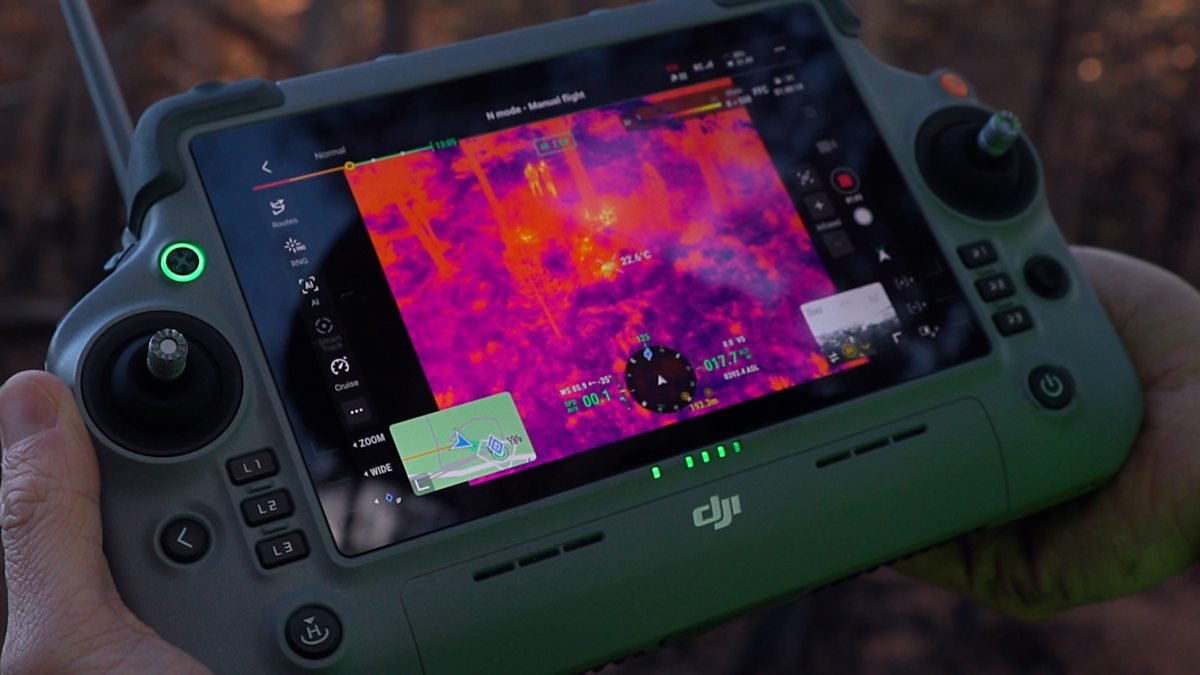
According to BBC Technology, McCallum’s visit on October 10 was a field test of a new AI‑driven sensor network that maps burn severity in real time, promising faster response times for remote fire crews. The system, mounted on a lightweight quadcopter, relayed thermal imagery to a cloud‑based analytics hub that flagged hotspots within seconds.
The timing could not be more charged. Europe is wrestling with a surge of late‑summer blazes that have ripped through pine‑dense reserves, while governments scramble to balance tourism, conservation, and the looming threat of climate‑induced displacement. In that mix, a tech showcase in a national park is a diplomatic gesture as much as a scientific one: it signals that the UK is willing to export high‑tech solutions to allies who lack the fiscal bandwidth for home‑grown research.
Tech Now: Why This Matters
The Cairngorms trial is not an isolated gadget demo; it sits at the intersection of three strategic currents. First, the data‑rich model it produces feeds directly into cross‑border emergency platforms, allowing neighboring nations to synchronize evacuations and resource allocation. Second, the AI algorithms have been trained on fire patterns from the Amazon, the Australian bush, and California’s chaparral, meaning the system can translate lessons from half a world away to the Scottish Highlands in minutes. Third, the very act of showcasing this capability in a protected area is a soft‑power move, a reminder that technology can be a bridge in climate diplomacy as much as a weapon in cyber‑warfare.
Historically, wildfire monitoring has been the domain of satellite imagery, a method hampered by cloud cover and latency. The shift to low‑orbit, AI‑enhanced drones cuts those delays dramatically, but it also raises questions about airspace sovereignty. Nations that have traditionally guarded their skies from foreign UAVs may view the rollout as an infringement, especially if the data streams feed into NATO‑linked command centres. The diplomatic choreography required to smooth those frictions will test the resolve of policymakers who are already stretched thin by broader security concerns.
The Bigger Security Picture
If the tech works as advertised, the winners are clear: rural fire services, insurance firms, and the increasingly anxious public who demand instant alerts. The losers, however, are the bureaucratic gatekeepers who thrive on opaque data pipelines and the private contractors whose satellite contracts could be rendered obsolete. Moreover, the reliance on AI introduces a new attack surface. A malicious actor who can spoof thermal signatures could trigger false alarms, diverting resources and eroding public trust—a classic case of “security through obscurity” backfiring.

Mainstream coverage tends to celebrate the sleek drones and the promise of greener forests, but it glosses over the geopolitical ripple effect. The UK’s push to export this monitoring suite to the Balkans, the Baltics, and even parts of the Middle East could become a bargaining chip in negotiations over energy security and migration. In fact, the very term “Tech Now” might evolve into a diplomatic shorthand, akin to “Copenhagen Accord,” denoting a suite of AI tools that nations exchange in exchange for climate‑aid packages.
Critics will argue that technology alone cannot curb the firestorm of climate change, and they are right. The sensors cannot stop a drought, nor can they replace the need for robust forest management policies. Yet, dismissing the innovation as a gimmick ignores the reality that in a world where every minute counts, the speed of information can be a matter of life or death.
The fashion industry’s recent flirtation with “eco‑tech” fabrics shows that sustainability can be a selling point, but the stakes in wildfire monitoring are far higher than a runway trend. Here, the technology must prove its mettle under the harsh glare of emergency rooms, not the soft glow of catwalk lights.
In the end, the Cairngorms experiment forces us to confront an uncomfortable truth: climate resilience is rapidly becoming a matter of national security, and the tools we deploy will shape diplomatic relations for decades. If the AI‑driven drones deliver, we may see a new era where borders are less about keeping people out and more about sharing fire‑fighting intelligence. If they falter, the backlash could set back collaborative climate efforts by years.
So, as the sun set over the misty peaks and the drones buzzed home, the question lingered: will “Tech Now” become a cornerstone of global security strategy, or will it fade into another well‑intentioned pilot that never left the runway? The answer will depend less on the hardware and more on the political will to let technology cross borders without sparking new conflicts.
Source: BBC Technology