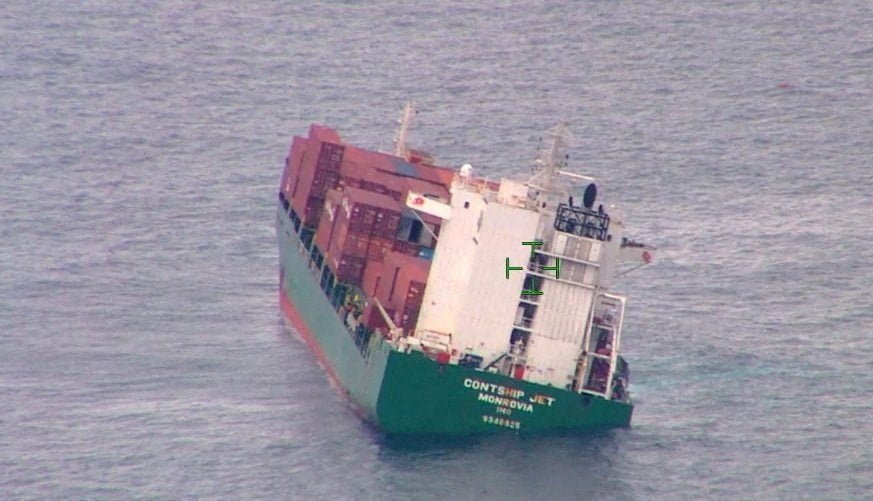
War Widens, and the Black Sea is becoming the newest proving ground for NATO’s resolve. Seven cargo vessels have already felt the sting of missile strikes just off Romania and Bulgaria, and the alliance’s decision to flood the region with patrol aircraft, radar nets and armed drones signals a shift from diplomatic protest to kinetic posturing. The question now is whether this escalation will cement a deterrent line or simply redraw the map of conflict in a way that drags the Middle East and South Asia deeper into the fray.
According to the gcaptain.com report dated November 3, 2026, seven attacks on merchant ships near NATO’s eastern flank prompted the alliance to announce a rapid deployment of maritime surveillance assets across the Black Sea. The United States, leading the effort, promised a continuous aerial presence, advanced radar stations on the Romanian coast and a fleet of unmanned aerial systems to track any hostile movement. No casualties were reported, but the pattern of strikes suggests a coordinated campaign aimed at testing the limits of NATO’s red lines.

War Widens: NATO’s Red Line Test in the Black Sea
The Black Sea has long been a strategic crossroads, but the recent salvo of attacks marks a decisive turn. Since Russia’s full‑scale invasion of Ukraine, Moscow has used its naval capabilities to harass shipping routes that feed European energy markets and grain exports. The strikes near Romania and Bulgaria were not isolated incidents; they followed a series of “gray zone” actions that included cyber intrusions on port infrastructure and the deployment of surface combatants near NATO ports.
In this context, NATO’s response is both symbolic and operational. By stationing P‑8 Poseidon aircraft and long‑range maritime patrol planes, the alliance signals that it will no longer tolerate unchecked aggression along its borders. Meanwhile, the installation of land‑based radar arrays creates a layered detection network that can spot low‑altitude missiles or fast‑moving boats before they reach critical shipping lanes. The drones, equipped with electronic warfare suites, add a further deterrent by threatening to neutralize any hostile launch platforms before they fire.

Why does this matter now? The timing coincides with heightened tensions in the Middle East, where Iranian-backed militias are expanding their naval presence in the Gulf of Oman, and with South Asian powers watching the Black Sea as a potential conduit for illicit arms shipments. The Black Sea’s proximity to the Turkish Straits also means that any disruption could choke off a vital artery for oil and gas flowing from the Caspian region to Europe. As a result, the “War Widens” narrative is no longer confined to Eastern Europe; it ripples outward, threatening supply chains that sustain economies from Riyadh to New Delhi.
The Bigger Picture: Middle Eastern Ripples and South Asian Stakes
The escalation in the Black Sea cannot be isolated from the broader geopolitical chessboard. Iran, still reeling from sanctions and a stalled nuclear deal, has quietly increased its naval cooperation with Russia, offering access to ports in the Caspian and even training its Revolutionary Guard crews on Russian missile systems. If the “War Widens” in the Black Sea persists, Tehran may view the conflict as a green light to intensify its own maritime pressure on Gulf shipping, leveraging the same tactics of ambiguous strikes to test U.S. and allied responses.

South Asia, too, watches with unease. India’s growing energy imports from the Black Sea corridor—particularly grain shipments from Ukraine—have become a lifeline for its domestic food security. Any sustained disruption could force New Delhi to recalibrate its procurement strategy, potentially turning to Iranian or Russian sources, thereby deepening its strategic entanglement with Moscow and Tehran. Moreover, Pakistan’s navy, already engaged in a delicate balancing act between China’s Belt‑and‑Road ambitions and U.S. maritime partnerships, may be compelled to reassess its own red line calculations in the Indian Ocean if NATO’s Black Sea stance signals a willingness to project power far from its traditional theater.
The mainstream narrative often frames the Black Sea skirmishes as a narrow, Euro‑centric security issue. That view ignores how the “War Widens” into a multi‑regional contest for maritime dominance, energy security and influence over global supply routes. The immediate winners are the defense contractors supplying the patrol aircraft, radar kits and drones—profits surge as NATO members scramble to fill procurement gaps. The losers, however, are the countless merchants whose cargoes face higher insurance premiums, longer transit times and the ever‑present risk of being caught in crossfire.
Critics argue that NATO’s escalation could provoke a dangerous spiral, prompting Russia to unleash more sophisticated anti‑ship missiles or to deploy submarines into the already crowded waters. Yet, the alliance’s visible commitment may also deter further aggression by raising the cost of each strike. If Moscow calculates that each attack now invites a swift aerial hunt, it may opt for covert cyber sabotage instead—a shift that would still threaten shipping but keep the conflict below the kinetic threshold.
In reality, the “War Widens” scenario is a high‑stakes gamble. NATO’s expanded presence could stabilize the Black Sea corridor, but it also risks drawing the alliance into a protracted maritime standoff that reverberates across the Middle East and South Asia. The key to avoiding a broader conflagration lies in clear communication of red lines, calibrated escalation and a willingness to engage diplomatic channels that address the underlying grievances—particularly Russia’s demand for security guarantees in its near‑abroad and Iran’s yearning for a regional maritime foothold.
As the drones buzz over the Romanian coast and radar screens light up with every passing vessel, the world watches a silent test of resolve. If NATO can keep the “War Widens” confined to a deterrent showcase, the Black Sea may remain a flashpoint rather than a front line. If not, the ripple effects could swell into a wave that engulfs shipping lanes from the Suez to the Strait of Malacca, reshaping the balance of power in ways no one can fully predict.
The next move will reveal whether the alliance’s red line is a firm barrier or merely a chalk outline waiting to be erased.
Source: NewsAPI:q