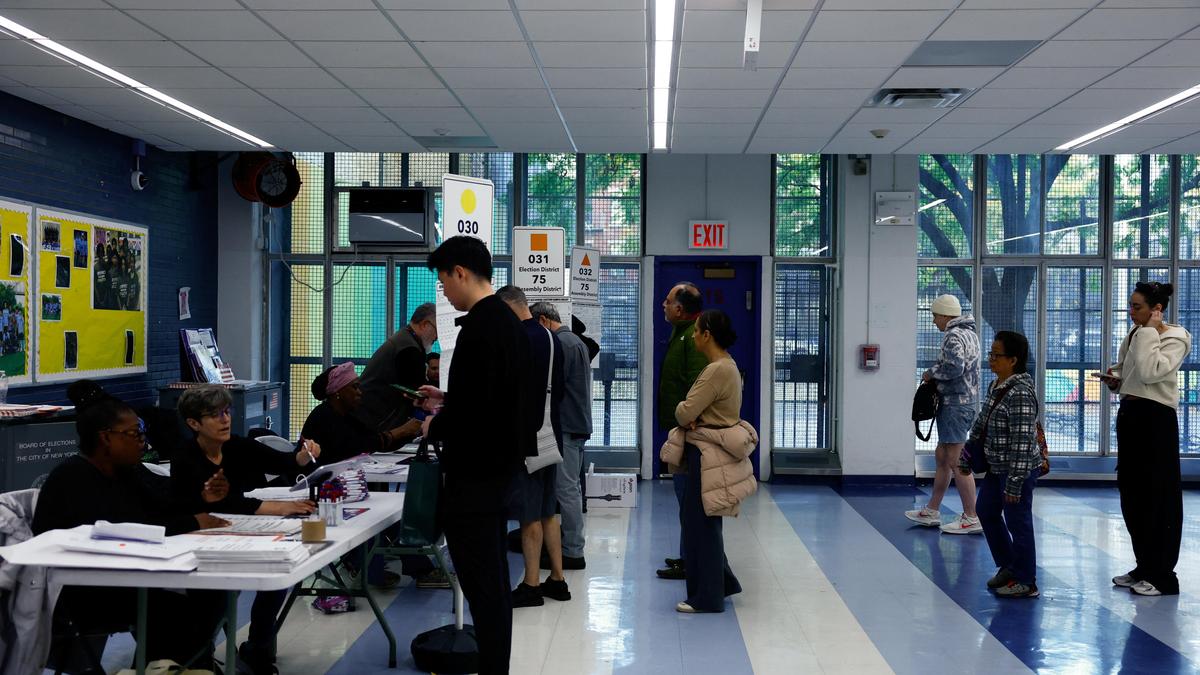
Midterm Elections are finally rolling in, and the nation’s pulse is racing faster than the ballot‑counting machines can keep up. With more than 210 million registered voters poised to decide every House seat, a third of the Senate and dozens of governorships, the 2026 contest promises to redraw the political map in ways that will reverberate far beyond American suburbs.
According to The Hindu, polls are closing across the country as the night deepens, and early returns already hint at a seismic shift. The full slate includes all 435 House districts, 35 of the 100 Senate seats and governorship races in 36 states, making this the most comprehensive midterm test of party strength in a generation.

Midterm Elections and South Asia: Why the Stakes Matter
The relevance of these Midterm Elections for South Asia may not be obvious at first glance, but the connection runs deep. The United States remains the largest source of foreign aid, trade, and security guarantees for the region, and any change in congressional composition directly reshapes those pipelines. Over the past decade, Democratic majorities in the House have pushed for tighter scrutiny of defense contracts tied to Indian and Pakistani defense firms, while Republicans have championed a more laissez‑faire approach that encourages private‑sector deals.
Meanwhile, the Senate’s composition influences the confirmation of key diplomatic appointments. A swing toward a more hawkish bloc could embolden the U.S. to adopt a firmer line on the India‑Pakistan nuclear standoff, whereas a dovish tilt might revive back‑channel diplomacy that has been dormant since the last crisis. Moreover, the governorships matter because many states control substantial portions of the federal budget earmarked for foreign aid; governors with strong ties to South Asian diaspora groups can lobby Washington for projects that benefit their constituencies.

These dynamics are not happening in a vacuum. The 2022 midterms saw a modest Democratic gain in the House, but the 2024 cycle delivered a Republican resurgence that was largely credited to economic anxieties and a bruising campaign against perceived “globalist” policies. As the 2026 votes unfold, the electorate appears even more polarized, with voter fatigue over pandemic recovery and rising inflation feeding into a narrative that the status quo simply cannot deliver. The result is a battlefield where every seat becomes a proxy for the broader ideological clash over America’s role on the world stage, and South Asia is inevitably caught in the crossfire.
Hot Take: Winners, Losers, and the Missed Narrative
If you strip away the partisan theater, the real winners of these Midterm Elections will be the strategic planners in New Delhi and Islamabad who can read the congressional mood and adjust their diplomatic playbooks accordingly. A Democratic surge in the House could translate into heightened scrutiny of U.S. arms sales to both countries, potentially forcing New Delhi to diversify its procurement and Islamabad to seek alternative security partners. Conversely, a Republican wave—especially if it strengthens the Senate’s foreign‑policy committees—might accelerate the flow of advanced weaponry and intelligence sharing, giving the Pakistani military a decisive edge in its long‑running rivalry with India.

The losers, however, are the ordinary voters whose expectations of accountability are being squandered. The media’s fixation on celebrity candidates and sensational soundbites obscures the fact that policy decisions emerging from these Midterm Elections will affect everything from trade tariffs on Indian textiles to the continuation of U.S. development projects in Afghanistan’s reconstruction. The mainstream narrative also glosses over the growing influence of South Asian American voters, whose turnout could tip tight races in swing states and force parties to reckon with community concerns ranging from immigration reform to climate‑justice funding for Bangladesh’s flood‑prone regions.
What could go wrong? A fractured Congress that struggles to pass a coherent foreign‑policy agenda could leave a vacuum that regional powers are eager to fill. In such a scenario, China’s Belt and Road Initiative might accelerate its inroads into Pakistan’s infrastructure, while India could double down on its “Act East” strategy, deepening ties with Southeast Asian nations. Both moves would diminish U.S. leverage at a time when global competition is intensifying. The mainstream press, preoccupied with the drama of individual races, often misses this strategic calculus, leaving readers unaware of how the Midterm Elections could reshape the balance of power across the Indian Ocean.
Still, there are counterarguments to consider. Some analysts argue that congressional turnover rarely produces swift changes in foreign policy because the executive branch retains primacy in diplomatic matters. Indeed, the President’s hand in negotiating treaties and authorizing military assistance can blunt congressional swings. Yet history shows that persistent legislative pressure can constrain presidential options, as seen in the 2020‑2021 pushback against the withdrawal from Afghanistan. Therefore, dismissing the impact of the Midterm Elections on South Asia would be naïve.
As the night wears on and the final tallies emerge, the real story will not be who won a particular district, but how the aggregate shift in power will steer America’s engagement with the subcontinent. Will Washington double down on partnership, or will it retreat into isolationist reflexes? The answer will shape trade, security and development outcomes for billions of people who never set foot in a U.S. polling booth.
The Midterm Elections have always been a barometer of public sentiment, but this year they also serve as a crystal ball for South Asia’s future. If the new Congress leans toward cooperation, we may see a resurgence of joint research initiatives, climate‑finance deals and a steadier hand in the volatile Kashmir corridor. If it veers toward protectionism, the region could face a new era of uncertainty, with rival powers scrambling to fill the void. One thing is certain: the choices made in Washington’s chambers this November will echo through the streets of Delhi, Islamabad and beyond for years to come.
Source: The Hindu