
The European maritime strategy is at a crossroads, and the choices made in the next few months will decide whether Europe sails toward genuine strategic autonomy or drifts into a patchwork of national whims. **The European** blueprint, once a quiet consensus among Brussels and its member states, is now being tested by competing security demands, climate imperatives and a resurgent China that sees the Indian Ocean as a highway to Europe’s doorstep.
According to a recent analysis released by the Fondation Robert Schuman, Europe’s current maritime policy is being rewritten under pressure from the war in the Middle East, the scramble for offshore wind sites, and the EU’s own “Blue Economy” ambitions. The think‑tank notes that the EU’s naval procurement plans have stalled, joint exercises have lost momentum, and member states are increasingly eyeing bilateral deals with non‑EU powers to fill the gap.

Why The European maritime strategy matters now
The timing could not be more critical. The conflict in Gaza has forced European navies to patrol the eastern Mediterranean more intensively, while Turkish assertiveness in the Eastern Aegean has raised alarms about freedom of navigation. At the same time, the EU’s climate agenda pushes for a massive rollout of offshore wind farms, a development that demands coordinated seabed mapping and a clear regulatory framework. In fact, the lack of a unified approach is already causing friction: Spain and Portugal are racing to claim lucrative wind zones, whereas Greece and Italy argue for a “Mediterranean corridor” that would prioritize shipping lanes over renewable projects.
Behind the headlines, the underlying driver is a strategic vacuum that the United States appears reluctant to fill. The US Navy has signaled a shift toward the Indo‑Pacific, leaving NATO’s southern flank under‑resourced. As a result, European capitals are debating whether to double‑down on a collective maritime doctrine or to pursue national blue‑water capabilities. Germany, for example, has announced a modest increase in its frigate fleet, while France is lobbying for a “European Naval Force” that would operate under a single EU command. The tension between national sovereignty and supranational coordination is the very essence of the current debate.
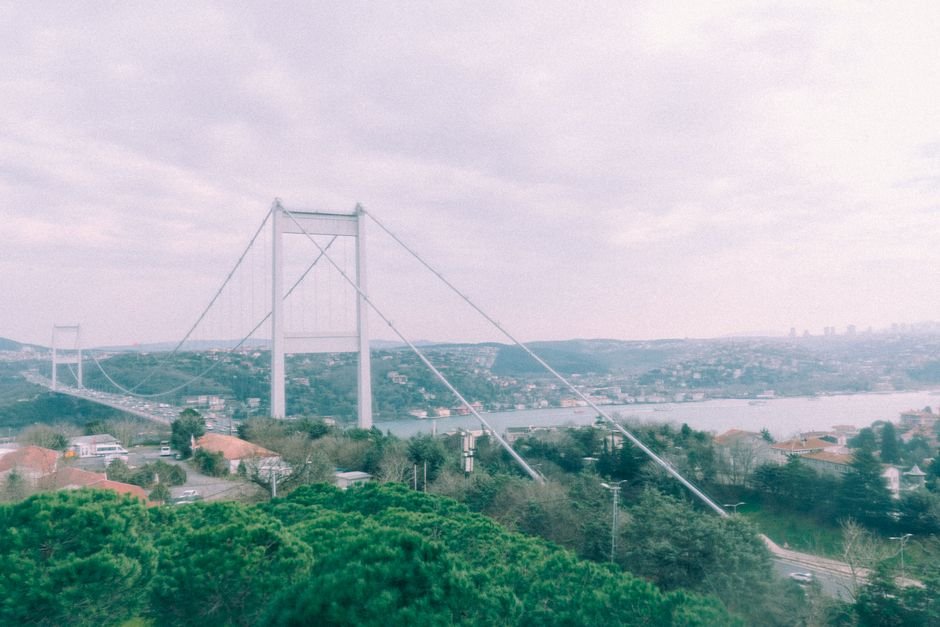
The European Union’s own institutions are not blind to the stakes. The European Commission’s “Fit‑for‑55” package includes a clause that ties maritime emissions reductions to the deployment of green shipping corridors, effectively making environmental policy a security issue. Meanwhile, the European Parliament’s Committee on Fisheries has warned that uncoordinated exploitation of marine resources could trigger a “tragedy of the commons” scenario, eroding both economic and geopolitical clout. All these threads converge on one point: without a decisive, cohesive strategy, Europe risks losing its influence over the seas that have long underpinned its trade, energy, and defense.
The stakes of a shifting sea policy
Who wins if the EU finally locks in a unified maritime doctrine? The answer is both simple and paradoxical. Large shipbuilders and defense contractors across the continent stand to gain billions from a coordinated procurement programme, while smaller coastal states could see their local interests subsumed under a broader agenda. The “European” approach promises economies of scale, joint research into autonomous vessels, and a shared intelligence net that could outpace any single nation’s capabilities. In practice, however, the reality may be messier.

If the EU embraces a joint naval command, it could finally present a credible deterrent to Russian aggression in the Black Sea and to Iranian naval posturing in the Gulf. That would reinforce NATO’s southern flank and give Europe a bargaining chip in any future negotiations with the United States over burden‑sharing. On the flip side, a rushed integration could alienate countries like Poland and the Baltic states, which already feel marginalized by Brussels and may turn to NATO or even bilateral agreements with the US for security guarantees.
Conversely, a fragmented approach—where each member state charts its own course—might preserve short‑term autonomy but will likely exacerbate competition for limited maritime resources. The scramble for offshore wind zones could turn into a diplomatic tinderbox, with legal disputes spilling into the European Court of Justice. Moreover, without a common naval presence, Europe’s ability to police illegal fishing, combat smuggling, and intervene in humanitarian crises will be severely hamstrung. The Mediterranean could become a “no‑fly zone” for coordinated action, inviting external powers to fill the void.
Mainstream commentary often glosses over the environmental dimension, treating the maritime strategy as purely a defense issue. In fact, the EU’s climate commitments mean that any future naval fleet must be carbon‑neutral by 2050, a requirement that forces a radical redesign of ships, fuels and logistics. Ignoring this factor would be a fatal oversight; the very ships that project power could become symbols of hypocrisy if they continue to burn heavy fuel oil while Europe touts its green credentials.
Critics argue that the EU’s bureaucratic machinery is too slow to respond to fast‑moving maritime challenges. They point to the delayed adoption of the “EU Maritime Security Strategy” as evidence of paralysis. Yet the same critics often overlook the fact that a coordinated policy, even if slower to materialise, can deliver far more sustainable outcomes than a patchwork of ad‑hoc agreements. The balance, therefore, lies in accelerating decision‑making without sacrificing the depth of consensus that underpins long‑term security.
The bottom line is stark: Europe stands at a maritime inflection point where strategic indecision could cost it both influence and credibility. The European powers that decide to act now—by harmonising naval procurement, aligning climate and security goals, and establishing a clear chain of command—will shape the continent’s role on the global stage for decades. Those that cling to the old game of national silos risk watching their maritime relevance fade as other powers fill the vacuum.
The tide is rising; the question is whether Europe will ride the wave or be swallowed by it.
Source: Google — UK & Europe