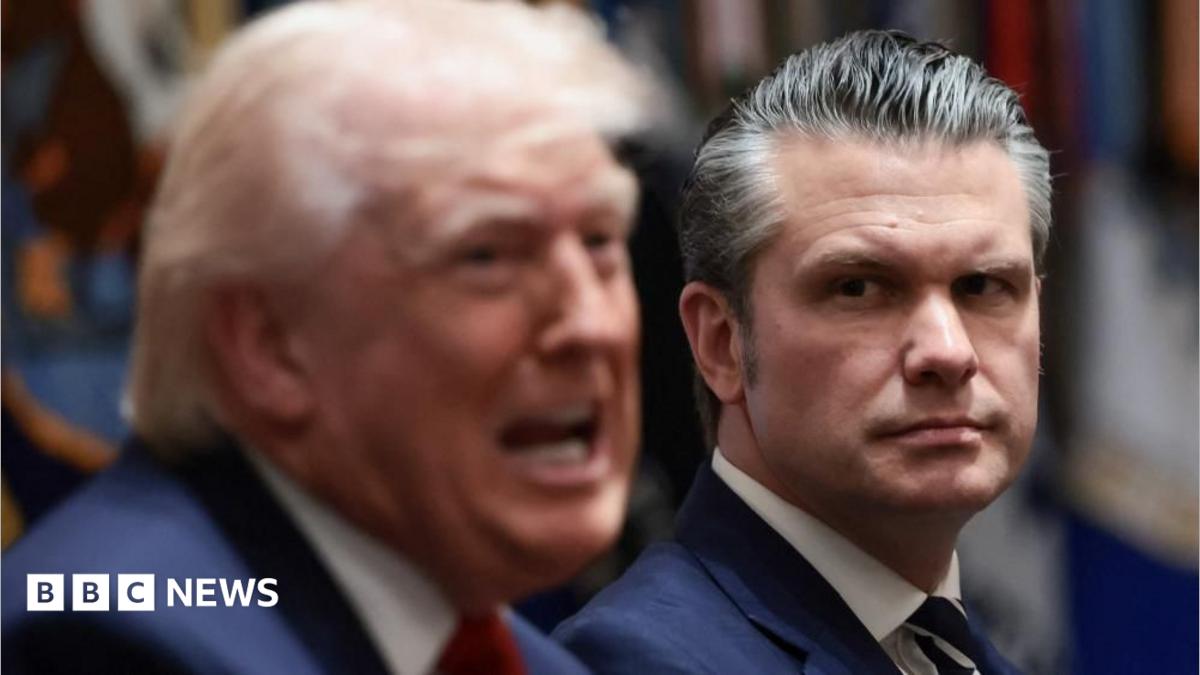
The Pentagon’s sudden ban on Anthropic’s tools is the latest reminder that **artificial intelligence** is still a battlefield where politics, profit and safety collide. If a government that spends billions on defense can deem a private AI firm a “supply‑chain risk,” you can bet the rest of the tech world will be watching its every move.
According to BBC Technology, the U.S. Department of Defense labeled Anthropic a supply‑chain risk in February after the startup refused to strip safety guardrails from its language models. By early October the Pentagon had officially stopped using any of Anthropic’s products, citing the same security concerns that sparked the initial blacklist.

The artificial intelligence risk calculus at the Pentagon
The decision does not exist in a vacuum. For years the defense establishment has tried to harness **artificial intelligence** to accelerate data analysis, improve logistics and even shape autonomous weapons. Yet the very same agencies that champion rapid AI adoption also cling to a paranoid view of the supply chain, fearing that hidden backdoors or unchecked outputs could compromise missions. Anthropic’s refusal to “turn off” its guardrails—safety features designed to curb toxic or misleading content—triggered a clash of philosophies: the Pentagon wanted an unfiltered engine that could be weaponised without ethical friction, while the company insisted on a responsible AI posture.
Anthropic’s stance is not unique. After the 2023 congressional hearings on AI risk, several firms publicly pledged to keep safety layers intact, even at the cost of reduced performance for high‑stakes customers. The Pentagon, however, has a history of demanding bespoke solutions that sidestep such constraints. In 2022 the Department of Defense’s Joint Artificial Intelligence Center (JAIC) pressed vendors to provide “unrestricted” models for classified analysis, arguing that any moderation would blunt the tools’ utility in combat scenarios. The Anthropic episode simply crystallises a long‑standing tension: do national security priorities trump the emerging consensus on responsible AI development?

The broader geopolitical context cannot be ignored. The United States is locked in a technology race with China, where AI prowess is equated with military superiority. By blacklisting Anthropic, the Pentagon signals to domestic AI firms that compliance with U.S. security demands is non‑negotiable, potentially nudging them toward more opaque, government‑driven research pipelines. Meanwhile, allies in the United Kingdom and South‑Asia watch closely, wondering whether similar supply‑chain vetting will become a global norm. If every nation adopts the same hard‑line approach, the AI ecosystem could fracture into siloed, militarised clusters, stalling the collaborative progress that once defined the field.
Hot take: Guardrails aren’t the problem; the Pentagon’s expectations are
What the mainstream coverage glosses over is that the real issue isn’t Anthropic’s safety guardrails but the Pentagon’s unrealistic demand for an AI that is both fully unrestricted and completely trustworthy. Expecting a model to obey orders without any moral filter while also guaranteeing it won’t hallucinate classified data is a recipe for disaster. The defense sector’s appetite for “raw power” often blinds it to the very vulnerabilities it fears.

Who wins here? Anthropic preserves its brand integrity and avoids becoming a government pawn, a move that may attract customers who value ethical AI. The Pentagon, on the other hand, loses a potentially valuable tool and is forced to turn to alternative providers—many of whom are either less transparent or more tightly coupled with the defense industrial base. In the short term, the Department of Defense might scramble for a replacement, but the longer‑term cost is a chilling effect on the broader **artificial intelligence** market. Start‑ups could see the writing on the wall: bend to military demands and risk alienating the public, or hold fast to safety and risk being shut out of lucrative contracts.
Critics will argue that security must trump ethics when lives are on the line. That point has merit; no one wants an AI that could inadvertently reveal operational secrets. Yet the solution isn’t to strip safety mechanisms but to invest in robust verification, explainability and controlled deployment environments. The Pentagon’s blacklisting of Anthropic reveals a deeper hypocrisy: it cries foul over “risk” while simultaneously courting AI firms that promise unchecked performance for weapons development. The inconsistency undermines the credibility of any national AI strategy that claims to balance innovation with responsibility.
If the Department of Defense continues to treat AI like a raw material—extracting value without regard for the ethical scaffolding that holds it together—we risk a future where the most powerful models are locked behind classified firewalls, inaccessible to civilian researchers and stifling the open‑source culture that has driven breakthroughs for the past decade. That would be a win for secrecy, but a loss for the United States’ long‑term technological edge.
The Pentagon’s move also serves as a cautionary tale for allied nations. The United Kingdom’s own AI roadmap emphasizes “trusted AI” for defense, yet its procurement guidelines still allow for waivers on safety features in the name of operational advantage. South‑Asian militaries, watching the U.S. play, may feel pressured to adopt similar shortcuts, potentially igniting an arms race not just of weapons, but of unregulated, high‑risk AI systems.
In the final analysis, the blacklisting of Anthropic is less about a single vendor and more about a systemic mismatch between the ambitions of defense establishments and the realities of responsible **artificial intelligence** development. The Pentagon can either double down on its demand for unfettered models—risking costly failures and ethical backlash—or it can lead a new era where security and safety co‑exist, setting a precedent that the rest of the world will have to follow.
The question now is whether Washington will learn from this episode or simply write a new rulebook that forces AI companies to choose between their conscience and a government contract. If the former, we might still see a collaborative future where AI enhances security without compromising principle. If the latter, the next headline could be a Pentagon‑run AI mishap that forces Congress to finally curb the unchecked militarisation of **artificial intelligence**. The stakes could not be higher, and the clock is already ticking.
Source: BBC Technology