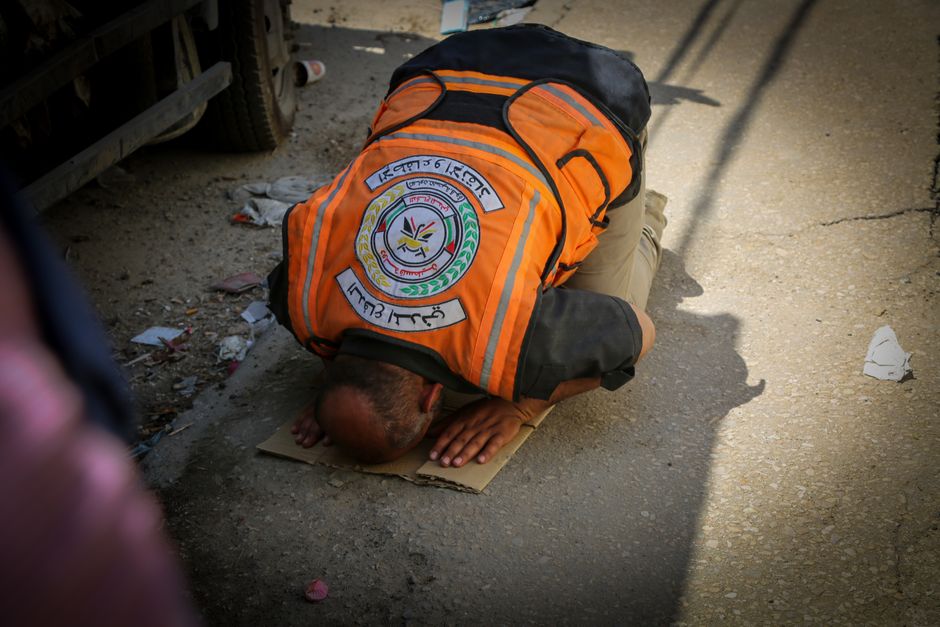
The latest Israeli strike on Gaza didn’t just add another headline to the endless war tally – it ripped a mother and her teenage daughter from a tiny Christian community that has survived three centuries of conflict. The brutal loss forces us to ask whether any civilian casualty can ever be justified when the world’s media machines are already numb to Gaza’s endless suffering.
Al Jazeera reports that an Israeli air raid hit a residential block in the Christian quarter of Gaza City, killing 62‑year‑old Mariam Khalil and her 14‑year‑old daughter, Lina. Neighbours describe the blast as a “sudden, deafening roar” that shattered windows and left a pile of charred belongings where a family once prayed.

The Israeli Conflict’s Human Toll on Gaza’s Christian Community
Christians make up roughly 1‑2 % of Gaza’s population, a fragile minority that clings to ancient churches and a dwindling diaspora. Historically, they have been caught between Hamas’s militant governance and Israel’s security campaigns, often pleading for visibility in a conflict that reduces them to footnotes. The death of Mariam and Lina underscores how Israeli operations, intended to target Hamas infrastructure, inevitably spill over into civilian neighborhoods where worshippers gather for Friday prayers.
The tragedy also exposes a deeper hypocrisy: Israel brands its strikes as precision warfare, yet the reality on the ground shows a pattern of indiscriminate damage that fuels anger across the Muslim world and, increasingly, among the few Christians who remain. International NGOs have repeatedly warned that Gaza’s densely packed residential zones make any aerial bombardment a high‑risk gamble for civilian lives. When a mother and daughter become the latest victims, the narrative that “only militants die” collapses under its own weight.
Moreover, the loss reverberates beyond Gaza’s borders. Christian charities in Europe and the United States, already struggling to raise funds for a war‑torn enclave, now face donors who question whether their money is funding a cause that cannot protect the most vulnerable. The Israeli government’s refusal to allow unhindered humanitarian corridors only deepens the sense that the civilian cost is an acceptable side‑effect of its security doctrine.
Why Monday’s Political and Market Reactions Matter
The timing of this atrocity could not be more consequential. Monday’s parliamentary sessions in Jerusalem will likely feature heated debates over the latest “escalation,” with opposition parties demanding a reassessment of the Israeli strategy that has just cost innocent lives. If the coalition government chooses to double down, it may cement its hard‑line reputation but risk alienating centrist voters who are weary of perpetual conflict.
In Washington, the White House is expected to issue a measured statement, walking a tightrope between supporting Israel’s right to self‑defence and acknowledging civilian casualties. Congressional aides are already drafting resolutions that could tie future military aid to stricter compliance with international humanitarian law. A failure to act might embolden the Israeli lobby, yet a harsh rebuke could provoke backlash from pro‑Israel constituencies and disrupt the delicate balance of US Middle‑East policy.
Financial markets, too, will watch closely. Defense contractors listed on the NYSE and Tel Aviv Stock Exchange often see short‑term spikes after major strikes, but a sustained outcry over civilian deaths can trigger investor concern about long‑term geopolitical risk. Hedge funds with exposure to Israeli tech firms may reassess their positions if the conflict drags on, fearing talent drain and supply‑chain interruptions. Conversely, energy traders could see oil prices inch higher if regional instability threatens shipping lanes in the Eastern Mediterranean.
The broader lesson is that every civilian tragedy in Gaza ripples into the corridors of power where decisions about aid, arms sales, and diplomatic pressure are made. The Israeli strike that killed Mariam and Lina is not an isolated incident; it is a catalyst that could reshape Monday’s political calculus and, by extension, the market sentiment that follows.
If the international community continues to treat Gaza’s Christian minority as an afterthought, the next headline will not be about a mother and daughter, but about a community that finally decides it can no longer endure the collateral damage of an endless war. The question for policymakers and investors alike is simple: will they finally learn that protecting civilians is not a moral luxury, but a strategic necessity?
Source: Google — Middle East