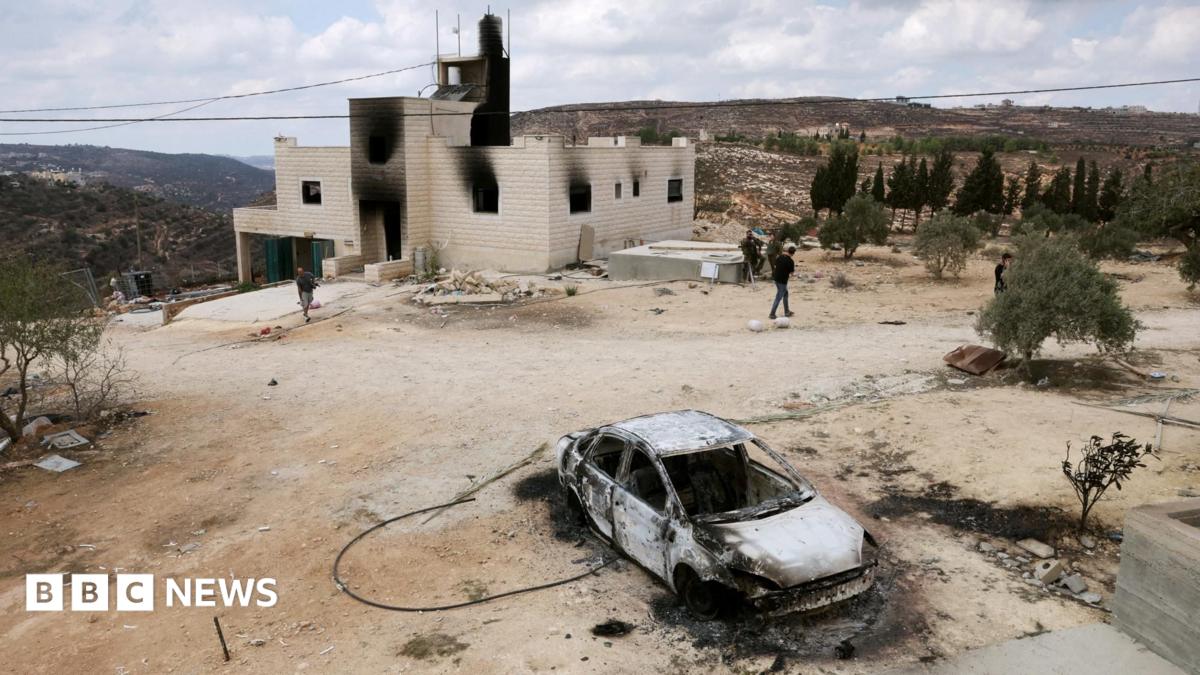
The latest flare‑up in the occupied West Bank proves that **Israeli settlers** are still willing to turn villages into battlefields, and the international community’s silence is becoming a tacit endorsement. When a Palestinian family’s two homes went up in flames and the same mob hurled stones at Israeli police, the scene was less a spontaneous outburst and more a rehearsed act of intimidation.
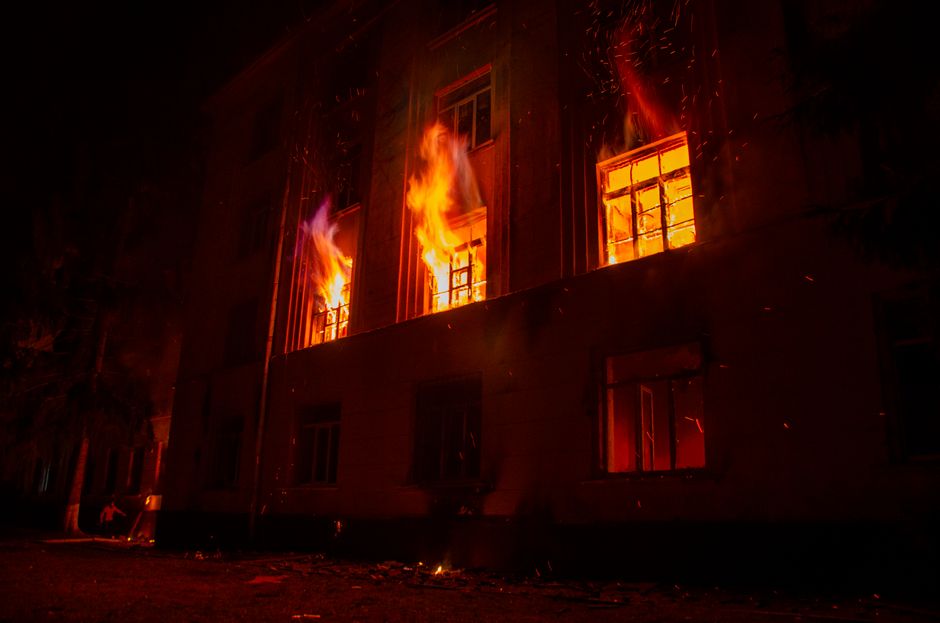
According to BBC Middle East, on 28 September a group of settlers torched the al‑Tubasi family’s houses in the village of Kafr al‑Aqab, setting fire to both structures within minutes. The same crowd then clashed with Israeli security forces, hurling rocks and shouting slogans while the police attempted to restore order.
Why the latest attack by Israeli settlers matters
The incident is not an isolated incident; it is a flashpoint that crystallises a pattern of settler‑driven violence that has been escalating over the past year. Since the Israeli government’s 2024 annexation‑related policy shift, settlement expansion has accelerated, emboldening extremist fringe groups who now operate with a near‑impunity that the military rarely curtails. The al‑Tubasi family’s ordeal illustrates how ordinary Palestinians are being used as pawns in a larger strategy to reshape demographics and pressure the Palestinian Authority into concessions it can no longer negotiate.
The timing is also critical. The attack came just days after the Israeli cabinet approved a new funding package for settlement infrastructure in the Hebron area, a move condemned by the United Nations and the European Union. By targeting a family that had already been displaced once, the **Israeli settlers** sent a clear message: any attempt to return will be met with fire. This tactic of “collective punishment” aims to erode the resolve of communities that might otherwise resist settlement expansion, effectively turning fear into a tool of land acquisition.
Moreover, the involvement of Israeli security forces in the same scene underscores a troubling ambiguity in policy. While the police intervened, they did not prevent the arson, and their presence was largely symbolic. As the BBC notes, the forces were themselves assaulted, which gave the settlers a pretext to claim they were acting in self‑defence. This narrative, however, masks the fact that the real target was a civilian family, not a legitimate security threat. The duality of protecting settlers while allowing them to perpetrate violence reveals a systemic bias that undermines the rule of law in the occupied territories.
The broader fallout: power, policy, and peril
The repercussions ripple far beyond Kafr al‑Aqab. For the Palestinian Authority, each new incident erodes its credibility among its own people, who see the state’s inability to protect its citizens as a sign of impotence. The PA’s limited jurisdiction in Area C, where most settlements sit, means it can only protest in diplomatic circles, a strategy that has yielded little tangible protection for families like the al‑Tubasis.
For Israel, the calculus is equally fraught. The government’s tacit support for settlement growth fuels internal political capital for right‑wing factions, but it also risks alienating moderate voters who fear a perpetual state of conflict. Internationally, the incident adds fresh ammunition to critics who accuse Israel of violating international law, potentially prompting renewed sanctions or diplomatic censure. Yet, the Israeli leadership continues to gamble that the strategic gains of expanding settlements outweigh the diplomatic costs.
On the ground, the **Israeli settlers** themselves are divided. While some radical elements relish the violence as a means to cement their claim, more pragmatic settlers worry about the long‑term sustainability of a region plagued by constant unrest. The internal tension could surface in future policy debates, especially if the economic burden of security and reconstruction becomes unsustainable.
The mainstream media, however, often reduces such events to a “spate of isolated attacks,” ignoring the systematic nature of settler aggression and the state’s complicity. This framing shields the broader public from confronting the reality that the settlement enterprise is not merely a fringe phenomenon but a state‑backed project that reshapes the very geography of the West Bank. By glossing over the pattern, the narrative fails to hold the **Israeli settlers** and the Israeli government accountable for the human cost of their expansionist agenda.
In the end, the al‑Tubasi family’s loss is a microcosm of a larger tragedy: a people’s right to return home being weaponised as a bargaining chip in a geopolitical chess game. As the smoke cleared from the charred walls, the question remains whether the Israeli legal system will ever treat settler‑instigated arson as a crime, or continue to view it as an inevitable side‑effect of a policy that prioritises land over lives.
If the international community does not move from rhetorical condemnation to concrete action—such as imposing targeted measures on settlement enterprises and demanding transparent investigations—incidents like this will become the new normal. The next time **Israeli settlers** set fire to a home, the world may simply watch, and in doing so, become complicit. The choice is stark: intervene and restore some semblance of justice, or allow the cycle of fear and displacement to grind on unchecked.
Source: BBC Middle East