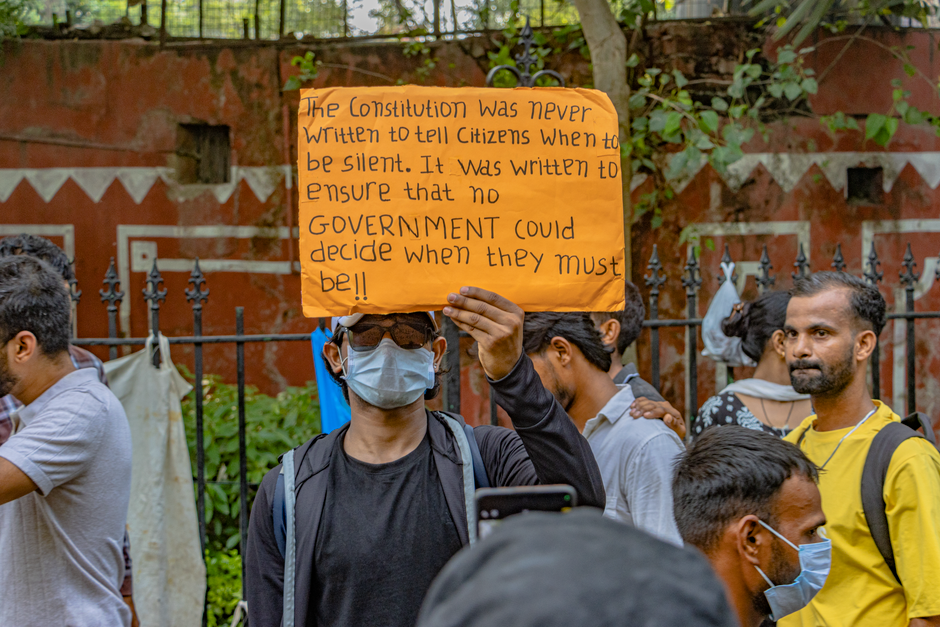
The question of what our universities are truly for – and what our **Students Are** being trained to be – has seldom felt more urgent.
In a recent *Psychology Today* column, Princeton University’s esteemed Robert P. George offered a stark, timely reminder of the fundamental purpose of higher education, pushing back against the prevailing winds that seek to reduce it to a mere conveyor belt for vocational skills. His piece, titled “Students Are Citizens, Not Just Consumers,” lands amidst escalating debates over tuition costs, graduate debt, and the perceived ‘value’ of a degree in an increasingly competitive global economy. It’s a context where the humanities, in particular, often find themselves on the defensive, their utility questioned by policymakers and parents alike.

Dr. George, a towering figure in conservative intellectual circles, used his platform to champion a vision of education rooted in civic duty and intellectual flourishing, rather than purely economic metrics. It’s a powerful intervention in a discourse frequently dominated by bottom lines and job placement statistics, challenging the very premise of how we often measure academic success.
What landed
Dr. George’s central thesis is both eloquent and deeply discomprising to the modern corporate university model: students are not simply “consumers” of educational services, nor are universities mere “providers” of job training. Instead, he argued, echoing the foundational aspirations of figures like John Adams, that the true aim of education is to cultivate “citizens” – individuals equipped for moral reasoning, critical thought, civic engagement, and a life of intellectual curiosity and service. He explicitly invokes Adams’s hope for future generations to embrace arts and sciences, a vision that feels increasingly imperiled today.

He adeptly dissects the fallacy of viewing education solely as an economic transaction, noting that while a shrinking labor market does understandably drive vocational anxieties, it should not dictate the entirety of higher learning’s mission. To do so, he suggests, is to fundamentally misunderstand the long-term societal and individual benefits of a truly liberal education. He champions the humanities not as a luxury, but as essential for navigating the complexities of human existence and fostering a robust democracy, emphasizing that these disciplines prepare individuals for *life*, not just a job. This is a point too often lost in an era obsessed with immediate return on investment.
What doesn’t add up
While Dr. George’s impassioned plea for the humanities strikes a chord, it also underscores a profound disconnect between the aspirational rhetoric of higher education and its often-grubby operational realities. Universities frequently tout their commitment to critical thinking and well-rounded individuals in their mission statements, yet simultaneously, their marketing departments and funding priorities lean heavily into metrics of graduate salaries and STEM program enrollments. This creates a peculiar internal contradiction: institutions ostensibly dedicated to fostering ‘citizens’ are often incentivized to treat them as ‘consumers’ of a product that promises immediate economic return.

The very “shrinking labor market” Dr. George acknowledges as a driver of vocational focus is also a powerful counter-argument to the perceived luxury of a purely liberal arts degree, creating a difficult tightrope walk for institutions trying to balance ideals with financial viability. One might ask, for instance, how precisely a university, facing dwindling state appropriations and rising calls for accountability, can pivot back to a “citizen-focused” model without appearing tone-deaf to the immediate economic anxieties of its student body. The article, while forceful in its diagnosis, leaves the prescription for this systemic shift largely to inference, perhaps assuming the sheer power of its truth will be enough to sway policy. It’s a compelling argument, certainly, but one that perhaps glosses over the institutional inertia and economic pressures that have driven higher education away from the very ideals it still ostensibly champions.
Dr. George’s intervention serves as a vital course correction in a debate that too often devolves into purely economic terms. Come Monday morning, the challenge for educators, policymakers, and indeed, for students and their families, is to reconcile the undeniable pressures of the job market with the enduring imperative to cultivate minds that can do more than just earn a living – minds that can truly live, and lead, as informed citizens.
Source: OnTheRecord