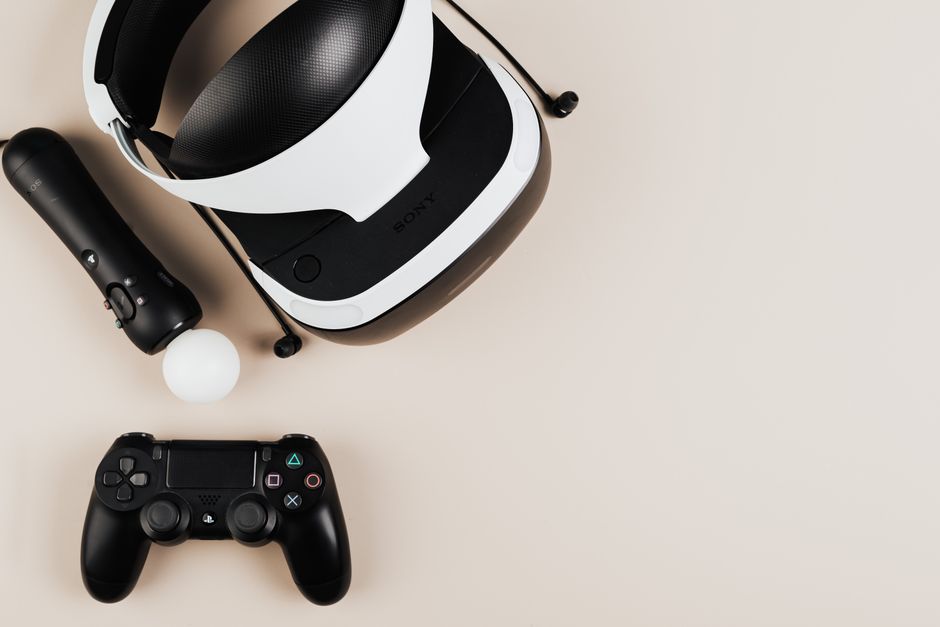
We’re told the future of competition is digital, played out on colossal screens while millions watch. But as the BBC’s ‘Tech Now’ segment spotlights the Esports World Cup and the evergreen appeal of building a gaming PC, one has to wonder: are we celebrating genuine innovation, or just the same old digital bread and circuses?
According to BBC Technology, their latest ‘Tech Now’ broadcast offered viewers a glimpse into the ongoing Esports World Cup held in Paris, alongside practical advice on how to assemble a custom gaming PC. This dual focus highlights two major, yet distinct, currents in the powerful river of modern technology.
The Enduring Allure of Personalized Tech
The rise of artificial intelligence promises to automate, simplify, and even *think* for us, pushing towards a future where human input might seem increasingly redundant. Yet, the stubborn act of physically building a personal computer — the careful selection of components, the intricate assembly, the inevitable troubleshooting — stands as a curious counter-narrative to this trend. It’s a hands-on defiance in an increasingly hands-off, automated world.
This persistent desire for DIY isn’t just about saving a few quid; it’s about mastery, understanding, and a deeply personal connection to the machinery that underpins our digital lives. In an era where black-box algorithms dictate more and more of our experience, the transparent, modular nature of a custom-built PC offers a potent sense of control. It’s a tangible link to the raw power we harness daily, a stark contrast to the opaque, proprietary systems that dominate much of the modern tech landscape.
Meanwhile, the Esports World Cup, a dazzling spectacle of digital prowess and lightning-fast reflexes, represents the *other* side of the coin: the professionalization and commodification of digital interaction. It’s a powerful testament to how deeply virtual worlds have permeated our reality, transforming what was once leisure into high-stakes careers and global entertainment. This convergence of intimate, personalized hardware with expansive, professional digital competition highlights a fascinating tension within the current **Tech Now** paradigm. One encourages deep, personal engagement with technology, the other emphasizes performance, viewership, and spectacle on a grand scale.
The Illusion of Innovation in Tech Now
Let’s be clear: while Esports is undeniably popular and building a PC remains a rewarding pursuit, the mainstream narrative often conflates iterative refinement with genuine revolution. We are rarely witnessing paradigm-shifting advancements in gaming hardware or fundamental changes in competitive play as frequently or profoundly as the pervasive hype suggests. Instead, much of what we celebrate as “innovation” is largely incremental. We get faster chips, slightly better graphics, marginally higher refresh rates. These improvements are primarily designed to make existing experiences *more* immersive, *more* fluid – not necessarily *different* or genuinely transformative.
This constant churn of incremental upgrades serves a powerful economic purpose. It encourages rapid consumption, making last year’s cutting-edge machine feel obsolete and perpetuating a cycle beneficial primarily to manufacturers and platform holders. The real intellectual heavy lifting, the kind that will truly redefine our interaction with machines and society, is happening elsewhere. It’s in the foundational AI research pushing cognitive boundaries, the quantum computing breakthroughs promising entirely new computational paradigms, or the novel human-computer interfaces that don’t rely on ever-more-powerful, energy-hungry GPUs.
Moreover, the intense focus on competitive gaming, while undeniably entertaining and skillful, often glosses over the deeper implications of such profound digital immersion. Are we truly fostering creativity, critical thinking, or unique problem-solving capabilities on a broad societal scale? Or are we, perhaps, perfecting a new, highly lucrative form of digital escapism that can be deeply profitable for a select few at the top of the pyramid? It’s a valid counter-argument to suggest these advancements democratize access to high-end computing and provide legitimate pathways for new forms of economic opportunity and community engagement. Yet, one must critically ask: opportunity for whom, and at what potential cost to broader, more impactful innovation? The shiny spectacle of **Tech Now** in gaming can often distract from the more challenging, less glamorous work of truly advancing human capability.
So, as you watch the next Esports championship or ponder your own next GPU upgrade, ask yourself: are we building towards a genuinely new future, or just endlessly perfecting the present? Because the *real* revolution, the one that truly matters for humanity’s trajectory, might be happening far from the bright lights of the arena, quietly reshaping our world in ways we’re too distracted to notice.
Source: BBC Technology