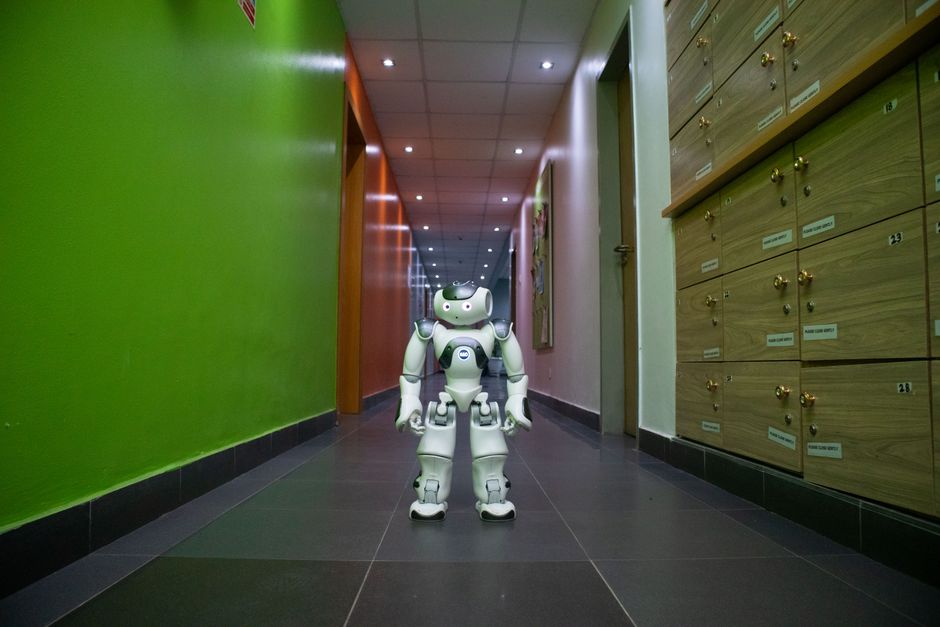
The future of African infrastructure got a rather pointed, albeit technically dense, update this week, as Huawei continued its push to shape the continent’s embrace of **artificial intelligence**.
At the Huawei Network Summit 2026 in South Africa, the Chinese tech giant wasn’t just showcasing gadgets; it was making a strategic declaration. This wasn’t an interview in the conventional sense, no probing questions for a head of state, but rather a carefully orchestrated presentation by a corporate entity that arguably wields geopolitical influence akin to one. The context is hardly subtle: a global tech race, persistent scrutiny from Western governments, and a continent ripe for digital transformation – or, depending on your perspective, digital entanglement.

Huawei, long accustomed to operating under a spotlight that swings between admiration for its innovation and suspicion regarding its origins, used this platform to unveil its ‘upgraded Xinghe AI Campus Solution’ for the Southern Africa region. It’s a move designed to cement its position, not just as a vendor, but as a foundational partner in the digital aspirations of an entire subcontinent. The emphasis, we are told by *OnTheRecord*, was on ‘secure’ solutions, a word choice that carries considerable weight given ongoing international debates.
What landed
What landed, with all the carefully polished sheen of a keynote address, was a bold statement of intent. Huawei positioned itself not merely as a provider of technology, but as an indispensable architect of the continent’s digital future, particularly in the burgeoning field of **artificial intelligence**. The ‘Xinghe AI Campus Solution,’ while sounding like something out of a science fiction novel, is Huawei’s tangible offering to integrate AI into the very fabric of institutional operations – think universities, business parks, and potentially even government facilities. The message was clear: Huawei is ready, willing, and able to build the smart infrastructure of tomorrow, today, in Southern Africa.
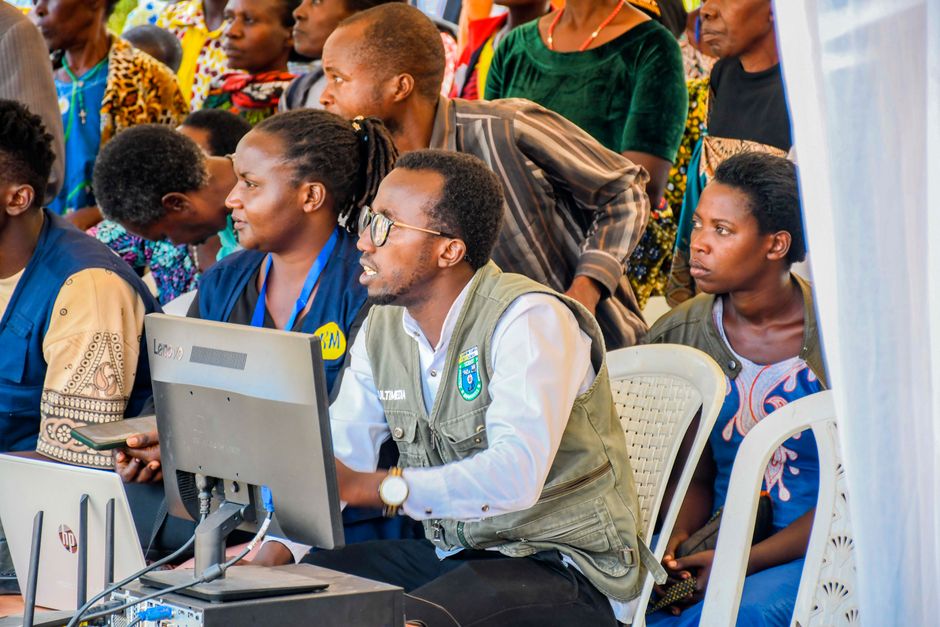
The summit itself served as a powerful, if unspoken, affirmation of Huawei’s sustained commitment to the region, despite the background noise of geopolitical tensions. By focusing on an ‘upgraded’ solution, the company signals continuous investment and adaptation, promising state-of-the-art capabilities tailored for local needs. It’s a pragmatic play: demonstrate capability, offer solutions, and embed technology so deeply that it becomes part of the indispensable infrastructure. One could almost hear the implicit assurance: ‘We’re here to stay, and we’re bringing the future with us.’
What doesn’t add up
Now, for what doesn’t quite add up, or rather, what’s conspicuously *unsaid* in such well-manicured unveilings. The term ‘secure,’ when deployed by a company like Huawei in the current geopolitical climate, is less a descriptive adjective and more a rhetorical tightrope walk. One struggles to find the probing follow-up questions about the specifics of that security, the independent audits, or the data sovereignty assurances that would accompany a truly transparent dialogue. This wasn’t an interview; it was a carefully managed information cascade, where the inconvenient questions about backdoors, state influence, or potential vulnerabilities were politely left outside the summit hall.

Indeed, the entire presentation felt less like an engagement and more like a pronouncement. While the company touts ‘upgraded’ solutions, the details provided publicly are often broad strokes. What, precisely, does ‘upgraded’ entail beyond a marketing refresh? Are these upgrades a direct response to specific security concerns raised elsewhere, or simply the natural evolution of product cycles? The audience, by design, received the ‘what,’ but the ‘how’ and the ‘why,’ particularly regarding the implications for national data security and strategic autonomy in the age of **artificial intelligence**, remained largely in the realm of corporate mystique. It’s a familiar dance: promise innovation, deliver product, sidestep scrutiny. The contradiction isn’t in what Huawei *said*, but in the stark difference between the public narrative of ‘secure solutions’ and the persistent, unaddressed concerns that dog the company’s global expansion. One might even call it a strategic omission, framed rather artfully as a focus on innovation.
So, come Monday morning, what changes? For Southern Africa, Huawei’s deepening footprint in **artificial intelligence** infrastructure means a continued acceleration towards a digitally integrated future, powered by a Chinese tech behemoth. For governments and businesses across the region, it’s a stark reminder that while the West frets over the origins of technology, the East is busy building the foundations of tomorrow. The ‘secure’ part, it seems, is left largely to interpretation and, perhaps, a healthy dose of hopeful thinking. The future, it seems, will be smart, connected, and undeniably complex.
Source: OnTheRecord