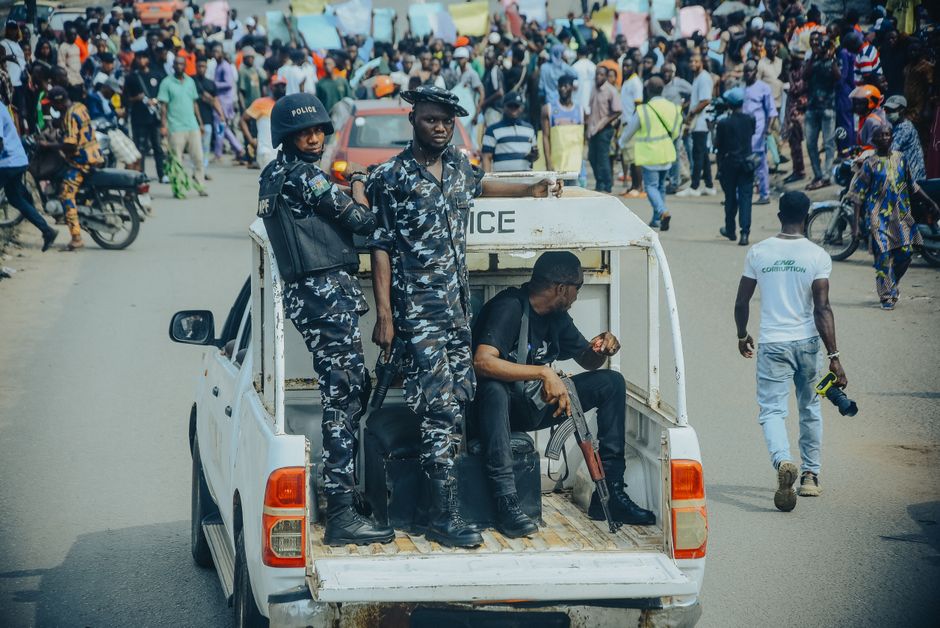
The latest intervention from Senator Adams Oshiomhole, urging security operatives to shoot armed criminals on sight, has thrown a match into the already volatile debate surrounding Nigeria’s pervasive insecurity.
Speaking in remarks reported by *Punchng.com*, the former Edo State Governor and current senator for Edo North, Adams Oshiomhole, weighed in heavily on the nation’s struggle with banditry and kidnapping. His comments arrive amidst a backdrop of escalating violence and public frustration, placing immense pressure on President Bola Tinubu’s administration to deliver on its promise of a safer Nigeria. Oshiomhole’s proposition, stark and uncompromising, immediately drew a line in the sand, particularly with its direct challenge to the standing operational directives of the Inspector General of Police.

What landed
Senator Oshiomhole certainly didn’t mince words, delivering a clear, if controversial, prescription for tackling the spiraling insecurity. He insisted that security operatives should “shoot armed criminals on sight,” a statement that leaves little room for ambiguity regarding his preferred approach. This isn’t a nuanced policy paper, but a visceral call to action, reflecting a deep-seated exasperation shared by many citizens. It’s a bold articulation from a sitting senator, one that bypasses much of the bureaucratic nicety usually associated with such high-stakes policy discussions.
Crucially, Oshiomhole didn’t stop at offering a solution; he explicitly “fault[ed] the IGP’s stance” on the matter, according to *Punchng.com*. This direct challenge to the nation’s top police officer is a significant development, exposing a public rift in the strategic thinking within the security apparatus, or at least among those who comment on it. For all the controversy it stirs, one must acknowledge the Senator’s willingness to stake out a definitive, if extreme, position on an issue that demands urgent attention. He’s not just complaining; he’s proposing, however bluntly, a drastic shift in operational policy. His urging of President Tinubu to tackle insecurity adds another layer, positioning him as a vocal advocate for more decisive, albeit harder-edged, action from the Commander-in-Chief.

What doesn’t add up
While Oshiomhole’s exasperation is understandable, the simplicity of his proposed solution raises more questions than it answers, and directly contradicts established principles of law enforcement. To advocate for a “shoot on sight” policy is to implicitly endorse extrajudicial killings, a perilous path that undermines the very rule of law it purports to uphold. The Inspector General of Police, one presumes, operates within a framework of legal statutes and human rights considerations; Oshiomhole’s dismissal of this professional stance suggests either a profound disagreement on fundamental principles or a performative embrace of populism over practicality.
The stark contrast between the Senator’s fiery pronouncement and the nuanced reality of security operations is striking. Where does “shoot on sight” leave due process, the presumption of innocence, or the crucial need for intelligence gathering? Such a directive, if implemented, risks turning law enforcement into arbitrary executioners, potentially leading to the deaths of innocent citizens caught in the crossfire or misidentified. It’s easy, from the comfort of a senatorial chamber, to call for such drastic measures. However, the operational reality for an officer on the ground, faced with a complex, often ambiguous situation, is far less straightforward. This isn’t about empowering security operatives; it’s about potentially unbinding them from accountability and pushing them into a legal quagmire. The focus on summary execution also conveniently sidesteps the deeper, systemic issues fueling insecurity – poverty, unemployment, governance failures, and the proliferation of arms – which a “shoot on sight” order does absolutely nothing to address.

Monday morning, the nation wakes up to an even more fractured debate on security. Senator Oshiomhole’s incendiary remarks have certainly injected a dose of urgency, but also a significant amount of dangerous rhetoric, into the public discourse. The immediate fallout will likely be heightened tension within the security forces and a renewed public clamor for ‘action,’ whatever the cost. The onus now falls on the Tinubu administration to either embrace this hardline stance and face the inevitable legal and ethical challenges, or to reassert a commitment to rule of law, even as the drums of summary justice beat louder.
Source: OnTheRecord