
The electric vehicle giant BYD is setting its sights on a market long considered impenetrable, making its move into **Japan** a critical test of global automotive ambitions.
The interview, reported by Japan Wire via Kyodo News, positions BYD as an aspiring disruptor, intent on penetrating Japan’s notoriously insular minivehicle segment with an ultracompact EV. This isn’t merely about selling cars; it’s about a foreign Goliath challenging the deeply entrenched Davids of Japan’s automotive heartland, a segment as unique and culturally specific as sushi. The stage is set for a fascinating clash of titans, or perhaps, a foreign challenger against a very particular local flavor.
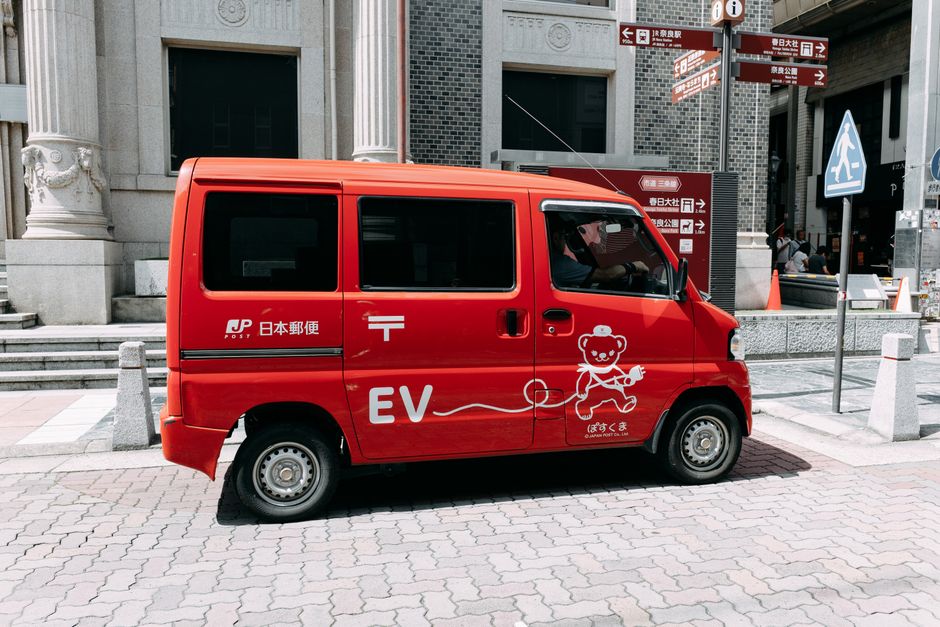
BYD, the Chinese powerhouse that has rapidly ascended to become a global EV leader, has made no secret of its aggressive expansionist strategy. From Europe to Southeast Asia, its battery-electric vehicles are rolling off showrooms, often undercutting established players on price while delivering competitive technology. Now, their gaze shifts to Japan’s “kei” car market – a segment defined by strict size and engine displacement limits, enjoying preferential tax and insurance treatment, and fiercely dominated by domestic manufacturers like Suzuki and Daihatsu. This isn’t just a niche; it’s a cultural institution, a testament to Japanese ingenuity in maximizing utility within minimal footprint.
What landed
What “landed” from this interview, even in its framing, is BYD’s audacity and strategic clarity. Their stated intent to target the minivehicle market is, on one hand, a stroke of genius. It acknowledges that mainstream passenger car segments in Japan are already fiercely competitive, and EV adoption, while growing, is still slower than in other developed nations. By focusing on the ultracompact EV, BYD is attempting to sidestep direct competition with Toyota or Nissan’s larger offerings and instead carve out a new space within an existing, highly popular segment.

The logic is sound: if Japan is to truly embrace EVs, ubiquitous, affordable, and practical models are essential for its dense urban environments and aging population. Minivehicles fit this bill perfectly. BYD, with its vertically integrated manufacturing and cost-effective battery technology, is theoretically well-positioned to deliver an ultracompact EV that could appeal to the price-sensitive and practicality-driven “kei” car buyer. The move signals a recognition that a one-size-fits-all global strategy won’t work in Japan; a tailored approach, even if seemingly niche, might be the only viable entry point. It’s an encouraging sign of a global player doing its homework, at least on the surface.
What doesn’t add up
However, the declared ambition of “looking to crack” Japan’s minivehicle market clashes spectacularly with the historical realities and profound intricacies of the Japanese automotive landscape. Foreign players, for decades, have found Japan a graveyard for their grand plans, particularly in segments where domestic manufacturers reign supreme. This isn’t merely about product; it’s about deeply ingrained consumer loyalty, a preference for local brands, and an almost impenetrable distribution and service network that rewards incumbency.

BYD’s prior success has largely stemmed from its ability to offer compelling value and advanced technology in more conventional vehicle classes. But the “kei” car market isn’t conventional. It’s a highly regulated, culturally specific ecosystem where vehicles are designed with an almost surgical precision to meet local demands – from tiny turning radii for narrow streets to cleverly maximized interior space. The question that doesn’t add up is how BYD, a company known for its global scale and sometimes less-than-tailored designs, plans to replicate the decades of local R&D and cultural understanding that Suzuki or Daihatsu pour into their offerings. Does BYD truly grasp the nuances of Japan’s unique safety standards, the specific driving habits, or the meticulous attention to detail that Japanese consumers expect, even from an “ultracompact”?
Furthermore, the “contradiction” extends to the very idea of a foreign brand breaking into this segment. Japan’s “Galapagos syndrome” isn’t a myth; it’s a deeply protective and selective market. Previous attempts by global giants to make headway in Japan, even with robust distribution and marketing, have often faltered, especially in segments so closely tied to everyday life. The interview’s framing suggests a confidence that might be bordering on naivety given the formidable obstacles. Will BYD’s ultracompact EV truly offer a value proposition so overwhelming that it can overcome generations of brand loyalty and the inherent comfort Japanese consumers find in their domestic marques? Or is this, perhaps, more of a strategic PR play, signaling intent to investors and competitors, rather than an immediate, fully fleshed-out battle plan for market domination? The interview, by its very nature, might be a rhetorical declaration designed to test the waters, rather than a blueprint for guaranteed success.
Come Monday morning, the auto industry will be watching closely. Will BYD’s ultracompact EV be the Trojan horse that finally allows a foreign player to disrupt Japan’s cherished minivehicle segment, or will it join the long list of ambitious foreign ventures that underestimated the unique, unyielding nature of the Japanese market? The stakes are high, not just for BYD, but for the future of EV adoption and market globalization itself.
Source: Google — Leader interviews