
The recent diplomatic foray into Saudi Arabia by Prime Minister Mark Carney wasn’t just a missed opportunity; for some, it represented a **Monumental** failure in moral leadership, echoing a familiar refrain of principled declarations meeting pragmatic silence.
Prime Minister Carney’s recent visit to Saudi Arabia, ostensibly aimed at strengthening bilateral ties and exploring new avenues for collaboration, was shadowed by an unspoken, yet potent, expectation. For many observers, particularly human rights advocates and the families of those unjustly imprisoned, the trip represented a critical juncture. It was an opportunity for Canada, a nation often vocal about its commitment to human rights on the global stage, to put its principles into practice where it arguably mattered most. The context is stark: a Canadian Prime Minister engaging with a regime under intense scrutiny for its human rights record, with the widely publicized case of jailed dissident Raif Badawi serving as a particularly poignant symbol.

The visit concluded, as these things often do, with polite handshakes and official communiqués. Yet, the real measure of its impact, or lack thereof, quickly emerged from an unexpected, but entirely predictable, quarter: Tirad Badawi, the son of the imprisoned blogger. His comments, delivered with a directness that cut through diplomatic niceties, provided a stark assessment of the visit’s perceived moral deficit.
What landed
What landed from this high-stakes diplomatic exchange wasn’t a bold new policy or a definitive statement from the Canadian delegation, but rather the resounding silence that followed. Tirad Badawi’s candid assessment, as reported by the National Post, spoke volumes. “I was very disappointed,” he stated, echoing a sentiment likely shared by many who hoped for a more robust defense of universal freedoms. It’s a phrase that, while understated, carries the weight of years of separation and injustice.
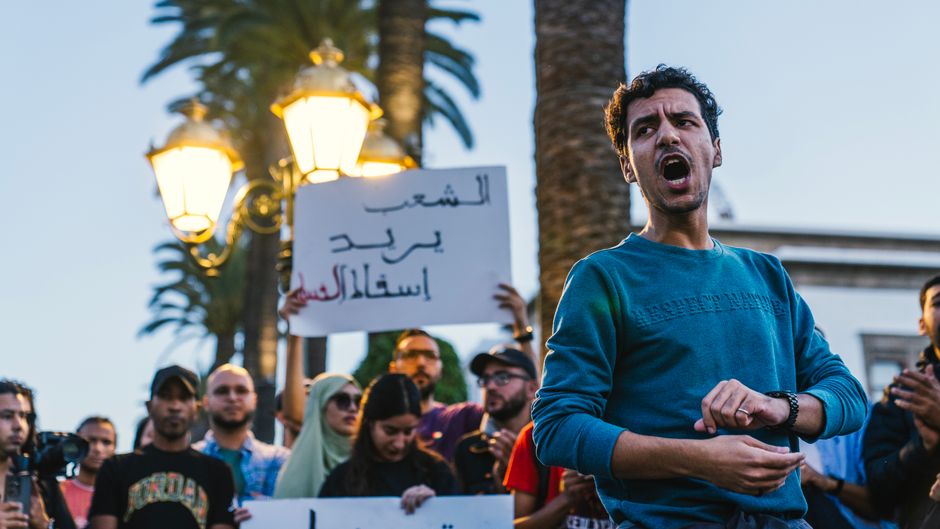
His further observation, that “Canadians want their prime minister to raise the issue of human rights even more,” is perhaps the most revealing insight into the public consciousness. This isn’t merely a personal plea; it’s an articulation of what Badawi perceives as a widespread public expectation, a moral imperative that he believes his nation’s leader failed to adequately uphold. It suggests a chasm between the pragmatic calculus of statecraft and the ethical demands of the populace. What we received was not a clear articulation of Canada’s stance on an egregious human rights case, but rather a tacit acknowledgement that, in the grand scheme of international relations, some issues remain unspoken, relegated to the realm of ‘quiet diplomacy’ – or worse, outright omission.
This disappointment from a directly affected family member, amplified by the assertion of broader public sentiment, serves as a powerful, if indirect, indictment. It reveals that the diplomatic dance, whatever its economic or strategic benefits, left a critical moral vacuum. The “landing” here is not an achievement of policy, but a confirmation of a perceived dereliction of duty, making it clear that when it comes to human rights, silence can often speak louder than any carefully worded communiqué. It underscores the notion that for many, diplomatic success is measured not just in trade deals, but in the unwavering defense of fundamental values.
What doesn’t add up
The chasm between Tirad Badawi’s clear expectation and the apparent reality of Prime Minister Carney’s visit raises uncomfortable questions about the integrity of Canada’s stated foreign policy. For years, successive Canadian governments have proudly articulated a commitment to human rights as a cornerstone of their international engagement. Yet, when presented with a high-profile case involving the unjust imprisonment of a Saudi blogger, a situation that directly implicates freedom of speech and basic human dignity, the response appears to have been underwhelming, at best.
What doesn’t quite add up is the persistent diplomatic tightrope act where economic expediency consistently seems to outweigh moral urgency. While the allure of trade agreements and strategic partnerships with resource-rich nations like Saudi Arabia is undeniable, the implicit message sent by a perceived silence on human rights issues is deeply troubling. Is Canada’s commitment to human rights a firm principle, or merely a convenient talking point to be deployed when geopolitically advantageous? The “even more” in Tirad Badawi’s statement implies a historical pattern, suggesting that Canadians have long felt their leaders could, and should, do more. This isn’t an isolated incident, but rather another data point in a recurring narrative where the pursuit of ‘realpolitik’ sidelines the ‘idealpolitik.’
There’s an unsettling tension between the public’s desire for moral clarity from its leaders and the opaque realities of international diplomacy. The official line, if one were to speculate, would likely revolve around the efficacy of ‘quiet diplomacy’ — the idea that direct, private engagement is more effective than public condemnation. Yet, when such ‘quiet’ approaches consistently fail to yield demonstrable results, particularly in high-profile cases like Raif Badawi’s, and are met with such public disappointment, one has to question their actual utility versus their function as a convenient shield from public scrutiny. The contradiction lies in advocating for human rights globally while, at critical junctures, appearing to deprioritize them in the face of economic or strategic considerations. It’s a classic case of talking the talk, but, in the eyes of the Badawi family and a segment of the Canadian public, failing to walk the walk.
Monday morning, the headlines may have faded, but the underlying tension between Canada’s professed values and its diplomatic actions will persist. For the Badawi family, the struggle for Raif’s freedom continues, perhaps now with a renewed sense of disillusionment about the capacity of international pressure to effect change. For Prime Minister Carney, the visit leaves a lingering question mark over the true cost of ‘pragmatism’ in foreign policy, and whether the perceived economic gains justify the potential erosion of moral authority. The public expectation articulated by Tirad Badawi serves as a potent reminder: in an interconnected world, leaders are increasingly held accountable not just for what they say, but for what they conspicuously leave unsaid. The stakes are monumental, not just for the individuals directly affected, but for the very fabric of a nation’s global identity.
Source: OnTheRecord