
The latest presidential foray into digital imagery highlights a growing disconnect between perception and reality, particularly when it comes to **artificial intelligence**.
On July 3rd, as the U.S. geared up for Independence Day celebrations, former President Donald Trump took to Truth Social, his preferred platform, to announce what he presented as a patriotic boon for American consumers. His post highlighted a network of “Freedom Fuel” gas stations, promising significant discounts on gasoline. The message was clear: a tangible benefit for everyday Americans, framed within his familiar “America First” economic rhetoric.
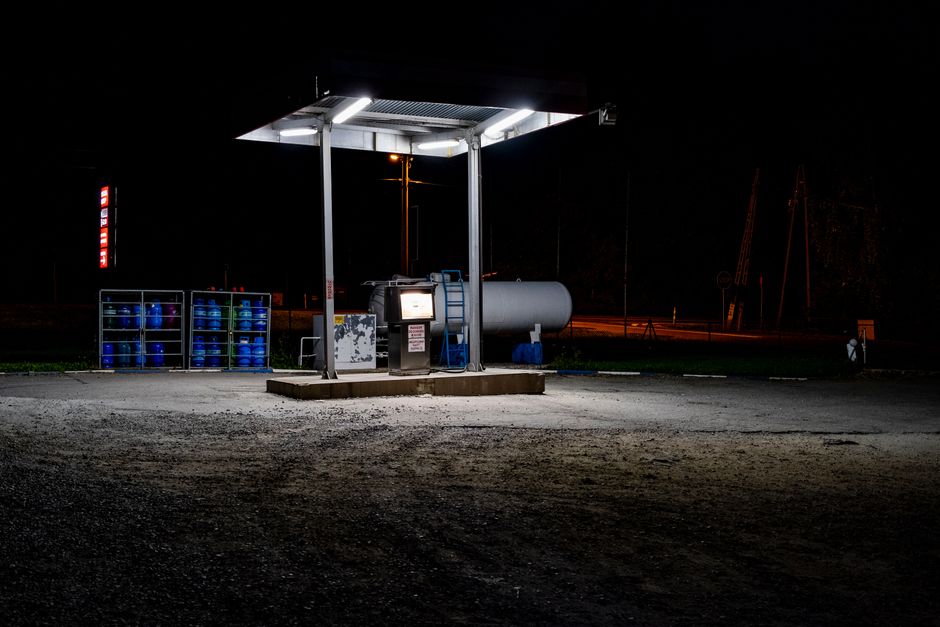
The post was accompanied by a vivid, almost too-perfect image of a gas station, emblazoned with the “Freedom Fuel” logo, seemingly bustling with activity and offering impossibly low prices. It was a classic Trumpian move — a grand declaration, a visual spectacle, and a direct appeal to the wallets of his base, all wrapped in a nationalistic bow just before a major holiday.
What landed
Amidst the usual political fanfare and the predictable surge of commentary, one crucial detail landed with undeniable force: the core claim of discounts wasn’t entirely fabricated. Indeed, a genuine network of gas stations, operating under the name “Freedom Fuel Network” across approximately 25 locations in the Philadelphia area, did offer substantial discounts on July 3rd. This wasn’t merely a phantom promise; real Americans did, for a brief window, benefit from cheaper gas, just as the former President’s post suggested.
This reality underscores the enduring appeal of such announcements. For many, the tangible outcome – lower gas prices, even for a day – trumps the subtleties of presentation. It delivered on a populist promise, reinforcing a narrative that his policies, or even just his endorsements, directly translate into economic relief for ordinary citizens. In an era of persistent inflation and high energy costs, any visible win on the price front resonates powerfully.

What doesn’t add up
Here’s where the narrative veers sharply off the road, even as the pump prices were dipping. The image Trump shared to illustrate his “Freedom Fuel” initiative was, by most expert accounts, a product of artificial intelligence. It was not a photograph of a real gas station, but a digitally conjured scene, carefully curated to present an idealized vision of American abundance and accessible fuel. This isn’t just a minor visual flourish; it’s a significant contradiction that speaks volumes about the current state of political communication.
Why deploy a generated image when actual “Freedom Fuel” stations exist and were, in fact, delivering on the promised discounts? The irony is palpable: a movement ostensibly about authenticity and American grit resorting to synthetic imagery. One could speculate on motives: perhaps a desire for a perfectly composed, unblemished visual that real-world imperfections might spoil. Or perhaps it’s an unsettling sign of how readily the line between reality and hyper-reality is being blurred in the digital age, even for the most mundane of subjects.
This isn’t an isolated incident; political figures across the spectrum have increasingly dabbled in AI-generated content, often with little or no disclosure. It raises a skeptical eyebrow: if a simple gas station requires digital fabrication, what other aspects of a message are being similarly manufactured? It fosters an environment where the audience is implicitly trained to question the very authenticity of what they see, even when the underlying factual claim (like the discounts) holds true. The truth, in this instance, became collateral damage in the pursuit of a flawless visual narrative. The message was true, but the messenger’s chosen method of delivery introduced an unnecessary layer of artifice, inviting doubt where none should have been necessary.
The larger concern isn’t just about this one image, but the precedent it sets. When a public figure, particularly one with such a massive platform, routinely employs artificial intelligence without distinction, it erodes the collective capacity to discern truth from sophisticated fabrication. It normalizes a kind of digital sleight of hand, where the visual “proof” is no longer proof at all, but rather a carefully constructed illusion designed to amplify a specific message, regardless of its groundedness in reality.
Come Monday morning, the challenge of discerning what’s real from what’s merely plausible will only intensify. This episode, where a real discount was promoted with a fake image, serves as a stark reminder: in the age of artificial intelligence, seeing may no longer be believing. The onus is increasingly on the consumer of information to be perpetually skeptical, to look beyond the slick visuals, and to question the genesis of every image presented as fact.
Source: OnTheRecord