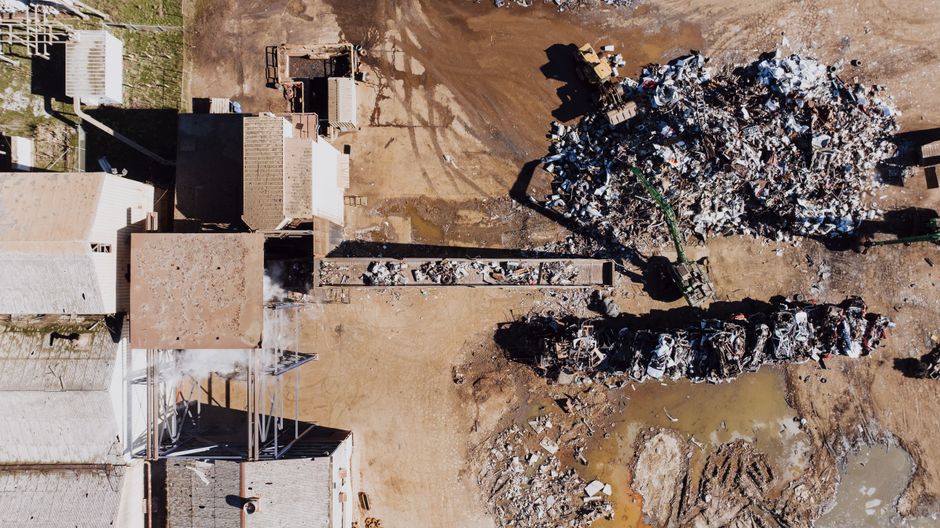
The solar panel recycling industry just got a serious boost, and **Comstock Metals** is staking its claim at the forefront.
Comstock Inc. and its subsidiary Comstock Metals LLC, fresh off a GlobeNewswire announcement, have detailed a significant step in their mission: the integration and automation of the initial stages of their industrial-scale solar panel recycling operation in Silver Springs, Nevada. This isn’t just about moving parts; it’s about positioning itself as a leader in tackling the growing challenge of end-of-life solar waste, aiming for nothing less than a “zero-landfill” circular economy.

The timing is critical. As the world accelerates its transition to renewable energy, the sheer volume of photovoltaic (PV) modules reaching their end-of-life is set to skyrocket. Efficient, sustainable recycling isn’t merely a nice-to-have; it’s an economic and environmental imperative, transforming potential waste into valuable critical minerals and metals. Comstock Metals’ latest move signals a serious commitment to scaling up to meet this looming demand.
What landed
Comstock Metals’ announcement hit several high notes, signaling a potent combination of ambition and practical application. The headline claim, establishing itself as a “leader in the responsible, zero-landfill recycling” and operating the “first certified commercial-scale operation” for PV modules in the U.S., is certainly attention-grabbing. It suggests a pioneering spirit in a nascent but crucial industry.

The commitment to an initial capacity of 10,000 tons per year for PV modules speaks to a tangible scale, moving beyond pilot projects to genuine industrial output. Integrating proprietary thermal processing and materials separation systems, alongside the automation of receiving, sorting, and feedstock preparation, suggests a sophisticated approach designed for efficiency. The company explicitly states this automation aims for “industry-leading efficiencies and purity levels,” which is precisely what the market needs to make recycling economically viable. For an industry that often struggles with cost-effectiveness, this focus on streamlining operations is a welcome development. The emphasis on extracting “critical minerals and metals” also aligns perfectly with national security and supply chain resilience objectives, shifting the narrative from waste management to resource recovery.
What doesn’t add up
While the announcement is decidedly encouraging, a few elements leave the discerning observer wanting more detail. The “zero-landfill” claim, while laudable and aspirational, is a high bar and invites immediate scrutiny. How precisely is this certified, and what are the specific metrics and audit processes involved? Companies often define “zero-landfill” in varying ways, and clarity here would bolster confidence in such a significant environmental promise.

Similarly, blanket terms like “industry-scale production” and “industry-leading efficiencies” are strong marketing pronouncements, yet they lack specific comparative data or benchmarks. What are the current industry standards they are surpassing? Without these figures, the claims, while positive, remain somewhat abstract. A little more transparency on the actual purity levels achieved or the energy footprint of these new automated processes would provide a more robust picture of their “significant environmental and economic benefits.”
Furthermore, the release, by its nature, is a celebration of success. It offers little insight into the challenges ahead, such as securing a consistent supply of end-of-life panels at scale, navigating fluctuating commodity prices for recycled materials, or the competitive landscape. While not strictly an interview, a touch of realism about the hurdles, even in a positive announcement, often lends more credibility to the overall vision. The “critical step towards a circular economy” is an admirable goal, but the journey is rarely without its twists and turns, and the press release, understandably, paints a rather straight path.
Monday morning, the integration and automation at Comstock Metals could mean a tangible acceleration for solar panel recycling in the U.S., potentially setting a precedent for efficiency and resource recovery. For investors and environmental advocates alike, it’s a promising indicator that the circular economy for renewables is not just a dream, but an increasingly automated reality. The challenge now is to ensure the granular details live up to the grand promises.
Source: OnTheRecord