The moment Saudi airports were peppered with Houthi missiles, the headlines screamed “new front in the Yemen war,” but the real story is how Damascus quietly saw an opening to flex its waning diplomatic muscle. The Syrian leadership, still nursing the scars of a decade‑long civil war, is now flirting with the idea of sending advisers, weapons or even pilots to the Yemeni battlefield – a move that could redraw the map of Middle‑East alliances in ways most Western analysts are too timid to admit.
Reuters reports that Saudi Arabia confirmed multiple attacks on civilian and military airfields in the kingdom, attributing the strikes to Yemen’s Houthi rebels who have stepped up their long‑range missile campaign. Within hours, Syrian officials, speaking on condition of anonymity, hinted that Damascus is evaluating “all possible forms of support” for the anti‑Saudi coalition in Yemen, a statement that has sent shockwaves through the Gulf’s security circles.
Why the Yemen conflict is reshaping regional power plays
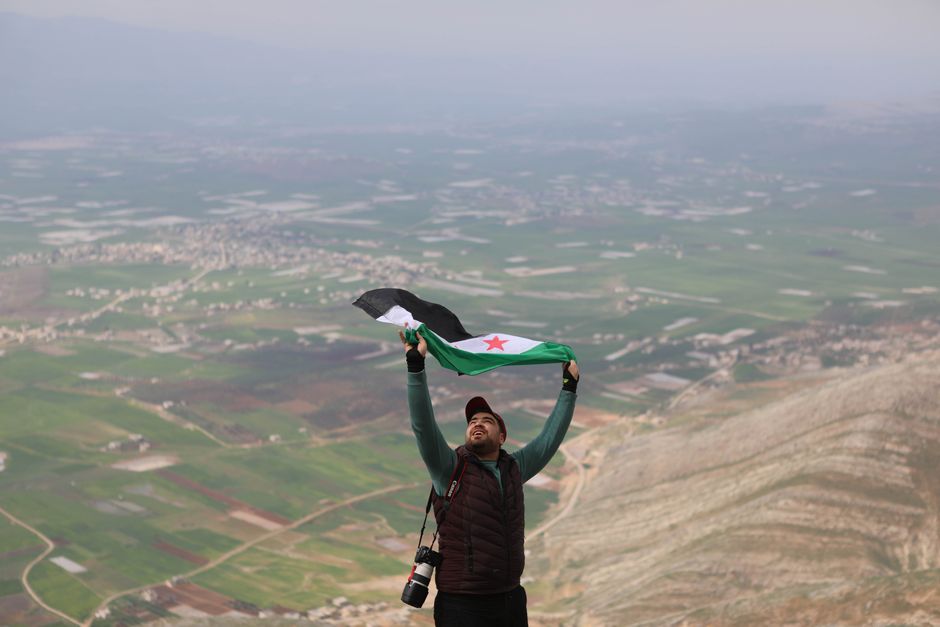
The Yemen conflict has always been a proxy theater, but its latest flare‑up reveals a deeper strategic calculus. After years of isolation, President Bashar al‑Assad is desperate for any diplomatic win that can lift Syria out of the sanctions‑laden status quo imposed by the United States and its European allies. By positioning itself as a willing partner to the Iranian‑backed Houthi movement, Damascus hopes to earn Tehran’s gratitude and, more importantly, to demonstrate to the Arab League that it can still influence regional outcomes.
Meanwhile, Saudi Arabia finds its credibility bruised. The kingdom has poured billions into the Yemeni civil war, yet the recent airport attacks expose a glaring vulnerability: its own air defenses are being outmatched by a rebel force that can strike deep into the heart of its territory. This humiliation is not just a tactical setback; it threatens the kingdom’s self‑image as the Gulf’s security guarantor. If Syria steps in, even in a limited advisory capacity, Riyadh may be forced to confront the uncomfortable truth that its coalition is losing the monopoly on anti‑Iranian operations.
The timing also dovetails with broader geopolitical shifts. The United States, preoccupied with its own Asian pivot and a looming election, has signaled a reduced footprint in the Red Sea. Meanwhile, China’s Belt‑and‑Road initiatives are quietly expanding maritime ports along the Yemeni coast, offering Tehran and its allies an alternative supply line that bypasses the Bab al‑Mandab choke point. In this fluid environment, the Yemen theatre becomes a testing ground for new alliances, and Syria’s potential involvement could be the catalyst that accelerates a realignment of loyalties across the peninsula.
The Syrian gambit: stakes and slip‑ups
If Damascus follows through, the immediate winner could be Iran, which would gain a more direct conduit to its Yemeni proxies without having to shoulder the logistical burden itself. Syrian military advisers on the ground would provide a veneer of legitimacy to the Houthi cause, allowing Tehran to claim plausible deniability while still reaping strategic dividends. For Syria, the payoff is twofold: a boost in regional relevance and a bargaining chip for future negotiations over sanctions relief.
However, the gamble is far from risk‑free. The Saudi‑UAE coalition could interpret Syrian involvement as a direct challenge, prompting a new round of airstrikes that would test the fragile ceasefire that has held in parts of Yemen since early 2025. Moreover, Russia, Syria’s main patron, may find itself in an uncomfortable position. While Moscow benefits from a chaotic Middle East that distracts the West, overt Syrian participation could drag Russian advisors into a conflict that Moscow has tried to keep at arm’s length, potentially provoking a broader confrontation with NATO‑aligned forces.
Domestically, the Syrian regime risks inflaming war‑weariness among a population already exhausted by years of destruction and economic hardship. Any casualties suffered by Syrian troops would provide opposition groups with fresh propaganda material, undermining Assad’s narrative of a “victorious resurgence.” On the other hand, the regime could spin the deployment as a heroic contribution to a pan‑Arab cause, rallying nationalist sentiment at a time when internal dissent is simmering.
The mainstream discourse in Western media often frames the Yemen war as a binary struggle between Saudi aggression and Iranian subversion, glossing over the nuanced motives of peripheral actors like Syria. This oversimplification blinds policymakers to the real danger: a multi‑layered proxy conflict that could spiral into a broader regional war, dragging in powers that have so far kept a cautious distance. By ignoring Syria’s tentative steps, analysts risk missing a critical inflection point that could dictate the next decade of Middle‑East security dynamics.
The Syrian overture also forces a reevaluation of the “de‑escalation” narrative championed by the United Nations. If Damascus does send boots onto Yemeni soil, the UN’s diplomatic machinery will be forced to confront a new set of actors, each with their own red lines and back‑channel agreements. This could either revive stalled peace talks—by introducing fresh pressure on the Saudi side—or further entrench the stalemate, as each new participant adds another layer of complexity to an already tangled ceasefire architecture.
In the end, the Yemen theater is becoming a chessboard where sidelined players like Syria are finally allowed to move their pieces. Whether this results in a strategic masterstroke or a self‑inflicted wound depends on how quickly regional powers can recognize the shifting balance and adjust their calculations before the next missile lands.
The real question remains: will Damascus’s tentative handout of expertise in the Yemen war be the spark that reignites a broader conflagration, or will it simply serve as a bargaining chip that finally pulls Syria out of diplomatic obscurity? Only time—and the next round of missile alerts—will tell.
Source: Google — Middle East