
When an Ohio Pastor shares a tale of individual hardship, it often carries a weight that transcends mere policy debate, giving a human face to complex bureaucratic decisions. This particular story, amplified by Mediaite, centers on a young Haitian immigrant losing his Temporary Protection Status, bringing the often-abstract world of immigration policy into sharp, local focus right in Springfield, Ohio.
The story, as reported, comes from a senior pastor in Springfield, Ohio, who recounted the heartbreaking situation of a Haitian boy in his community. The specifics of where and when this story was told remain somewhat elusive in the initial report, but its power lies in its simplicity and the stark reality it presents. It lands in a political landscape perennially fraught with debates over who belongs, under what circumstances, and for how long, especially regarding those seeking refuge from unstable nations. Temporary Protection Status, or TPS, is a designation granted by the Department of Homeland Security to eligible nationals of certain countries affected by armed conflict, environmental disaster, or other extraordinary and temporary conditions, allowing them to remain and work in the United States for a limited period. The pastor’s narrative pulls back the curtain on the very real, often devastating, human consequences when that “temporary” status expires or is rescinded.

What landed
The inherent power of this “heartbreaking story” lies precisely in its granular detail and the moral authority of its messenger. A senior pastor in a local community isn’t just delivering a dry policy brief; he’s speaking from direct experience with an individual family within his flock. This isn’t an abstract statistic from a think tank or a soundbite from a politician; it’s a specific child, known to a community, now facing an uncertain future. That direct, personal connection is often far more potent than any broad policy argument, capable of cutting through the usual political rhetoric to elicit empathy.
The pastor’s decision to share this particular anecdote serves as a powerful reminder that behind every government designation and every expiration date lies a human life, often one already scarred by circumstances beyond their control. It grounds the national conversation about immigration in the everyday reality of a specific town, transforming a distant policy debate into a tangible, immediate crisis for a young boy. For those who might view immigration through a purely legalistic or economic lens, the pastor’s account offers a compelling, if emotionally charged, counter-narrative, emphasizing the humanitarian dimension that often gets lost in the noise. It’s a clear, unvarnished plea for compassion, delivered not from a political podium, but from a spiritual leader.

What doesn’t add up
While the emotional resonance of the pastor’s story is undeniable, what remains conspicuously absent from the initial reporting is the broader context surrounding the revocation of this young boy’s TPS. The briefing offers no details on *why* his status was rescinded. Was it part of a sweeping policy change affecting all Haitian TPS recipients? Was it a specific review of his individual case that found him ineligible under new or existing criteria? Was there a specific justification offered by the Department of Homeland Security for this decision? The story, as presented, functions as a powerful emotional appeal, but it leaves a gaping hole where the specifics of policy execution, and any governmental rationale, might have been.
This lack of detail, while perhaps intentional to highlight the human cost, inadvertently allows for a vacuum where different interpretations can flourish. For those who might support stricter immigration controls, such an anecdote could be dismissed as an isolated case or a necessary outcome of enforcing existing laws, however unfortunate. The tension here lies in the contrast between the deeply personal, human-centric narrative and the typically impersonal, rule-bound nature of immigration policy. TPS, by its very definition, is “temporary,” implying that conditions are expected to improve in the home country, or that a review process will eventually conclude. The “heartbreaking story” underscores the often-unforeseen consequence that individuals can establish deep roots and lives during this temporary period, making their removal, however legally justified, incredibly disruptive. The pastor’s story, while shining a light on profound individual distress, doesn’t quite illuminate the policy machinery that led to it, thus making it easier for policymakers to acknowledge the “heartbreak” while sidestepping the “policy.”
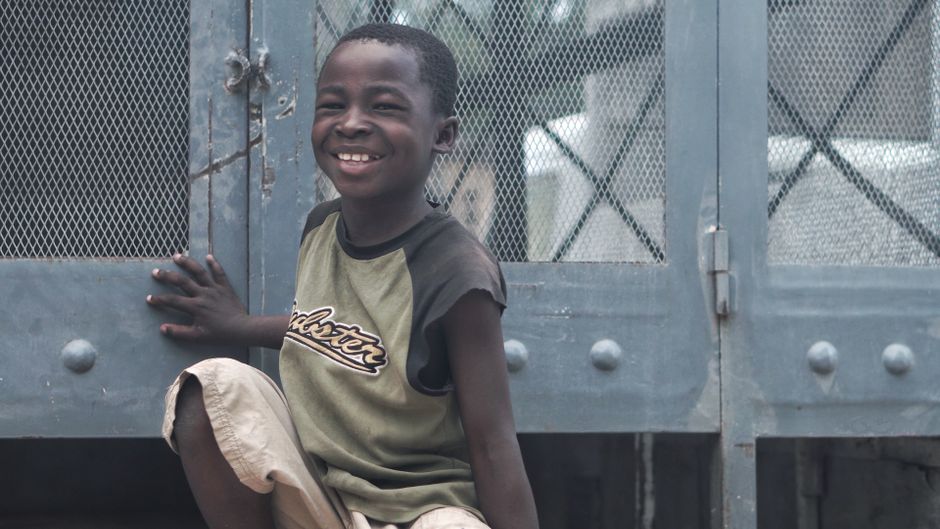
What changes Monday morning? Perhaps not a sweeping legislative overhaul, but the pastor’s stark account certainly injects a potent dose of humanity into a debate too often dominated by abstract numbers and legal jargon. For the community in Springfield, Ohio, it means looking at their Haitian neighbors with renewed understanding, and for policymakers, it presents a challenge: to reconcile the cold calculus of temporary status with the very real, very permanent lives built in the interim. The stakes for that young Haitian boy, and countless others like him, are nothing less than their future.
Source: OnTheRecord