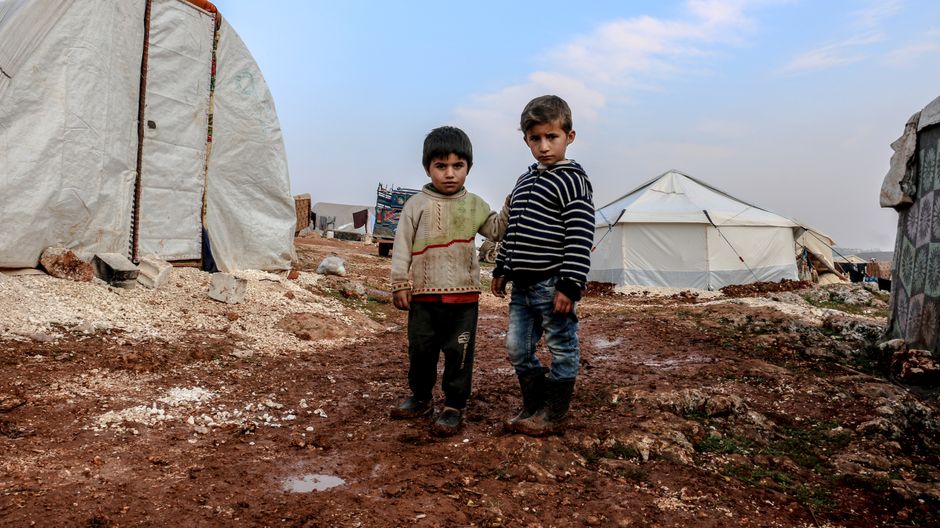
It’s rarely a quiet day in geopolitics, but when a claim emerges suggesting a nation might be weaponizing human migration for strategic advantage, it’s a moment that demands our full attention. The question, *Is Morocco* engaging in such a manoeuvre, is now firmly on the table, challenging conventional wisdom and forcing a re-evaluation of the dynamics at play.
The claim, put forth by Global Research, cuts through the usual diplomatic niceties, asserting that “The timing of this latest migrant crisis is the critical variable that connects the actions of Morocco with the strategic objectives of the United States.” It’s a bold statement, framing a humanitarian crisis not as an organic outflow, but as a deliberate instrument in a larger, intricate geopolitical dance. Such an assertion, appearing on the record, compels us to look beyond immediate headlines and consider the deeper, often hidden, currents of international relations. This isn’t just about borders; it’s about power, influence, and the uncomfortable grey areas of statecraft.
What landed
The strength of the Global Research assertion lies precisely in its focus on “timing.” In the often-murky world of international diplomacy, timing isn’t just a factor; it’s frequently *the* factor that reveals intent. The argument encourages us to look past the surface-level explanations for the migrant influx and consider the deliberate orchestration of events. It’s a call to view the crisis through a strategic lens, prompting us to ask not just “what happened?” but “why now?” and “who benefits?” This kind of analytical rigor, pushing for a deeper dive into the causality of events, is always welcome, even when the conclusions are disquieting.
To suggest that a nation might leverage human movement to achieve geopolitical aims is, admittedly, a cynical perspective, but one that history has, regrettably, shown to be plausible. The article’s implied contention—that Morocco’s actions could be a calculated move to align with specific US objectives—forces us to consider the potential for quid pro quo arrangements in international relations. Is there a US interest in a destabilized European flank, or perhaps a stronger Moroccan hand in regional disputes, that this crisis could inadvertently serve? Such a question, while provocative, is crucial for understanding the full spectrum of state motivations. It demands that we acknowledge the possibility of cold, hard strategy at work, even amidst the most emotionally charged events.
What doesn’t add up
While the focus on timing is compelling, the Global Research piece, by its very nature as a summary argument, leaves us hungry for the detailed evidence that would robustly connect Morocco’s actions directly to “strategic objectives of the United States.” The assertion is strong, yet the specific mechanisms of this alleged connection remain largely in the shadows. What precise US objectives are being served? What direct or indirect communication, what incentives, might be at play? Without unpacking these critical layers, the claim risks remaining a powerful, yet ultimately speculative, correlation rather than a proven causation.
Furthermore, attributing such a complex phenomenon solely to a singular, calculated strategy risks oversimplifying the intricate realities of migration. While state actors certainly wield influence, the push factors for migration—poverty, conflict, climate change—are immense and often operate independently of geopolitical machinations. Could this interpretation inadvertently diminish the agency of the migrants themselves, or overlook the very real internal pressures within Morocco that might contribute to such outflows? A purely strategic reading, while analytically sharp, must be careful not to discard other, equally valid, contributing factors. It’s a tricky balance: acknowledging the potential for manipulation without erasing the genuine human suffering and systemic issues at play.
Monday morning, the question of whether this migrant crisis is a humanitarian emergency or a geopolitical chess move will continue to loom large. If the Global Research assertion holds water, it forces a fundamental recalculation of alliances and intentions, demanding that we scrutinize every diplomatic statement and every border incident for the hidden hand of strategic maneuvering. Ignoring such claims would be naive; embracing them uncritically would be irresponsible. The real task, as always, is to encourage a deeper, more skeptical look at the levers of power, wherever they may be pulling.
Source: OnTheRecord