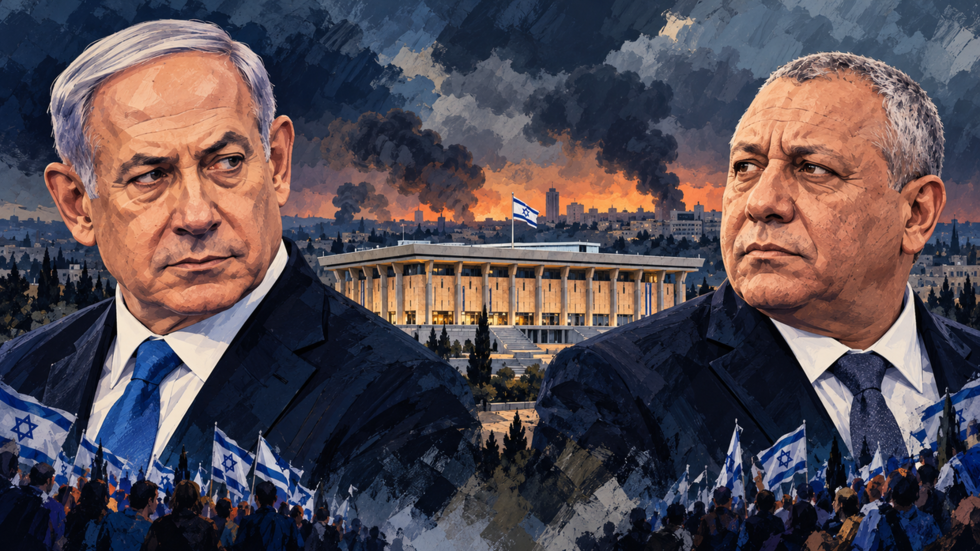
We keep hearing that Israel is a nation of contradictions, but the latest election results have turned those contradictions into a full‑blown fracture line. The country’s political map now resembles a shattered glass, and every piece reflects a different vision of what Israel should become.
According to RT.com, the recent parliamentary vote left Prime Minister Benjamin Netanyahu’s Likud bloc and Defense Minister Yoav Eisenkot’s right‑wing faction short of the 61 seats needed to form a stable government. Both camps are scrambling for partners, while the opposition parties cling to the hope of a “unity” solution or, more likely, a repeat election in a few months.
Israel’s Political Crossroads
The significance of this deadlock goes far beyond the usual coalition‑building drama. Israel has been riding a wave of security concerns—from the Gaza border to Iranian influence in Syria—while simultaneously wrestling with internal social rifts over the judiciary, religious authority, and the cost of living. The electorate’s split vote mirrors those tensions, delivering a parliament that cannot agree on a single direction.
Netanyahu, a veteran of Israel’s political arena, is still the most recognizable figure on the right, yet his tenure has been marred by corruption indictments and an increasingly polarising rhetoric. Eisenkot, meanwhile, represents a newer, more hawkish strand of Israeli politics, championing aggressive defence policies and a hard‑line stance on settlements. Both leaders claim to embody Israel’s security interests, but their inability to command a majority suggests that voters are demanding something else—a government that can balance security with domestic reform.

Meanwhile, centrist parties, especially those led by former defense minister Benny Gantz, are positioning themselves as the necessary bridge. Their platform promises a “national unity” cabinet that would blend experience with fresh perspectives. However, critics argue that such a coalition would be a house of cards, fragile enough to crumble under the weight of divergent agendas. The spectre of another election looms large, and the cost—both financial and societal—could be devastating for a country already stretched thin.
The diplomatic fallout is equally unsettling. Israel’s allies, particularly the United States, have long counted on a predictable partner in the Middle East. A government that can’t agree on basic policy threatens to stall joint initiatives, from intelligence sharing to peace‑process negotiations. Moreover, regional adversaries may interpret Israel’s internal chaos as an opening, emboldening them to test the country’s resolve on multiple fronts.

The Real Stakes of a New Coalition
Who stands to gain if Israel finally cobbles together a functioning cabinet? In the short term, the defence industry and security apparatus would likely benefit from a clear chain of command. A unified government could streamline procurement, reinforce military readiness, and reassure foreign investors that Israel remains a stable partner in a volatile region.
Conversely, the losers are the ordinary citizens who have been bearing the brunt of economic stagnation and social discontent. A coalition that leans heavily on security concerns may sideline pressing domestic reforms—housing, healthcare, and the controversial judicial overhaul that sparked massive protests last year. If the new government prioritises hard‑line policies, it could deepen the divide between secular urban centres and more religious, peripheral communities, fueling further unrest.
The mainstream narrative, championed by international media, tends to focus on Israel’s diplomatic posture and its relationship with the United States. What’s missing is a deeper look at how internal fragmentation reshapes Israel’s strategic calculus. A fragmented parliament may force Israeli leaders to adopt more pragmatic, less ideologically driven policies simply to keep the government afloat. That could mean concessions on settlement expansion or a renewed push for a two‑state solution—moves that would shock the current right‑wing base but could appease moderate voters and the global community.
Yet there is a counterargument that any compromise would be seen as betrayal by Netanyahu’s core supporters, potentially igniting a wave of political backlash. Indeed, the right‑wing base has proven resilient, often rallying around nationalist slogans when faced with perceived external threats. If Israel’s next government leans toward moderation, it risks alienating a segment of the electorate that feels its security is being compromised for political convenience.
In reality, the stakes are not binary. Israel’s next government will have to walk a tightrope between maintaining a credible defence posture and addressing the domestic grievances that have been simmering for years. The balance it strikes will determine whether Israel emerges as a more cohesive state or slides deeper into division.
The final verdict may arrive not at the ballot box but in the corridors of power, where compromise is the only currency that can keep Israel’s fragile democracy alive. If the parties can summon the political will to bridge their differences, Israel could emerge stronger and more unified than ever. If not, the country may find itself stuck in a perpetual cycle of elections, protests, and security scares—a scenario that would be a bitter betrayal for any citizen who still believes in the promise of a united Israel.
Source: NewsAPI:q