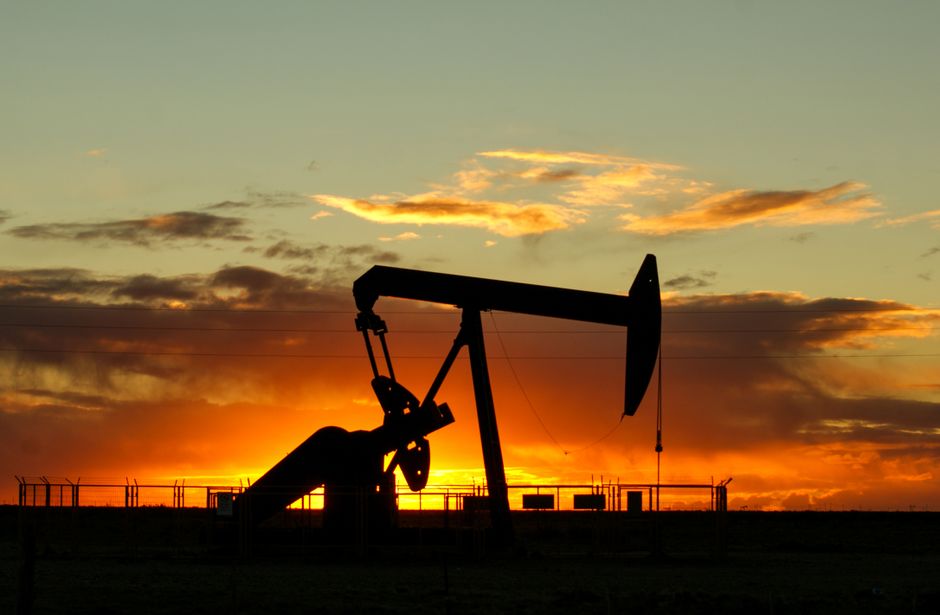
The ambition of **Danielle Smith** to double Alberta’s oil production, propelled by a new West Coast pipeline, is a political lightning rod, but the question remains: can she actually deliver?
Premier Danielle Smith recently outlined her audacious vision for Alberta’s energy future in an interview, staking a clear claim on the economic benefits of increased oil production. The backdrop for this pronouncement is the newly operational Trans Mountain Expansion pipeline, a project that, after years of delays and cost overruns, finally offers Alberta’s landlocked oil a direct route to Asian markets via Canada’s West Coast. For Smith, this infrastructure achievement isn’t just about market access; it’s a springboard for a new era of growth, a chance to rekindle the province’s boom-time spirit. The CBC News report captures the undeniable excitement rippling through parts of the industry, particularly those focused on securing new export capacity.
Politically, the timing for Smith is impeccable. Capitalizing on the successful completion of a major pipeline, a long-sought goal for Alberta, allows her to project strength and deliver on promises of economic prosperity. Her government has consistently championed the province’s oil and gas sector, portraying it as a cornerstone of both provincial and national prosperity. This new pipeline, therefore, becomes not just a conduit for crude, but a powerful symbol in her narrative of Alberta’s economic resurgence.
What landed
What landed unequivocally was Premier Smith’s sheer conviction. She didn’t merely suggest growth; she articulated a clear, bold target: doubling Alberta’s oil output. This is a powerful, straightforward message designed to resonate with an industry and a populace that have weathered years of market volatility and regulatory uncertainty. Her narrative suggests that the pipeline bottleneck, long blamed for stifling investment and depressing prices, is now definitively resolved, clearing the path for unfettered expansion.

The Premier’s embrace of the pipeline as a catalyst is astute. It provides a tangible, shovel-ready reason for optimism, a direct answer to the perennial challenge of market access. Her framing, as reported by CBC News, suggests a direct causal link: pipeline capacity equals production growth. This unvarnished commitment to the oilsands, at a time when other jurisdictions are pivoting away from fossil fuels, undoubtedly serves to reassure her core political base and those within the industry eager for provincial advocacy. There’s a certain political courage in such an explicit embrace of a sector under increasing global scrutiny.
What doesn’t add up
While the Premier’s vision is undeniably bold, the actual path to doubling production looks less like a superhighway and more like a winding, pot-holed backroad. The enthusiasm emanating from Smith’s office, as CBC News highlights, stands in stark contrast to the more measured, even wary, stance of the very oilsands giants she needs to invest. Analysts quoted in the CBC report suggest that these major players may be less inclined to “spend big to grow” than Smith hopes, a significant disconnect between political rhetoric and market reality.
This isn’t the first time Alberta has heard grand pronouncements about exponential growth, only for market forces and corporate strategy to chart a different course. Historically, oilsands operators have demonstrated a strong pivot towards capital discipline, favouring shareholder returns and debt reduction over aggressive expansion, especially after the downturns of the mid-2010s. The industry has become leaner, more efficient, and perhaps, more cautious. To expect them to suddenly reverse course and pour billions into new greenfield projects, simply because a pipeline is open, seems to ignore years of evolving corporate behaviour.
Furthermore, the idea that pipeline capacity alone drives *new* production overlooks the global energy transition. While the Trans Mountain Expansion offers an exit route, it doesn’t unilaterally conjure demand or erase the long-term uncertainties facing fossil fuels. Major international investors are increasingly sensitive to ESG (Environmental, Social, Governance) factors, and the prospect of sinking massive capital into projects with multi-decade horizons, only to face future carbon taxes or diminished global demand, gives even the most bullish executives pause. The contradiction here is profound: a provincial leader, buoyed by domestic infrastructure, projecting an internal logic of growth that may simply not align with the external, global pressures and strategic priorities of the very companies expected to deliver it. It’s a classic case of political will colliding with economic pragmatism, and previous on-record statements from industry leaders have consistently emphasized prudence over sheer volume.
Monday morning, the oil price will still be dictated by global supply and demand, not solely by the Premier’s aspirations. While the Trans Mountain pipeline’s opening is a genuine boon for existing production, the true test for Danielle Smith will be convincing deeply cautious oilsands boardrooms to loosen their purse strings and buy into her vision, rather than simply optimizing their current outputs. Otherwise, Alberta risks seeing a boom not of new oil, but of unfulfilled political promises.
Source: OnTheRecord