
Afghanistan’s fragile peace is being tested again, this time by a fresh wave of cross‑border raids that the Defence Ministry says left 41 insurgents dead as they tried to slip back in from Pakistan. The claim, reported by The Hindu, underscores a volatile reality: every militant footstep across the Durand Line drags the whole region deeper into a security quagmire that no one seems willing to dig out of.
According to The Hindu, Afghan officials announced that their forces intercepted the fighters near the eastern border, killing all 41 as they attempted to cross “with the support” of Pakistan. The statement was delivered in a brief press release that offered no names, no evidence, and no invitation for independent verification.
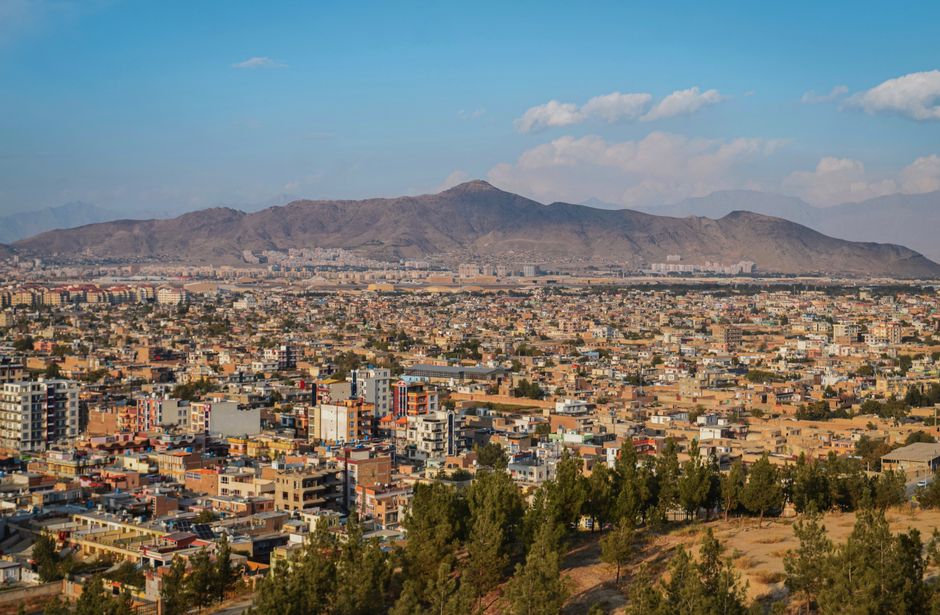
Afghanistan’s Security Dilemma
The incident arrives at a moment when Afghanistan is still grappling with the aftermath of the U.S. withdrawal and the Taliban’s struggle to transition from insurgents to administrators. Since the 2021 power shift, the country has faced a surge of attacks from groups like ISIS‑K, which exploit gaps in the nascent security apparatus. In fact, the Taliban’s own intelligence services have repeatedly warned that militants exploit the porous border to regroup, train, and re‑arm across the frontier.
Pakistan, for its part, has long denied any official involvement in Afghan insurgent movements, insisting that its border security forces are equally hamstrung by the terrain and tribal dynamics. Yet the Afghan Ministry’s allegation that the insurgents received “support” from Pakistan adds another layer to a dispute that stretches back decades. Historically, the Durand Line has been a conduit for fighters, smuggling networks, and political influence, a fact that both sides have used to justify their own security postures.
Meanwhile, the Taliban’s claim of a decisive victory could be read as an attempt to bolster its dwindling legitimacy. After all, the regime’s claim to power rests on its ability to protect the population from the very forces it once commanded. A successful operation that eliminates a sizable insurgent contingent may help the Taliban convince skeptical Afghans that it can enforce order where the previous government could not. However, the lack of third‑party verification means the narrative remains contested, and the Taliban’s credibility hinges on a pattern of results rather than a single headline.
Regional Fallout and Diplomatic Chess
The broader regional picture makes the Afghan claim far more than a domestic policing note. If Pakistan is indeed facilitating insurgent movement, the accusation could trigger a diplomatic flare‑up that reverberates through South‑Asia’s already strained relations. India, which has historically supported Afghanistan’s non‑Taliban governments, may seize the moment to pressure Islamabad, while Iran watches anxiously from its western border, wary of any spillover that could destabilize its own Kurdish and Baluchi minorities.
Moreover, the United States and its NATO allies have signaled a willingness to re‑engage with Afghanistan on counter‑terrorism grounds, even as they distance themselves from nation‑building. A credible claim of cross‑border support could revive discussions about intelligence sharing, joint patrols, or limited drone surveillance, all of which would test the Taliban’s willingness to cooperate with former adversaries. On the other hand, the Taliban’s insistence on sovereignty may lead them to reject any external monitoring, preferring instead to handle the issue unilaterally and risk further isolation.
Critics argue that the Taliban’s narrative may be designed to shift blame for internal security failures onto an external scapegoat. By painting Pakistan as the puppet master, the Afghan defence ministry diverts attention from the regime’s own shortcomings in border management and counter‑insurgency tactics. Pakistan, for its part, could respond with diplomatic protests, demand proof, or even launch a covert counter‑propaganda campaign. In the worst‑case scenario, a tit‑for‑tat exchange of border skirmishes could erupt, dragging civilian populations into a cycle of displacement and hardship.
Nevertheless, the mainstream discourse often glosses over the human cost of these shadow wars. Families on both sides of the border live under the constant threat of raids, checkpoints, and sudden violence. The Taliban’s claim of killing 41 militants may be celebrated in Kabul’s corridors, but for the villagers whose fields lie along the frontier, the aftermath is a renewed sense of insecurity and economic disruption.
In reality, the incident illustrates a paradox: Afghanistan’s quest for stability is inextricably linked to the actions of its neighbours, yet each actor pursues its own strategic calculus. The Taliban needs to demonstrate control; Pakistan wants to avoid international censure; regional powers seek leverage; and the international community hopes to prevent Afghanistan from becoming a safe haven for global jihadists again. The delicate balance can tip with a single misstep, and the Afghan claim of a successful border operation may be the first tremor of a larger shift.
Afghanistan stands at a crossroads where every claim, every raid, and every diplomatic exchange reshapes its future. If the Taliban can translate today’s headline into a lasting reduction in insurgent activity, it may earn a sliver of legitimacy. If not, the narrative of a border riddled with foreign‑backed militants will only deepen the crisis, leaving the region to wonder whether any side can truly control the chaos that has long roamed the Durand Line.
Source: The Hindu