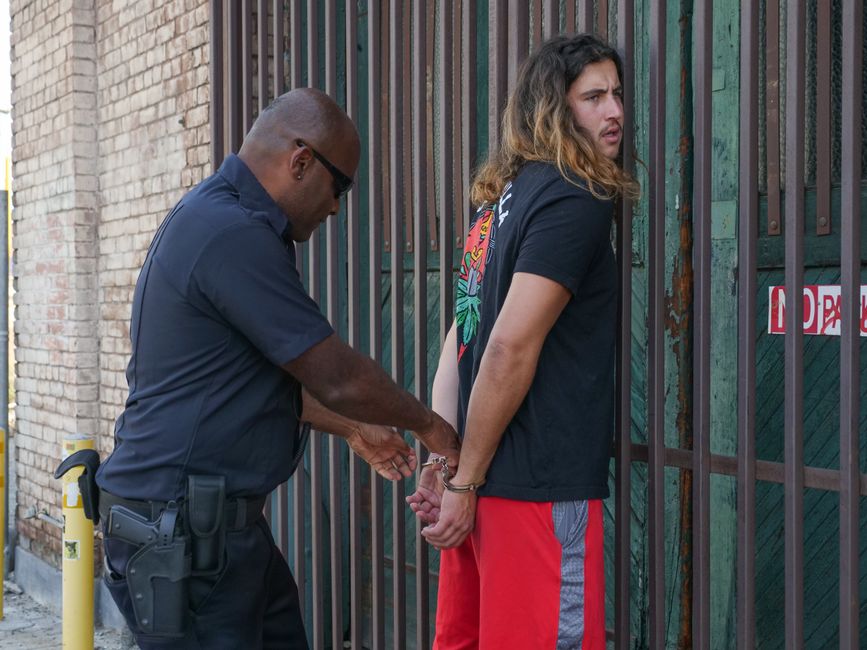
What happens when the very people sworn to protect become the predators? In a country already reeling from economic collapse and political instability, the recent actions of a few uniformed individuals plunge the depths of human depravity, further eroding what little faith remains in the **Venezuelan** state.
According to The Guardian World, four Venezuelan police officers have been arrested and face dismissal. Their alleged crime? Looting cash from the rubble of a collapsed building in the wake of last week’s devastating twin earthquakes. Meanwhile, local people, volunteers, and national and international rescue teams continue their desperate search for survivors amidst the devastation.
The Shaky Ground of Venezuelan Trust
This isn’t merely a tale of individual corruption; it’s a symptom of a much larger, insidious disease plaguing the nation. The earthquakes may have physically shaken the country, but this alleged act of theft has delivered an even more profound blow to the collective psyche. It exposes the raw nerve of growing anger at authorities and the government, an anger fueled by years of hardship and now exacerbated by a crisis of conscience.
Venezuela has long grappled with systemic issues, from hyperinflation to widespread poverty, which have stretched public services and institutions to their breaking point. When disaster strikes, the expectation is that the state, through its various arms, will rise to the occasion, offering solace and support. Instead, these accusations suggest a betrayal of the highest order, where those entrusted with order see chaos as an opportunity for personal gain. This incident, while specific, speaks volumes about the perceived moral decay within certain segments of the Venezuelan official apparatus. It underscores how desperate circumstances can either forge unity or expose the rot beneath the surface.
When Protectors Pillage: A Betrayal
Let’s be blunt: there’s no excuse for stealing from victims of a natural disaster. None. The argument that police officers are underpaid or face difficult conditions, while sometimes true, does not justify preying on the most vulnerable. This isn’t just a lapse in judgment; it’s a fundamental breach of the social contract. When the **Venezuelan** people are looking for a helping hand, they find a grasping one.
The real tragedy here extends far beyond the stolen cash. It’s the theft of hope, the pilfering of trust, and the crushing of what little faith the public might have had in its institutions. Imagine losing everything – your home, your possessions, perhaps even loved ones – only to discover that the very people meant to secure the scene were rifling through the remnants of your life for a quick buck. This isn’t just a crime; it’s an act of profound psychological violence. It tells a struggling populace that even in their darkest hour, they cannot rely on their own government’s representatives.
Such actions undermine the tireless work of genuine heroes – the volunteers, the foreign aid workers, and the honest **Venezuelan** rescue personnel who are risking their lives to save others. Their efforts are tainted by the greed of a few. Furthermore, this incident inevitably provides ammunition to those who paint the entire state apparatus as irredeemably corrupt, making it harder for legitimate recovery efforts to gain public confidence and cooperation. The focus shifts from rebuilding lives to prosecuting internal criminals, diverting critical resources and attention.
While it’s important to acknowledge that four arrests do not indict an entire force, the optics are catastrophic. This event throws a harsh spotlight on the urgent need for accountability and transparency within all levels of Venezuelan authority, especially when the nation is at its most fragile. The government’s swift action in arresting and pursuing dismissal for these officers is a necessary first step, but it must be followed by comprehensive reforms that rebuild public trust from the ground up.
Until the **Venezuelan** state can guarantee that its uniform is a symbol of protection, not predation, its people will remain stranded not just in physical rubble, but in the ruins of their own hope. Will this crisis finally force a reckoning, or will it simply be another scar on a nation already full of them?
Source: Guardian World