
What does it say about a country’s business when only three-quarters of first-class mail is delivered on time? If this is the state of our postal service, it’s clear that foundational aspects of our economy are on shaky ground. According to the BBC, Royal Mail has announced that its service is improving, claiming it’s on track to meet the reduced delivery targets set by Ofcom. But can we genuinely trust a system that increasingly feels like it’s all bark and no bite?
The State of Mail Delivery and Its Impact on Business
The statistics speak for themselves: a mere 75% of first-class mail arrived as scheduled, a figure that would leave any business professional shaking their head. In a world where immediacy is king, this delay in delivery cannot be brushed aside as an unfortunate hiccup. Businesses rely on timely communication, whether it’s invoices, contracts, or customer correspondence. With Royal Mail struggling to meet even diminished expectations, companies face the dilemma of whether they can count on a service that’s integral to their operations.

The broader context here is multi-layered. Once considered a pillar of British society, Royal Mail has been under intense scrutiny and pressure. The shift toward digital communication, combined with rising operational costs and stiff competition, has put the traditional postal service in a precarious position. As more customers opt for instant messaging or email, it begs the question: Is Royal Mail still relevant in a fast-paced business landscape?
A Critical Eye on Royal Mail’s Promises
Royal Mail’s claim that it is on the mend is, at best, a half-truth. Improvement may be on the horizon, but the reality is that businesses can’t afford to wait for promises of better service. The stakes are high. In an economy where every minute counts, delays can mean lost sales, missed deadlines, and dissatisfied clients. For small businesses, especially, this is a matter of survival.
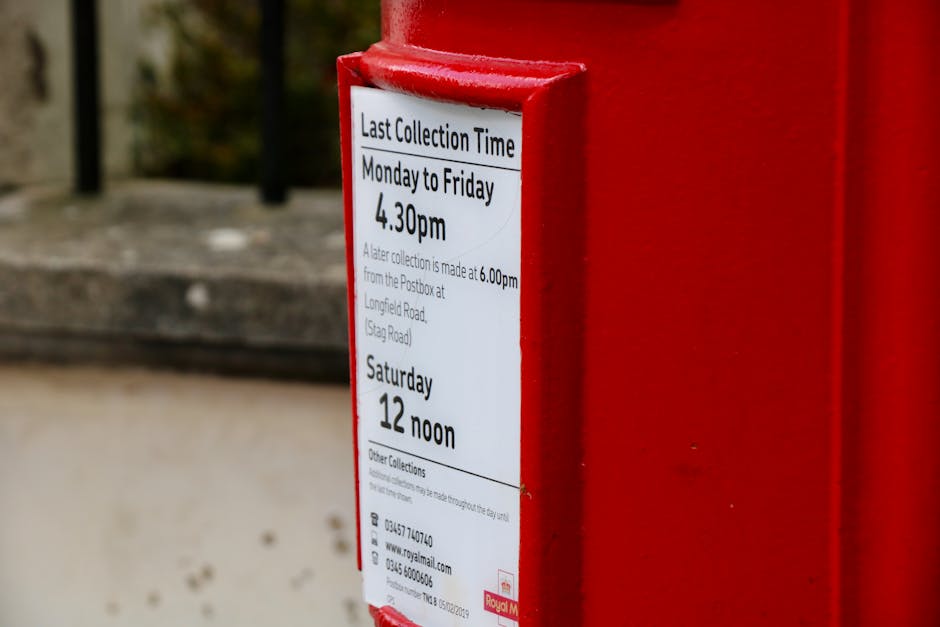
The mainstream narrative is fixated on the idea of a turnaround. Yet, it conveniently glosses over systemic issues that plague Royal Mail. The company faces mounting competition from private couriers who are not shackled by the same antiquated infrastructure. Meanwhile, consumers are increasingly choosing alternatives that promise speed and reliability. If Royal Mail doesn’t adapt and innovate, it could very well find itself rendered obsolete, leaving businesses scrambling to fill the void.
As we analyze the implications of these delivery failures, we must also take a hard look at the role of regulation. Ofcom’s intervention, while well-intentioned, risks becoming a band-aid on a festering wound. Instead of merely lowering targets to account for inefficiencies, shouldn’t we be demanding a robust overhaul of the postal service? After all, a resilient business environment cannot thrive on reduced expectations.

In the end, the fate of Royal Mail is not just about mail delivery; it’s about the fabric of our business ecosystem. A reliable postal service is vital for commerce, and the inability to deliver on such a fundamental service raises serious questions about the reliability of other business systems.
So what does the future hold for Royal Mail? Will it rise like a phoenix from the ashes, or will it continue to languish in mediocrity? One thing is clear: businesses—large and small—are watching closely, because the outcome of this postal struggle could have far-reaching implications for the entire economy. As we head into the weekend, let’s not forget that in business, as in life, being late is often worse than not showing up at all.
Source: BBC Business