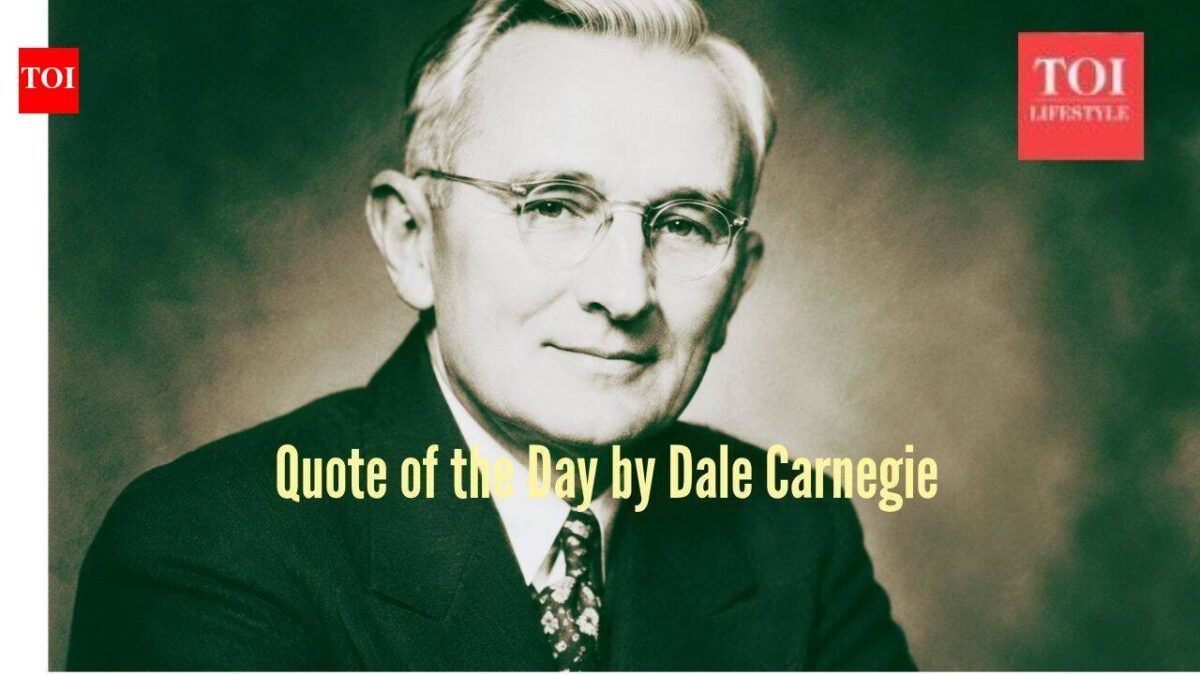
The moment you see a **Quote** that claims happiness isn’t tied to wealth or status, you feel a pang of both relief and skepticism. Dale Carnegie’s terse observation—“You aren’t happy or unhappy because of what you have or who you are, but it is…”—cuts straight to the gut of a culture obsessed with material benchmarks. In a world where Instagram feeds glitter with luxury and Indian middle‑class aspirations chase ever‑higher salaries, the promise that contentment lives elsewhere feels both radical and comforting.
According to the Times of India, Carnegie rose to prominence as a self‑improvement pioneer, reshaping how people connect and communicate. His bestselling manual *How to Win Friends and Influence People* still serves as a blueprint for building rapport, while his public‑speaking courses democratized a skill once reserved for the elite.

The Enduring Power of the Quote
Carnegie’s influence stretches far beyond the 1930s lecture hall. By turning public speaking into a teachable, scalable craft, he opened doors for countless South Asians who once believed that eloquence was a birthright of the privileged. In India and Pakistan, where oral persuasion can decide political outcomes and corporate deals, his training modules have been adapted into university curricula and corporate workshops alike. The **quote** resonates because it offers a counter‑narrative to the relentless consumer push that dominates regional media: your self‑worth is not measured by the size of your car or the brand of your phone.
Moreover, the philosophy behind the **quote** aligns with a growing mindfulness movement across the subcontinent. Yoga studios in Delhi, meditation apps in Bengaluru, and wellness podcasts in Colombo all echo Carnegie’s insistence that internal attitudes trump external trappings. The synergy between his teachings and today’s mental‑health discourse explains why his ideas continue to surface in boardrooms and bedtime reading lists. As a result, the **quote** has become a cultural touchstone for anyone trying to navigate the pressure cooker of South Asian expectations while seeking personal equilibrium.

Hot Take: Why Carnegie’s Message Is a Double‑Edged Sword
The mainstream applause for Carnegie’s **quote** often glosses over a crucial blind spot: it can become an excuse for complacency. If happiness truly hinges on mindset alone, then systemic inequities—such as the widening wealth gap in Mumbai, the education‑access crisis in rural Bangladesh, or gender‑based workplace discrimination in Sri Lanka—risk being dismissed as “mental blocks.” Critics argue that the **quote**’s emphasis on personal agency subtly shifts responsibility from institutions to individuals, allowing power structures to remain unchallenged.
On the other hand, the very simplicity of the **quote** empowers people who feel trapped by circumstance. A junior accountant in Kolkata, for instance, may find in Carnegie’s words a lifeline that encourages proactive communication and networking, tools that can break the glass ceiling of a rigid corporate hierarchy. By teaching that influence begins with listening, the quote equips ordinary workers with a pragmatic strategy for upward mobility, rather than promising an impossible utopia of instant bliss.

The tension, therefore, lies in how the **quote** is deployed. When leaders cite it to motivate teams without addressing structural roadblocks, they risk sounding hollow. Conversely, when educators embed the quote within curricula that also tackle socioeconomic realities, they create a balanced narrative that honors both personal growth and collective responsibility. The mainstream media’s tendency to cherry‑pick the feel‑good portion of Carnegie’s message ignores the nuanced debate that scholars in Delhi’s sociology departments are already having.
In the end, the durability of Carnegie’s **quote** hinges on our willingness to interrogate it, not merely repeat it. It is a reminder that happiness is partly a mental construct, yet it is also a call to examine the environments that shape that construct. If South Asian societies can fuse the internal optimism of Carnegie with an external push for equity, the old adage that “the personal is political” finally feels accurate.
So, as you scroll past the latest celebrity endorsement of a luxury brand, ask yourself whether the **quote** you carry in your mind is a genuine compass or just a comforting pat on the back. The answer may determine whether you become a passive consumer of happiness or an active architect of it.
Source: Times of India