
Iran’s shadow loomed over the Strait of Hormuz today, and the United States answered with a volley of defensive strikes. The moment reminded the world that the Persian Gulf remains a pressure cooker where a single spark can ignite a regional conflagration, and the word Iran is now echoing through every strategic briefing.
According to AP News, a senior U.S. defense official confirmed that American forces launched precision attacks against Iranian‑linked vessels that had threatened commercial traffic in the narrow waterway. The official described the operation as “defensive,” aimed at protecting shipping and deterring further aggression.
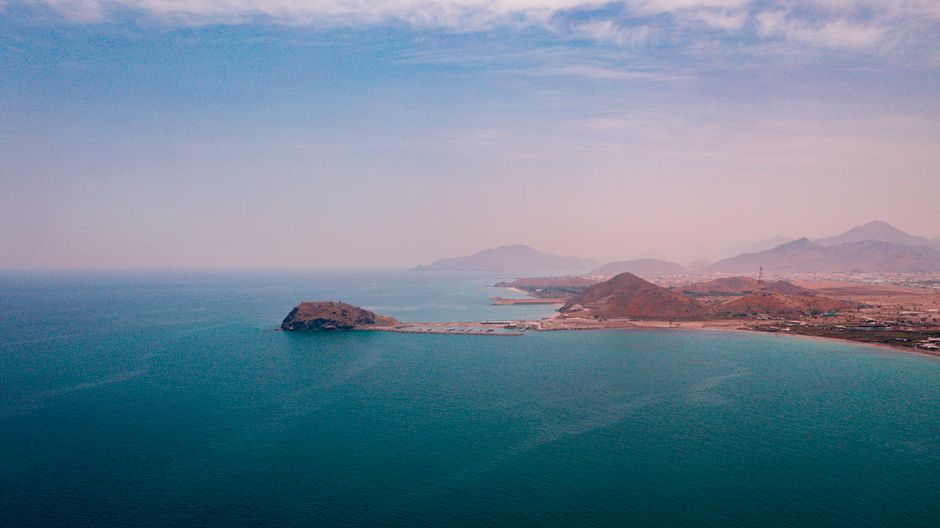
The incident unfolded just after midnight local time, when radar‑guided missiles from U.S. Navy ships engaged three fast‑moving craft believed to be under Iranian control. The strikes reportedly disabled the vessels without causing any casualties among civilian crews.
The timing is anything but accidental. In recent weeks, Iran has ramped up its naval presence in the Hormuz corridor, deploying speedboats and unmanned surface vessels to harass tankers bound for the Gulf. Tehran’s rhetoric has also intensified, with senior officials warning of “retaliation” if the United States continues to “interfere” with Iranian interests. Meanwhile, Washington has been signaling a willingness to defend the free flow of oil, a lifeline for the global economy.

Iran and the Hormuz Flashpoint
Iran’s strategic calculus centers on the Strait of Hormuz because it controls roughly a fifth of the world’s oil shipments. By threatening this choke point, Tehran hopes to leverage economic pain against countries that support its rivals. The latest U.S. strikes therefore serve as a direct rebuke to Iran’s attempt to weaponize geography.
Technology played a decisive role in the encounter. The U.S. Navy employed AI‑driven threat‑analysis platforms that sifted through terabytes of sensor data in seconds, identifying the hostile craft before they could close in on merchant vessels. Autonomous drones hovered above the water, feeding live video to operators who could cue missile launches with pinpoint accuracy. In contrast, Iran’s own unmanned boats rely on older, less sophisticated guidance systems, leaving them vulnerable to the sophisticated electronic warfare suites mounted on U.S. warships.
The broader context includes a series of cyber‑espionage campaigns attributed to Iranian state actors, which have targeted oil companies and shipping firms for years. The United States, in turn, has been integrating AI‑enabled cyber defenses into its naval operations, creating a layered shield that blurs the line between kinetic and digital warfare. This technological arms race underscores why the Hormuz incident is not merely a naval skirmish but a preview of how AI will shape future conflicts in the Middle East.
Regional actors are watching closely. Saudi Arabia and the United Arab Emirates have publicly condemned Iran’s provocations, yet they remain wary of an escalation that could disrupt their own oil exports. Israel, a vocal opponent of Iranian influence, praised the U.S. response as a “necessary show of force,” while Russia, a longtime ally of Tehran, issued a diplomatic reminder that the Strait is an international waterway and warned against unilateral action.
Hot Take: Who Gains from the U.S. Strikes?
The immediate winner appears to be the global shipping community, which now enjoys a temporary reprieve from Iranian intimidation. By neutralizing the threat, the United States has bought time for commercial vessels to navigate the strait with reduced risk, preserving the flow of crude that underpins world markets.
However, the longer‑term picture is messier. The United States gains political mileage by projecting power, but it also deepens the perception of a perpetual “U.S.‑Iran” rivalry that fuels anti‑American sentiment across the region. Iran, meanwhile, can spin the incident as evidence of U.S. aggression, rallying domestic support and justifying further naval build‑up. In the realm of technology, the strikes showcase American AI capabilities, but they also expose a vulnerability: reliance on high‑tech systems that could be jammed or spoofed by a determined adversary.
The mainstream narrative often frames the event as a simple act of self‑defence, but it glosses over the strategic gamble the United States is making. By escalating kinetic engagement, Washington risks pulling Iran deeper into an asymmetric response—perhaps deploying swarms of low‑cost, AI‑controlled drones that could overwhelm traditional missile defenses. Such a scenario would force a costly re‑evaluation of naval tactics and could trigger a broader arms race in autonomous weaponry.
Critics argue that diplomatic channels remain under‑utilised, pointing out that back‑channel talks between Washington and Tehran have been stalled for months. They suggest that a calibrated diplomatic push, coupled with targeted sanctions, might have defused the situation without firing a single missile. Yet proponents of the strike contend that Iran’s pattern of brinkmanship leaves little room for patience, and that a decisive show of force is the only language Tehran understands.
The stakes extend beyond the immediate theater. Energy markets are already jittery; any hint of prolonged disruption in Hormuz can send oil prices spiralling, affecting economies far removed from the Persian Gulf. Moreover, the incident provides a testing ground for AI‑driven combat systems, a development that will reverberate through future conflicts in Africa, Eastern Europe, and the Indo‑Pacific.
In the end, the United States has bought a fleeting window of security at the cost of entrenching a technological arms race with Iran. The question now is whether Washington will double down on AI‑enabled strikes or pivot back to diplomacy before the cycle becomes self‑sustaining.
The Hormuz flashpoint reminds us that the line between deterrence and provocation is razor‑thin, especially when AI can turn a single missile into a statement. As the world watches, the next move will determine whether Iran’s challenge becomes a catalyst for peace or a prelude to a new, automated era of naval warfare.
Source: Google — Middle East