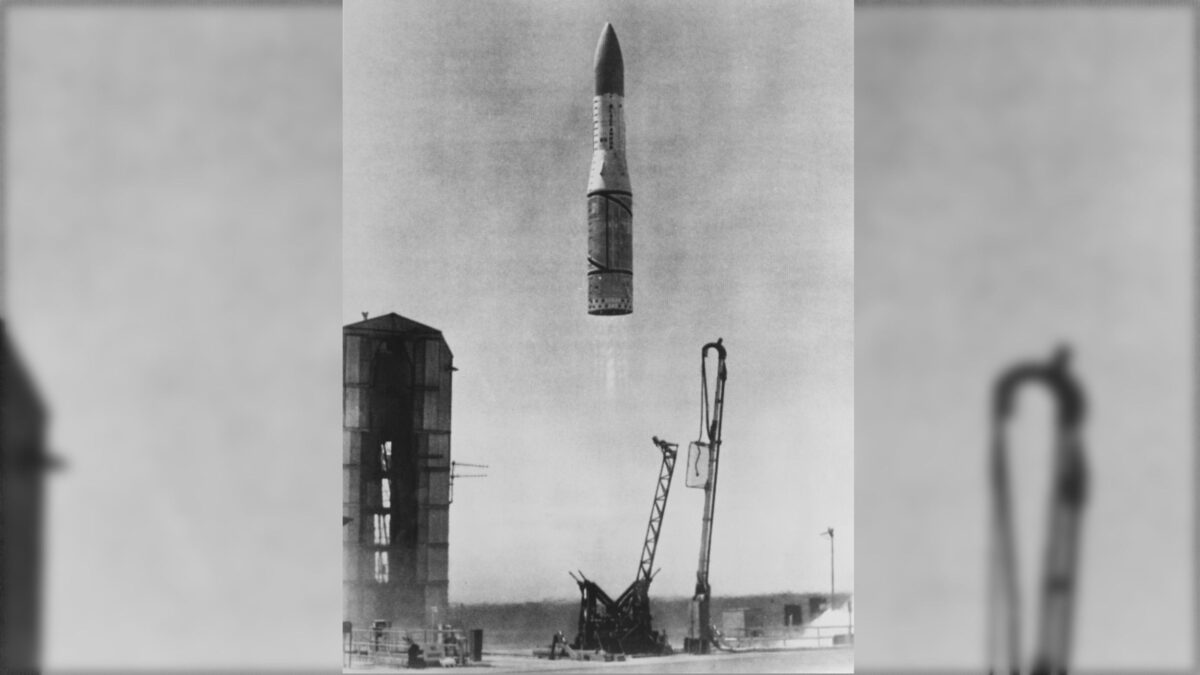
On a cold October night in 1971, Britain finally proved it could reach beyond its island shores. On that same day a modest Black Arrow rocket hurled the Prospero satellite into orbit, marking the United Kingdom’s first independent foray into space. The event may look quaint beside today’s megastructures, but it still flickers in diplomatic archives and security debates, reminding us that even a modest launch can reshape a nation’s global posture.
According to Space.com, the launch took place on 28 October 1971 from the Woomera Test Range in Australia. The Black Arrow vehicle, the only British‑built orbital launcher ever to reach space, placed the 66‑kilogram Prospero into a low‑Earth orbit that lasted for several months before the satellite re‑entered the atmosphere. The mission was a technical triumph for a program that had been underfunded and politically contested for years.

On the Legacy of Britain’s First Satellite
The significance of Prospero extends far beyond a single payload. In the early 1970s, the Cold War’s space race was dominated by the United States and the Soviet Union, and European nations were still largely dependent on American launch services. By achieving an autonomous launch, the United Kingdom signaled a desire to carve out its own strategic niche. The decision to use an Australian launch site also highlighted the Commonwealth’s lingering cooperation, a diplomatic thread that subtly reinforced Britain’s post‑imperial ties.
At the time, the British government framed the mission as a boost for scientific research and industrial capability. In reality, the launch served a dual purpose: it was a showcase of homegrown engineering that could be leveraged in negotiations with NATO allies and potential commercial partners. The satellite carried experiments on communications and radiation monitoring, but the underlying message was clear—Britain could field its own space assets, reducing reliance on U.S. technology and opening a pathway for independent intelligence gathering.
Fast forward to today, and the echoes of that 1971 launch reverberate in policy circles. On the diplomatic front, the United Kingdom’s current push for a “British Space Agency” and participation in the European Space Agency are rooted in the confidence that Prospero helped plant. The early success proved that a modest budget, when paired with political will, could produce a credible launch capability. That lesson is now being revisited as Britain debates whether to revive a domestic launch industry or continue outsourcing to private firms abroad.
Why the Prospero Launch Still Matters
The hot take is simple: the Prospero episode was a missed opportunity that still haunts British space policy. While the Black Arrow program was cancelled a year after its sole success, the momentum it generated was never fully captured. Had the government capitalized on the achievement, Britain might have joined the ranks of early spacefaring nations with a continuous launch capability, potentially influencing satellite communications, navigation, and even early reconnaissance.
Instead, the decision to abandon the program handed the United States and Europe a larger share of the market, leaving Britain to play catch‑up. Modern critics argue that the loss of domestic launch expertise has made the UK more vulnerable to geopolitical pressure, especially as satellite constellations become central to national security. On the policy table, the legacy of Prospero is invoked to argue for renewed investment in launch infrastructure, with some politicians citing the 1971 success as proof that British engineers can compete on the global stage.
Conversely, skeptics point out that the Black Arrow’s payload capacity was minuscule compared to today’s heavy‑lift rockets, and that the economic case for a national launcher was never robust. They claim that the romanticism surrounding Prospero masks a pragmatic reality: the UK is better served by collaborating with allies rather than reinventing the wheel. Yet this view overlooks the strategic autonomy that a homegrown launch capability provides, especially when satellite data underpins everything from military surveillance to disaster response.
The stakes are high. If Britain chooses to invest in a new generation of small‑sat launchers, it could reclaim a niche market and reinforce its diplomatic clout within NATO and the EU. If it continues to rely on external providers, it may find its strategic options increasingly constrained, especially as great‑power competition intensifies in orbit. The Prospero launch, though a single flash of flame in 1971, still offers a template for how a modest investment can yield outsized diplomatic dividends.
The story of Prospero also offers a cautionary tale about the intersection of science, security, and fashion. In the 1970s, the sleek design of the Black Arrow and its tiny satellite captured the public imagination, turning engineers into unlikely style icons. Today, the resurgence of “space chic” in tech circles mirrors that era’s optimism, reminding us that scientific milestones often become cultural symbols. The legacy of that October night is therefore both technical and aesthetic, a reminder that space achievements can influence everything from policy to runway trends.
In the end, the 1971 launch was more than a footnote in British aerospace history; it was a statement of intent that still whispers in today’s diplomatic corridors. The question now is whether Britain will let that whisper become a roar, or whether it will let the memory of Prospero fade into a nostalgic anecdote. The answer will shape not just the nation’s space ambitions, but its broader security posture in an increasingly contested orbital arena.
Source: Space.com