
Washington’s water wars have a new front‑line hero: a farmer who has tended his family’s fields since 1984 and now finds himself staring at $618,000 in state‑imposed irrigation penalties. The sheer size of the bill turns a routine regulatory dispute into a litmus test for how the Evergreen State balances agricultural heritage with tightening environmental mandates.
According to the Times of India, Ron Fodé, a lifelong resident of eastern Washington, was hit with the penalties after the Department of Ecology rejected his applications for irrigation assistance in 2017. The department’s decision, rooted in alleged violations of state water‑use rules, cascaded into a series of fines that now total $618,000. Fodé’s case was recently heard by the Washington Supreme Court, where he argued that the penalties threaten the very survival of his farm.
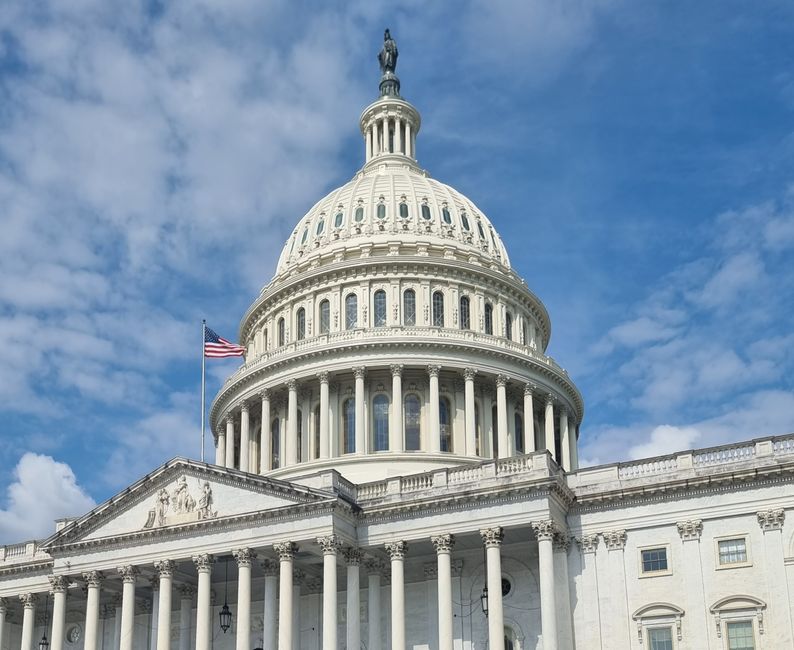
Washington Water Rights Battle
The conflict did not erupt in a vacuum. Washington’s intricate system of water rights, inherited from the 19th‑century doctrine of “first in time, first in right,” has long pitted growers against environmental regulators. Over the past decade, the state’s Department of Ecology has tightened its oversight, especially in the arid Columbia Basin, where water scarcity is becoming a seasonal certainty. Fodé’s farm, nestled near the Yakima River, depends on a network of canals that the department claims have been over‑drawn during drought years.
In 2017, when Fodé applied for a modest increase in water allocation to sustain his wheat and apple orchards, the agency denied the request, citing a breach of the state’s “instream flow” requirements—minimum water levels that must remain in rivers to protect fish and wildlife. The denial triggered a cascade of compliance reviews, each adding another layer of fines for alleged over‑irrigation. By the time the penalties were tallied, they had ballooned to six‑figure territory, a sum that dwarfs the average annual profit of a mid‑size Washington farm.
The legal battle reflects a broader tension: Washington’s push to meet aggressive climate goals while preserving the economic backbone of its rural communities. State legislators have pledged to cut greenhouse‑gas emissions by 2030, and water management is a keystone of that strategy. Yet the enforcement mechanisms—often heavy‑handed fines and rigid caps—have been criticized for lacking flexibility for farmers who argue that their practices are both necessary and sustainable.
Fodé’s appeal to the Washington Supreme Court hinges on a technical argument: that the penalties were assessed without proper notice and that the department misapplied the “reasonable use” standard, which allows farmers to adjust water use based on seasonal conditions. If the court sides with him, it could set a precedent that forces the ecology agency to recalibrate its penalty framework, potentially easing the fiscal strain on countless farms across the state.
Why This Fight Matters Beyond the Farm
The stakes stretch far beyond a single acreage. Washington’s agricultural sector contributes roughly $20 billion to the state’s GDP, and water policy is the invisible scaffolding that supports that figure. A ruling that curtails the department’s punitive reach could embolden other growers to challenge similar assessments, creating a ripple effect that reshapes the regulatory landscape. Conversely, a decision that upholds the fines would send a clear signal that environmental compliance trumps traditional water‑right claims, accelerating the shift toward more water‑conservative cropping methods.
Politically, the case lands squarely in the crosshairs of the upcoming mid‑term elections. Rural legislators, many of whom represent districts where farming is the primary employer, have already begun framing the issue as a classic “big government vs. the little guy” narrative. Their rhetoric echoes the broader national debate over how aggressively states should police environmental standards without stifling economic vitality. In Washington, where the Democratic governor’s office has championed aggressive climate legislation, the Fodé case could become a bargaining chip for Republicans seeking to rally agrarian voters.
Critics of the ecology agency argue that its top‑down approach ignores the nuanced reality of on‑the‑ground water management. Farmers like Fodé contend that they have long employed conservation techniques—such as drip irrigation and soil moisture monitoring—to minimize waste. Yet the agency’s reliance on broad usage metrics can paint an oversimplified picture, penalizing practices that are, in fact, aligned with sustainability goals. This disconnect fuels a growing resentment that could spill over into protests or legal challenges in other water‑intensive states watching Washington’s experiment.
On the other hand, environmental advocates caution that softening penalties might undermine decades of progress in river restoration and endangered‑species protection. They point to the sharp decline in salmon runs in the Columbia River system as a stark reminder that water allocation decisions have life‑or‑death consequences for ecosystems. For them, the $618,000 fine is a necessary deterrent, a fiscal lever that forces farmers to adopt truly regenerative practices rather than relying on historical rights.
The middle ground may lie in collaborative water‑sharing agreements that blend scientific monitoring with farmer input. Some pilot projects in Washington already pair real‑time river flow data with flexible allocation caps, allowing growers to scale back during droughts without incurring punitive fees. If the supreme court’s ruling nudges the department toward such adaptive management, it could pave the way for a more resilient agricultural model that honors both economic and ecological imperatives.
Ultimately, the outcome will test whether Washington can reconcile its ambitious climate agenda with the entrenched realities of its rural heartland. The decision will reverberate through policy circles, farm boards, and the courts, shaping the narrative of who gets to decide the value of a drop of water.
If the Washington Supreme Court throws out the penalties, we may witness a new era where farmers regain a foothold in the water‑rights debate—potentially prompting a wave of legislative reforms that prioritize flexibility over blanket enforcement. If it upholds the fines, the message will be unmistakable: environmental compliance is non‑negotiable, and the cost of resistance will be steep. Either way, Ron Fodé’s fight is a bellwether for the state’s capacity to juggle climate ambition with agricultural survival. The question now is not just whether he can keep his farm afloat, but whether Washington can craft a water policy that waters both crops and rivers without drowning either.
Source: Times of India