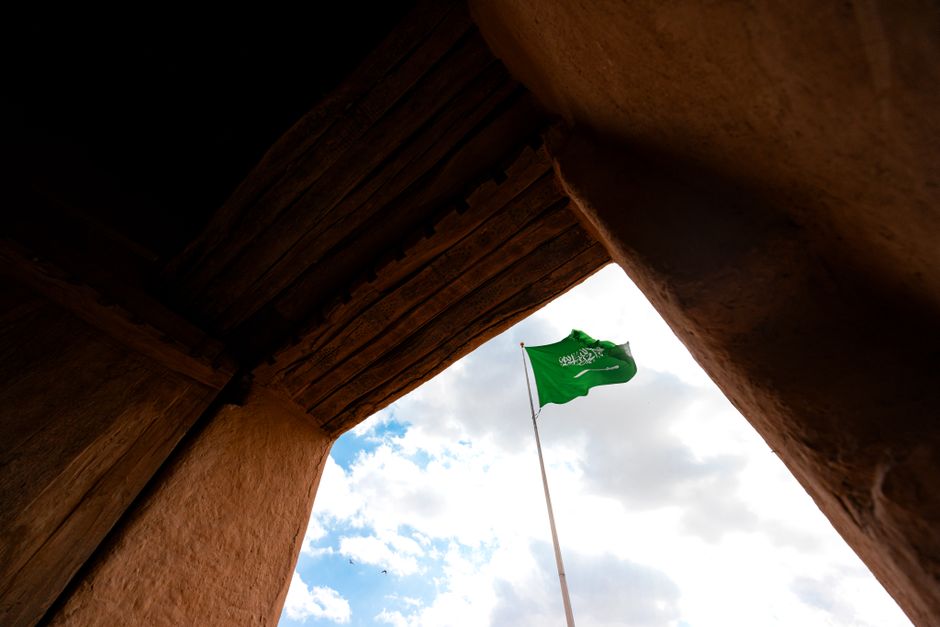
Why Saudi has suddenly dusted off its war‑machinery in Yemen is the question no one wants to ask aloud, yet the answer is staring us in the face. The same Saudi kingdom that spent the past decade boasting a “peace dividend” is now back on the battlefield, and the implications ripple far beyond the Red Sea.
According to a report by Responsible Statecraft, Riyadh launched a fresh series of airstrikes against Houthi positions on Monday, citing renewed attacks on its shipping lanes and the need to protect “national security.” The article notes that the strikes are coordinated with the United Arab Emirates and have been quietly endorsed by Washington and London.

Why Saudi’s renewed Yemen campaign matters now
The timing could not be more strategic. After months of diplomatic fatigue, the United States is eager to showcase a tangible foreign‑policy win before the upcoming mid‑term elections, while the United Kingdom scrambles to prove relevance after Brexit’s foreign‑policy vacuum. Meanwhile, the Houthi rebels have stepped up missile launches that threaten the Bab al‑Mandeb, a chokepoint that handles roughly a third of global oil shipments.
In fact, the resurgence of hostilities follows a series of setbacks for the Saudi‑backed Yemeni government, including a failed peace conference in Doha and a crippling economic collapse that left half the population dependent on aid. The kingdom’s leadership, bruised by a series of domestic scandals and a faltering economy, now sees a renewed war as a way to rally nationalist sentiment and distract from internal dissent.

Moreover, the broader regional context cannot be ignored. Iran, Tehran’s quiet patron of the Houthis, has been busy cementing its influence in Iraq and Syria, forcing Riyadh to reassert its own dominance in the Arabian Peninsula. By re‑engaging militarily, Saudi Arabia sends a clear message to Tehran: the Gulf will not be a playground for Iranian proxies.
The hidden stakes: US, UK and regional powerplay
Western powers are not merely passive observers. The United States, still nursing the fallout from its Afghanistan withdrawal, views Yemen as a testing ground for new drone and missile technologies. Congressional leaders have quietly pushed for increased defense contracts with Saudi firms, hoping to offset domestic budget pressures.

On the other hand, the United Kingdom, desperate to prove its “Global Britain” agenda, has dispatched a small advisory team to Riyadh, offering intelligence support and training for Saudi pilots. Critics in Westminster argue this involvement betrays the UK’s professed commitment to human rights, especially after years of documented civilian casualties in Yemen.
Yet, the mainstream narrative glosses over the fact that these alliances deepen Saudi Arabia’s strategic autonomy. By aligning with Western militaries, Riyadh can bypass the United Nations’ arms embargoes and secure advanced weaponry without the usual diplomatic strings. As a result, the war in Yemen may become a proxy battleground for great‑power competition, with the Yemeni people caught in the crossfire.
Some observers contend that Saudi Arabia’s return to war is simply a reaction to Houthi provocations, a defensive posture justified under international law. While there is truth to the security concerns, this view sidesteps the reality that Riyadh’s military resurgence also serves political ends at home and abroad. The kingdom’s leadership faces mounting pressure from a restless youth population, rising unemployment, and a fragile monarchy. A war rally can temporarily mute dissent, but it risks long‑term destabilisation.
If the conflict escalates, the cost will be borne not only by Yemen’s starving civilians but also by global markets. A sustained disruption of the Bab al‑Mandeb could spike oil prices, prompting inflationary pressures in Europe and North America—exactly the kind of economic shock that could sway voters in the upcoming US mid‑terms and the UK’s next general election.
In short, the answer to why Saudi has re‑entered Yemen’s war is layered: a blend of domestic political calculus, regional power balancing, and the appetites of its Western allies for a low‑risk arena to test new weapons.
The world will watch, but the real drama unfolds behind closed doors, where diplomats, arms dealers, and Saudi princes negotiate the next chapter of a conflict that has already claimed more than 400,000 lives.
If Saudi Arabia cannot translate its renewed military vigor into a decisive victory, the kingdom may find itself trapped in a perpetual cycle of war‑economy, further eroding its claim to moral leadership in the Muslim world.
Only time will tell whether this gamble pays off or becomes yet another tragic footnote in the endless saga of Yemen’s suffering. The question remains: can any side afford to lose the war that no one truly wanted?
Source: Google — Middle East