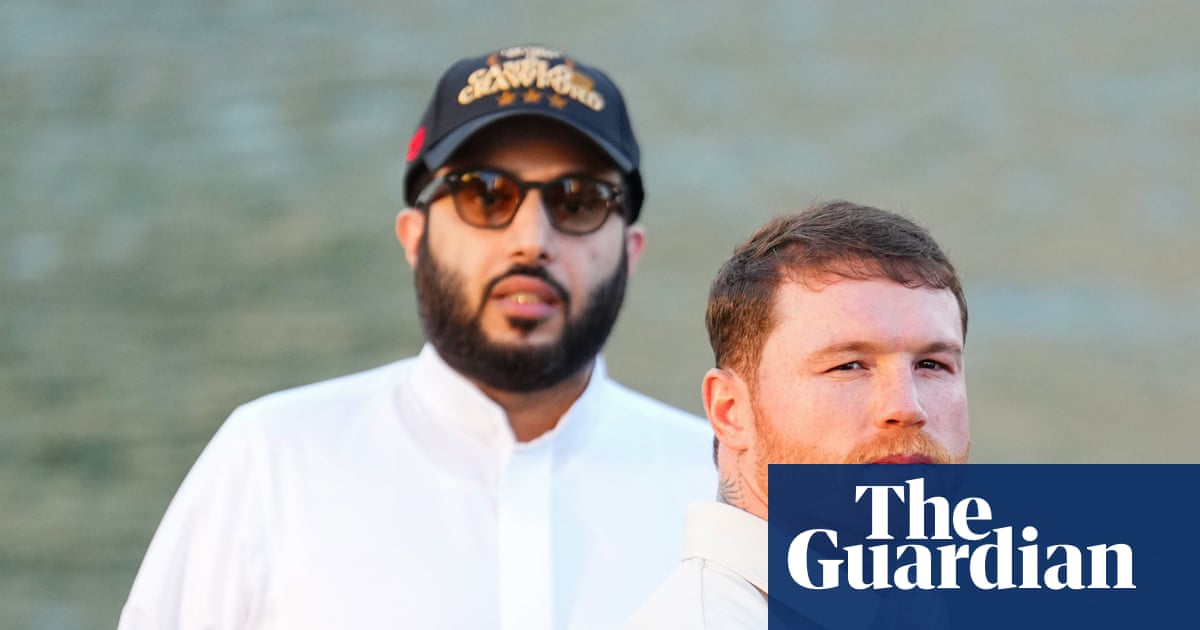
Canelo Álvarez’s willingness to step into a Riyadh arena while rockets rain on Saudi airports reads like a stunt‑filled headline, but the reality behind the bravado is far more unsettling. The Mexican champion has publicly declared that “nothing scares me,” and Saudi boxing czar Turki al‑Sheikh has confirmed the bout will go ahead despite a spate of deadly attacks that have already claimed at least a dozen lives, according to The Guardian.
The fight is slated for later this month, pitting Álvarez against a yet‑to‑be‑named challenger in a bid to erase the sting of his recent loss to Jermell Crawford. The Guardian reports that a series of coordinated strikes on Saudi airports and other infrastructure have left hundreds wounded, yet the Saudi Sports Ministry has refused to postpone the event. Al‑Sheikh, whose influence in the sport rivals that of any promoter, insists the match will proceed as planned, framing it as a symbol of resilience.

Canelo’s Riyadh Gambit
The decision to fight in Riyadh is not merely a career move; it is a calculated gamble that intertwines sport, geopolitics, and image‑crafting. In recent years Saudi Arabia has leveraged high‑profile events—from Formula 1 races to heavyweight boxing spectacles—to rewrite its global narrative, projecting an aura of modernity that masks ongoing internal strife. By anchoring a marquee fight in the kingdom, Canelo becomes an unwitting participant in that soft‑power campaign.
Historically, the Middle East has been a battleground for competing narratives. The Houthi‑driven attacks that have crippled civilian travel underscore a volatile security environment that the Saudi state is desperate to downplay. Allowing a world‑class bout to continue sends a message that “business as usual” still holds, even as ordinary citizens navigate curfews and disrupted air travel. In turn, Canelo benefits from a lucrative purse and the promise of a massive international audience, while the Saudi regime harvests positive press coverage that eclipses the recent bloodshed.
The timing also dovetails with a broader shift in boxing’s power structure. Traditional promoters in the United States have seen their grip loosen as sovereign wealth funds and state‑backed entities pour money into the sport. Al‑Sheikh’s involvement epitomizes this trend, and Canelo’s willingness to fight under his banner signals a new era where fighters answer to financiers as much as to fans. As a result, the sport’s governance may tilt further away from the familiar U.S.‑centric model, raising questions about regulatory oversight and fighter safety.
Why the Fight Matters Beyond the Ring
The stakes of this bout extend far beyond a boxer’s ego. For the Saudi government, the event is a litmus test of its ability to project stability amid a crisis that could otherwise erode investor confidence. If the fight proceeds without incident, Riyadh can point to a seamless execution as proof that the kingdom’s security apparatus remains robust. Conversely, any disruption could amplify criticism of the regime’s handling of the attacks and embolden opposition voices both domestically and abroad.
From a Western perspective, the fight forces policymakers to confront an uncomfortable paradox: how to engage with a nation that simultaneously offers lucrative commercial opportunities and perpetrates or tolerates violent repression. U.S. and British officials have long walked a tightrope between condemning human‑rights abuses and preserving strategic alliances in the Gulf. The Canelo showdown may reignite debate in parliamentary chambers about whether sporting events should be weaponized for diplomatic gain or withheld as a form of protest.
Critics argue that allowing the match to go ahead normalizes violence‑tainted environments and rewards a regime that silences dissent. In fact, several human‑rights groups have already called for a boycott, urging fans to withhold support until the security situation improves. Yet supporters counter that sport can serve as a bridge, offering a rare moment of unity that transcends politics. They point to historical precedents—such as the 1995 Rugby World Cup in South Africa—where high‑profile events helped catalyze societal change.
The reality likely sits somewhere in between. Canelo’s presence will undeniably bring global attention, but it will also cast a spotlight on the very contradictions the Saudi leadership hopes to conceal. As the fight approaches, the world will watch not just for a knockout, but for the broader implications of staging entertainment amid turmoil. If the bout proceeds flawlessly, it may embolden other authoritarian states to follow suit, using sport as a smokescreen for deeper issues. If it falters, it could signal that even the most well‑funded spectacles cannot outrun the gravity of real‑world conflict.
In the end, the decision to fight in Riyadh is a high‑risk bet for Canelo—one that could either cement his redemption arc or bind his legacy to a controversial chapter in Middle‑Eastern geopolitics. The outcome will be measured not just in punches landed, but in how the world interprets a boxer’s willingness to step into a ring that sits at the crossroads of sport, politics, and violence. The question remains: will Canelo’s bravado prove a triumph of resilience, or will it become a footnote in the larger story of a kingdom trying to rewrite its image while its streets bleed?
Source: Guardian Middle East