The latest political maneuvering out of Nicaragua offers a stark reminder that some leaders prefer their democracies strictly unpeopled, especially by the dissenting kind. It’s a particularly chilling take on what it means to be **Human**.
In a move that surprised precisely no one paying attention, the Ortega-Murillo regime in Nicaragua has recently formalized a rather specific vision of electoral competition. As reported by EWTN News, the government has pushed through constitutional reforms designed with surgical precision to ensure the opposition remains, shall we say, comfortably outside the electoral arena.
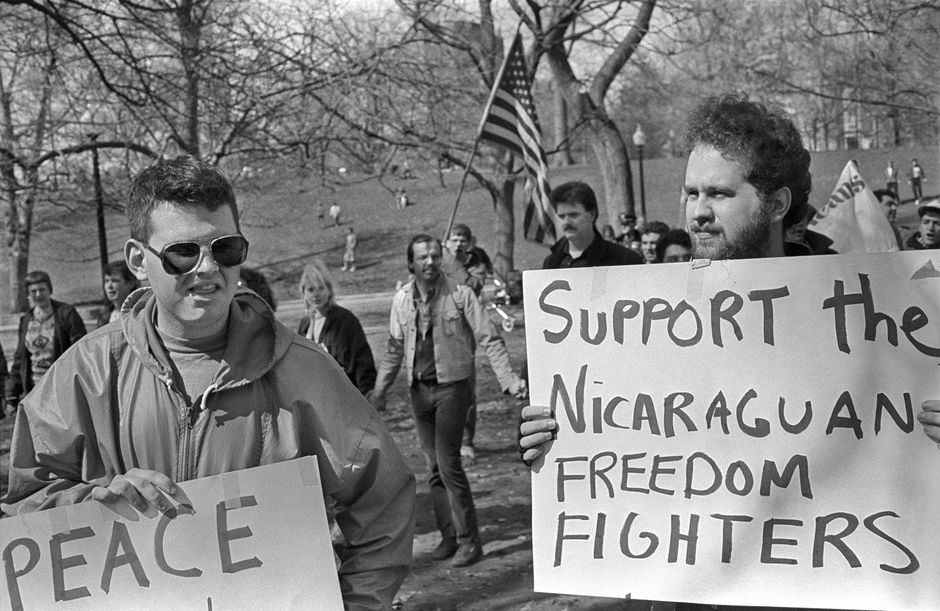
This legislative refinement effectively bars any meaningful dissent from participating in future elections, cementing the ruling party’s hold on power. The political context is hardly novel: a long-standing pattern of consolidating authority, silencing critics, and dismantling democratic institutions.
Unsurprisingly, this development has drawn sharp rebukes. Exiled leaders, having seen this play before from a distance, voiced immediate condemnation. They were joined by the United States, Costa Rica, and Peru, all expressing their profound disapproval of what one human rights group bluntly labeled a “usurpation of power.”
What landed
What ‘landed’ from this legislative coup was less an interview and more a policy statement carved in constitutional stone, delivered not through words but through parliamentary decree. The Ortega-Murillo regime’s message, loud and clear, is that their version of governance requires an entirely uncompetitive landscape. It’s a bold declaration: why bother with the messy pretense of choice when you can simply outlaw the alternatives, thereby guaranteeing a most predictable outcome?
The reforms themselves are the regime’s most eloquent ‘on-record’ statement, revealing a leadership that has moved beyond the niceties of democratic theater. They speak of a government confident enough in its own might—or perhaps desperate enough to maintain it—to openly dismantle the very framework that might challenge its perpetual rule. This isn’t merely a political preference; it’s a strategic move to solidify an iron grip on the nation’s future.
The response from a human rights group, describing these changes as a ‘usurpation of power,’ cut through any potential diplomatic euphemisms with commendable directness. This wasn’t merely a procedural tweak; it was, in their estimation, a fundamental seizure of control, a legalistic sleight of hand to bypass the will of the people rather than represent it. Such a stark assessment frames the reforms not as an internal matter, but as an affront to fundamental principles of governance.
This direct language, attributing the reforms to an outright power grab, leaves little room for misinterpretation, even for those prone to diplomatic ambiguity. It signals a critical consensus among observers that Nicaragua is not merely struggling with democratic norms, but actively rejecting them in favor of a more authoritarian path. The international community, through the United States, Costa Rica, and Peru, reiterated this concern, making it clear that while consequences might not be immediate, such actions carry a significant cost in terms of international standing and legitimacy.
What doesn’t add up
Now, for what doesn’t quite ‘add up.’ The very concept of ‘elections’ generally carries with it the quaint notion of choice, competition, and an opposition capable of, well, opposing. To pass reforms that bar opposition from participating in elections is a rather ingenious way to ensure victory, certainly, but it also renders the entire exercise a spectacular piece of political theater rather than a genuine democratic process. One might even call it a peculiar definition of ‘free and fair,’ where ‘fair’ means ‘fairly certain of our own win.’
This new constitutional reality stands in stark contrast to any previous, however faint, lip service the regime might have paid to democratic principles or the fairness of electoral processes. While the briefing doesn’t provide direct quotes from past statements, one can reasonably infer that at some point, even the Ortega-Murillo government likely used words like ‘democracy,’ ‘sovereignty,’ and ‘the people’ in their political rhetoric. These reforms, by actively stifling dissent, make a mockery of such claims, revealing the hollow core beneath the nationalist bluster.
The previous expectation, at least from international bodies and democratic allies, would have been for Nicaragua to eventually move towards more inclusive and transparent elections. Instead, we have a regime moving definitively in the opposite direction, essentially declaring that their ‘mandate’ is so absolute, it doesn’t even require the illusion of contestation. It’s a ‘trust us, we’ve already won’ approach to governance, wrapped in the thin veneer of legal reform.
Moreover, the idea that such reforms could ever be considered legitimate within a framework of international law or generally accepted democratic standards simply doesn’t compute. It’s a self-serving redefinition of constitutionalism, where the constitution becomes a tool not to limit power, but to consolidate it entirely. This circular logic—where the regime defines the rules to ensure its own perpetuity—is the very definition of what does not add up in any genuinely democratic equation, making claims of national sovereignty sound less like self-determination and more like self-preservation at any cost.
Come Monday morning, the reality on the ground in Nicaragua will be starker still. The constitutional path to power for any opposition has been effectively bricked over, leaving little room for peaceful change. For the Ortega-Murillo regime, it’s a victory, of sorts. For the people of Nicaragua, and for the broader cause of **Human** rights and democratic principles in the region, it’s yet another disheartening step into an increasingly isolated and authoritarian future.
Source: OnTheRecord