The BBC, it seems, has developed a rather unique definition of what constitutes “poignant” and “uplifting” – one that apparently includes a resounding “f*** Nigel Farage” and a direct call to “free Palestine” from the stage. When a public broadcaster frames a performance by **Loyle Carner** with such descriptors, one must question if we’re all watching the same broadcast.
The scene was Reading Festival, a cornerstone of the British music calendar, where hip hop artist Loyle Carner delivered a set that was anything but muted. In front of thousands, and captured for posterity by the BBC, Carner’s performance included moments of stark political declaration, aimed squarely at figures and causes of contemporary contention.
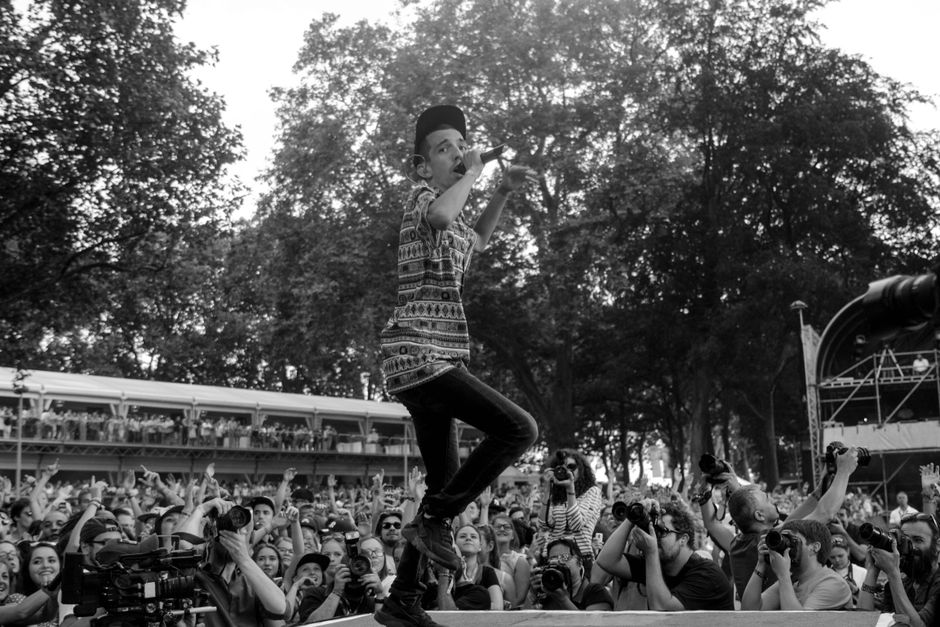
The publicly funded BBC then uploaded the recording of this set to its iPlayer service, accompanying it with editorial descriptions that praised the performance as “poignant” and “uplifting.” It’s a framing that, while perhaps reflecting the emotional impact for some, elides the explicit political nature of Carner’s words.
What landed
Loyle Carner’s performance, by all accounts, was powerful in its directness. In an era where many artists tread carefully around political landmines, Carner chose to detonate them. His decision to use the BBC’s platform at Reading to express such unequivocal sentiments is, in itself, a testament to the enduring power of live music as a vehicle for protest and opinion.

The lyrics, as reported, left little to the imagination: a clear, unvarnished expletive directed at Nigel Farage, followed by the potent rallying cry of “free Palestine.” These aren’t subtle metaphors or abstract musings; they are blunt, partisan statements delivered to a mass audience. For those who share Carner’s views, the performance undoubtedly resonated deeply, offering a moment of catharsis and solidarity. It was a clear demonstration that popular music can still be a sharp-edged instrument of dissent, even when broadcast by a traditionally cautious institution.
What doesn’t add up
It’s here, in the chasm between artistic intent and editorial framing, that the BBC’s handling of the Loyle Carner set becomes truly curious. To dub a performance featuring such pointed, unvarnished political declarations as simply “poignant” and “uplifting” stretches the bounds of even the most generous interpretation. The BBC, a public broadcaster bound by impartiality guidelines, has previously demonstrated a rather robust aversion to overtly political statements or profanity on its airwaves.
One has to wonder if “poignant” and “uplifting” were the immediate, visceral reactions of the commissioning editors, or if these words were applied retroactively, perhaps to smooth over the rough edges of an unexpectedly confrontational broadcast. This is a broadcaster that has, in the past, faced scrutiny for everything from presenters’ social media posts to perceived biases in news coverage. Yet, here we have a major artist delivering a direct political broadside on a BBC platform, subsequently described with terms usually reserved for a moving tribute or an inspirational speech. The dissonance is stark, creating a quiet yet potent contradiction: can a declaration of “f*** Nigel Farage” truly be universally “uplifting” when broadcast by a body committed to serving all corners of the public?
Monday morning, this incident will inevitably fuel ongoing debates about the BBC’s role in public discourse, artistic freedom, and the ever-shifting goalposts of impartiality. It leaves us to ponder what kind of “poignancy” we can expect next from our national broadcaster, and how much “upliftment” is packed into its political pronouncements.
Source: OnTheRecord